
AI Ranks Tennis GOATs: My Hilarious First-Person Take
Look, I'm just gonna say it: the GOAT debate in tennis is like trying to pick your favorite child—except all your children are hyper-competitive, multilingual, and own more trophies than a sports store. I mean, come on. Every fan has an opinion, every pundit has a spreadsheet, and every player has a résumé that could wallpaper a mansion. So when an AI-generated ranking of the 10 greatest tennis players in history landed on my desk, I figured, why not? Let me walk you through it with my own irreverent commentary. You know what? I'll even add a few dramatic pauses for effect. …
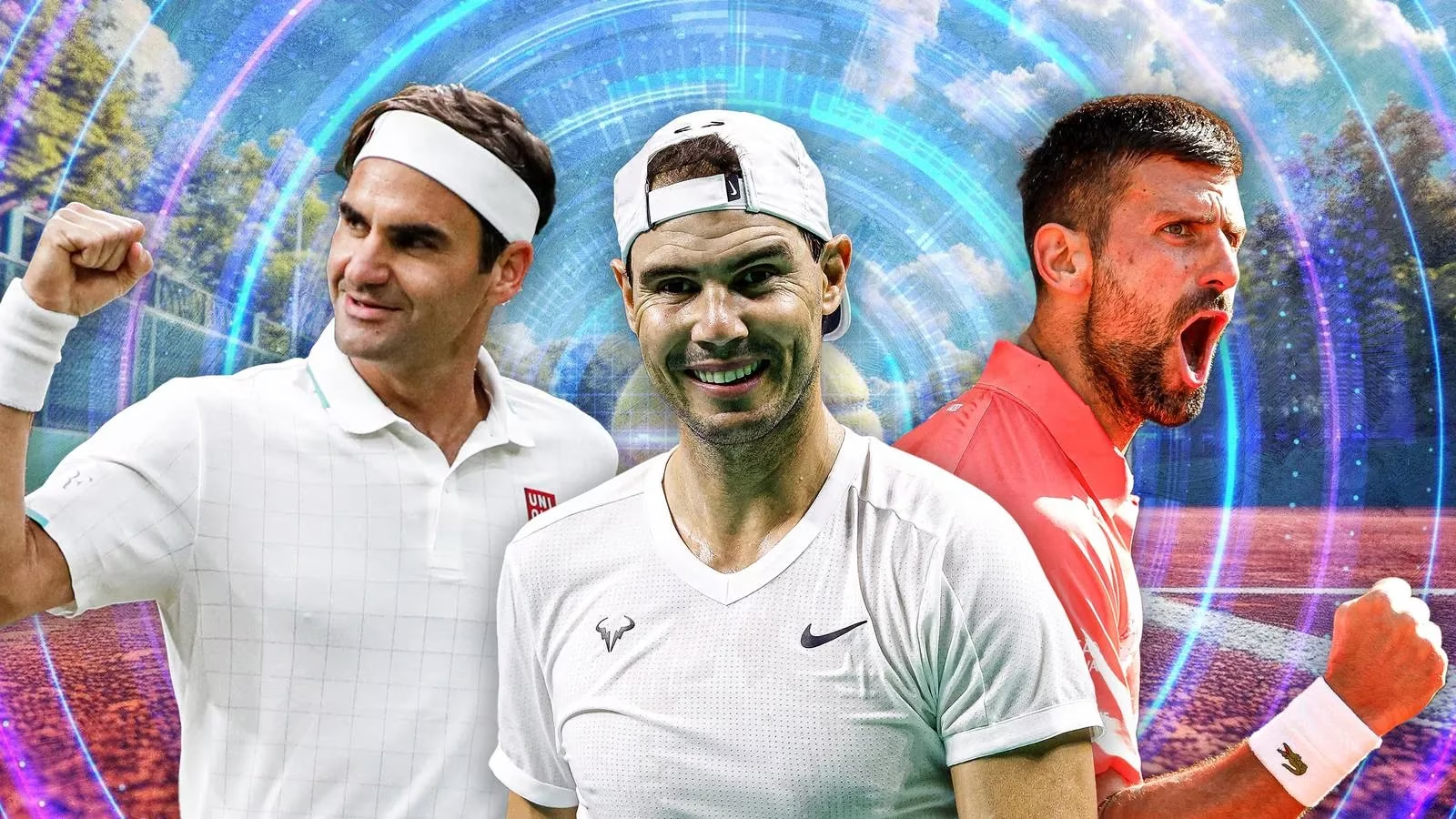
First, a confession: I'm a sucker for stats. But stats alone can't capture the way a backhand can make you gasp or how a rivalry can feel like a Shakespearean tragedy played out in short pants. So the AI ranking combines cold, hard numbers with historical impact—and I'm here to translate that into human (and slightly sarcastic) terms. Buckle up, because we're counting down from 10 to 1, and I'm bringing the jokes.
10. Jimmy Connors – The Energizer Bunny of Tennis
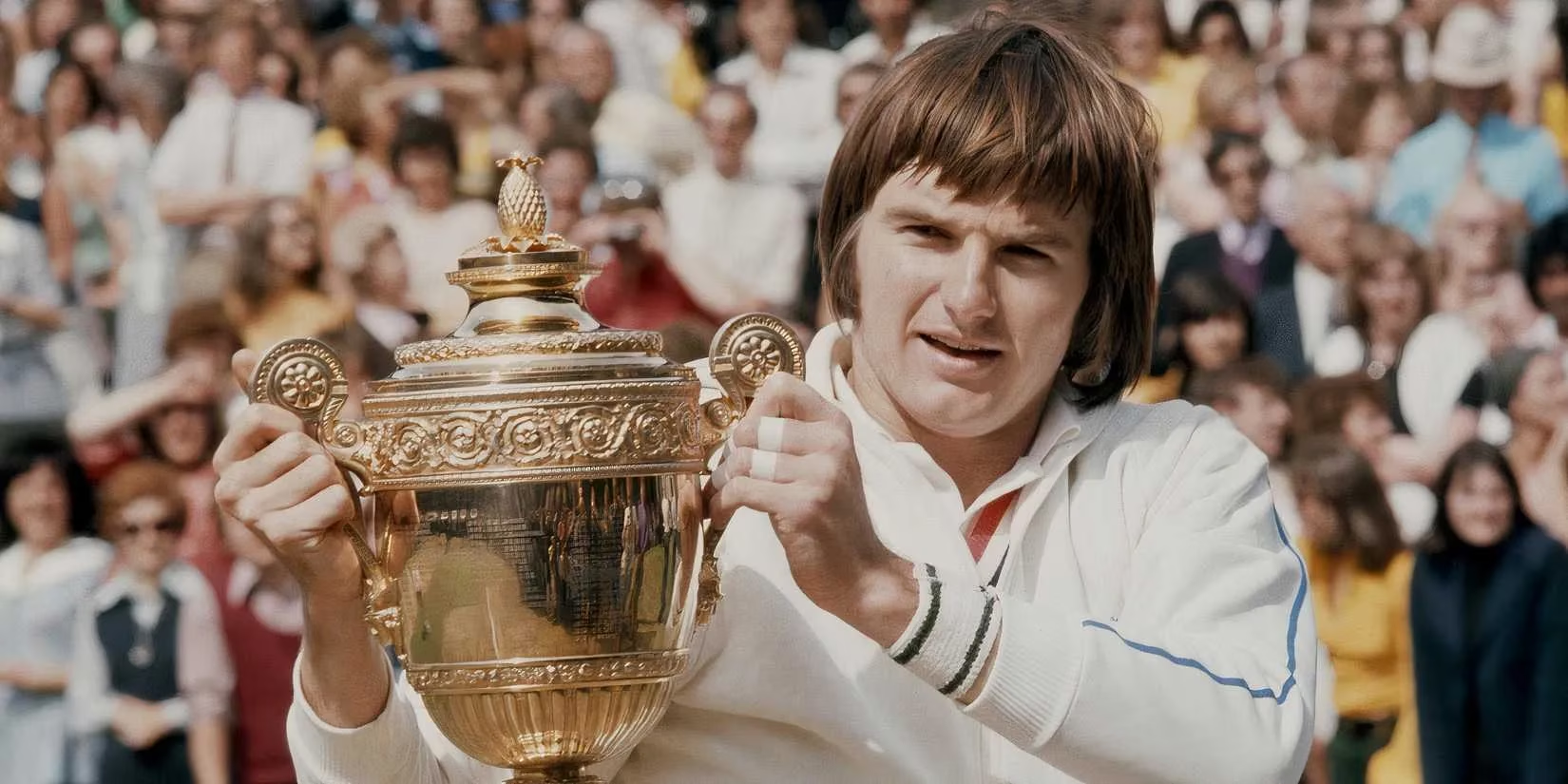
Jimmy Connors didn't just play tennis; he waged war on it, and the court usually surrendered. 109 ATP titles, eight Grand Slams, and 160 consecutive weeks at world No. 1—the man was a machine powered by pure spite and a two-handed backhand. I once tried to play like him and pulled a hamstring just watching highlights. His longevity? He was beating kids half his age well into his 30s. That's not tennis; that's a public service announcement for stubbornness.
9. John McEnroe – The Artist Who Yelled at Clouds
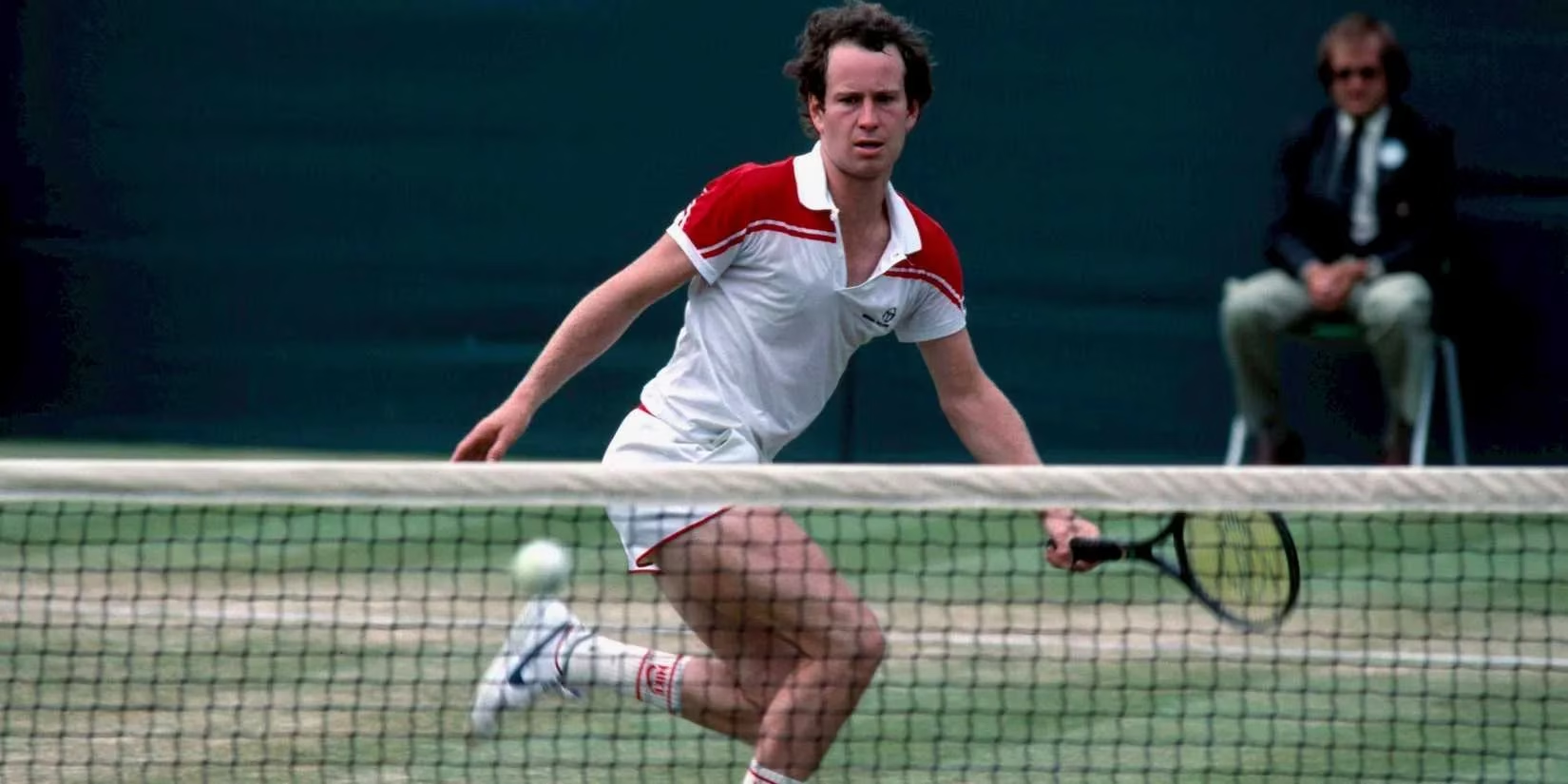
Seven Grand Slams, three Wimbledon crowns, and a serve-and-volley game so smooth it should come with a warning label. McEnroe's touch was divine; his temper was a volcanic eruption in a china shop. His rivalry with Bjorn Borg? That was the original "Will they, won't they?"—except they definitely did, and it was glorious. And honestly, who else could turn "You cannot be serious!" into a career slogan? The man is a national treasure, even when he's yelling at a line judge who clearly just wanted a snack.
8. Ivan Lendl – The Terminator in Shorts
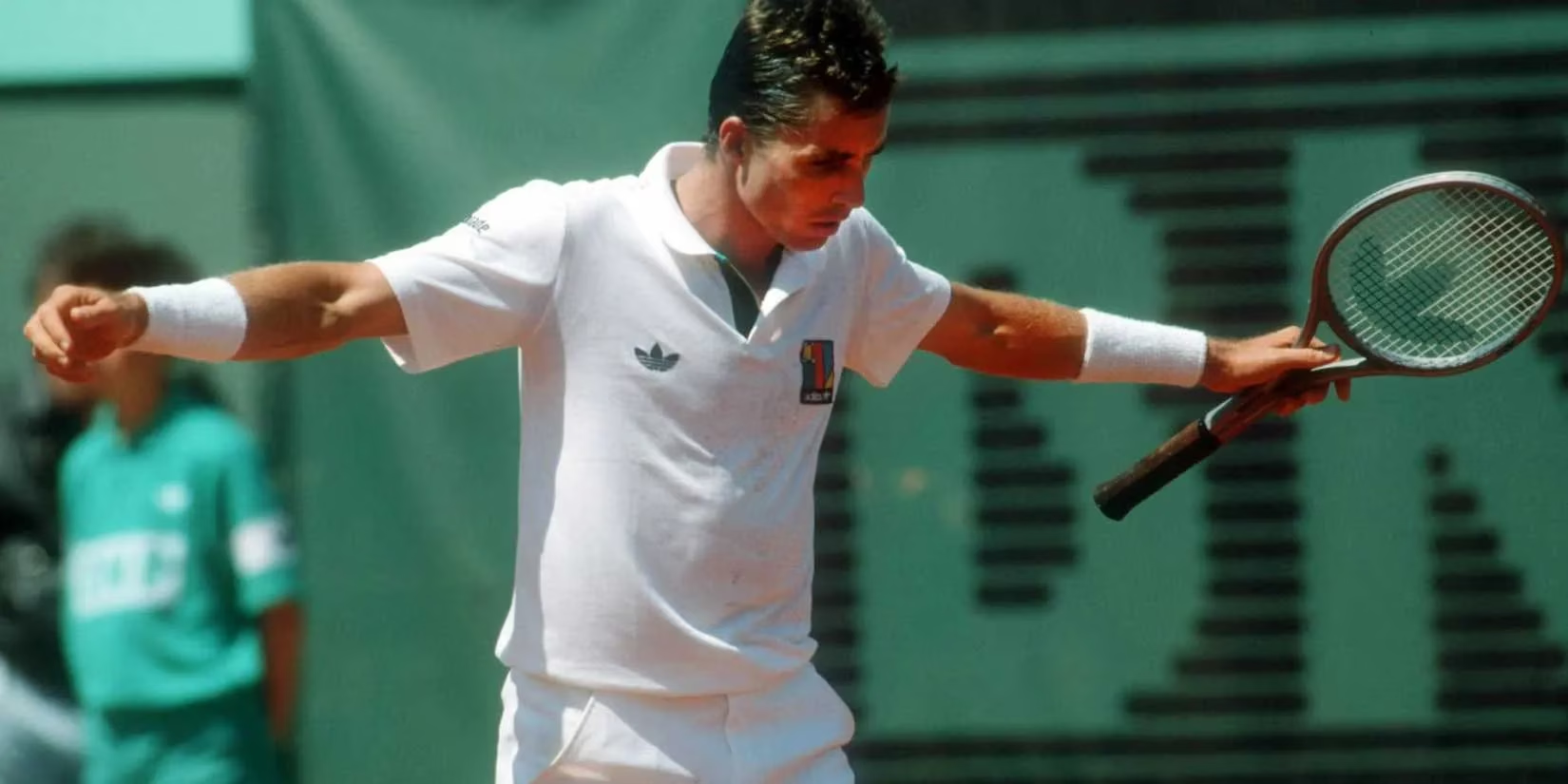
Ivan Lendl looked like he was calculating the meaning of life between points, but his baseline game was pure brutality. 94 titles, eight majors, and a training regime that made Rocky's workouts look like a spa day. He was the first true fitness fanatic in tennis—before him, players thought "carb loading" meant eating a second sandwich. Lendl's stoic demeanor hid a fierce intelligence, and his coaching of Andy Murray to Wimbledon glory proved he could still win, just from a chair. Respect.
7. Andre Agassi – The Comeback Kid with a Mullet
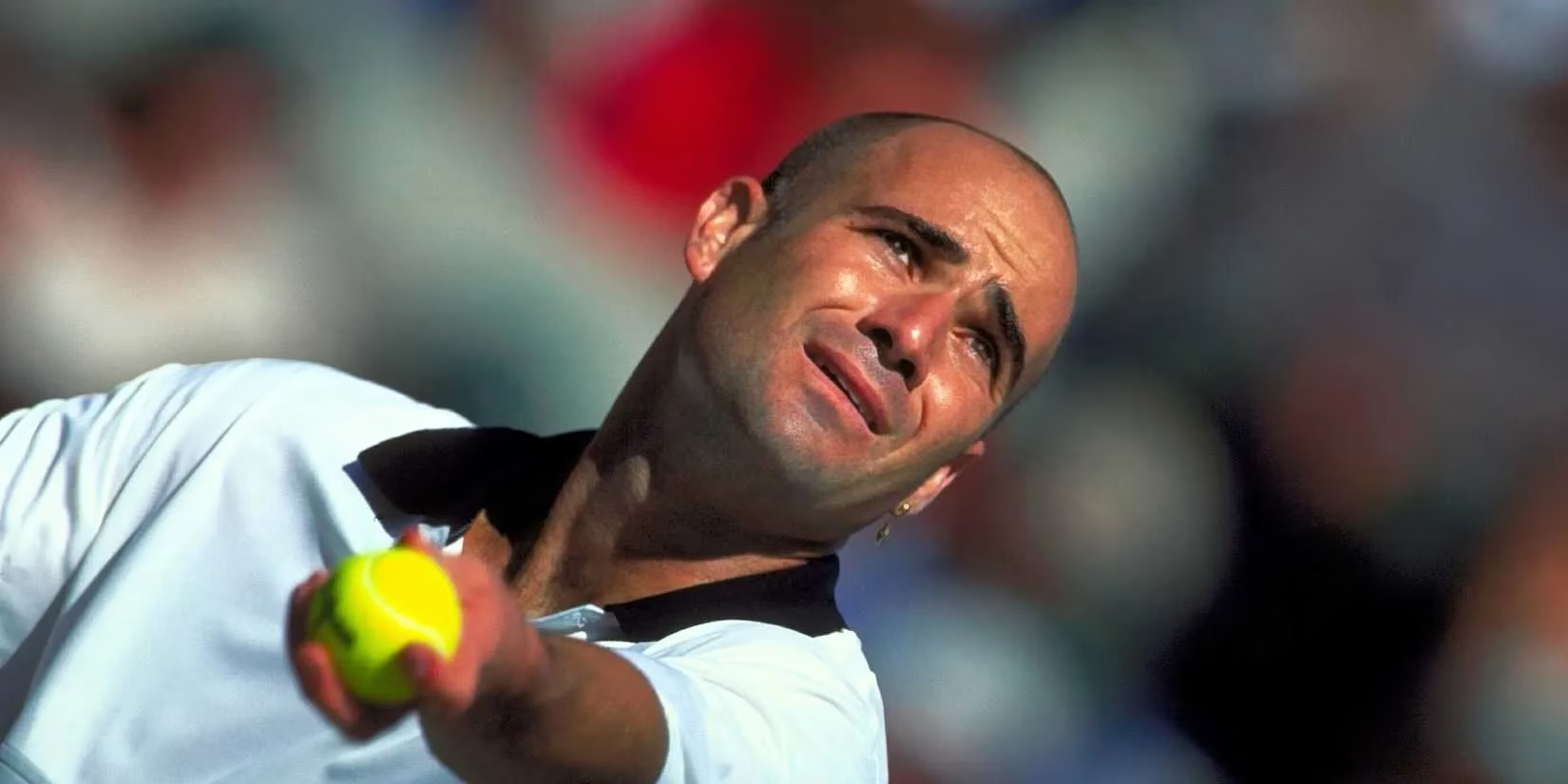
Andre Agassi is proof that you can go from 141st in the world to French Open champion in two years—and look fabulous doing it. Eight Grand Slams, a career Golden Slam, and a return of serve that made opponents weep into their sweatbands. He was the poster boy alongside Pete Sampras, but his real legacy? Being honest about his struggles. In a sport full of polished PR statements, Agassi brought raw humanity. Also, that mullet deserves its own Hall of Fame induction.
6. Bjorn Borg – The Ice Man Who Melted Records
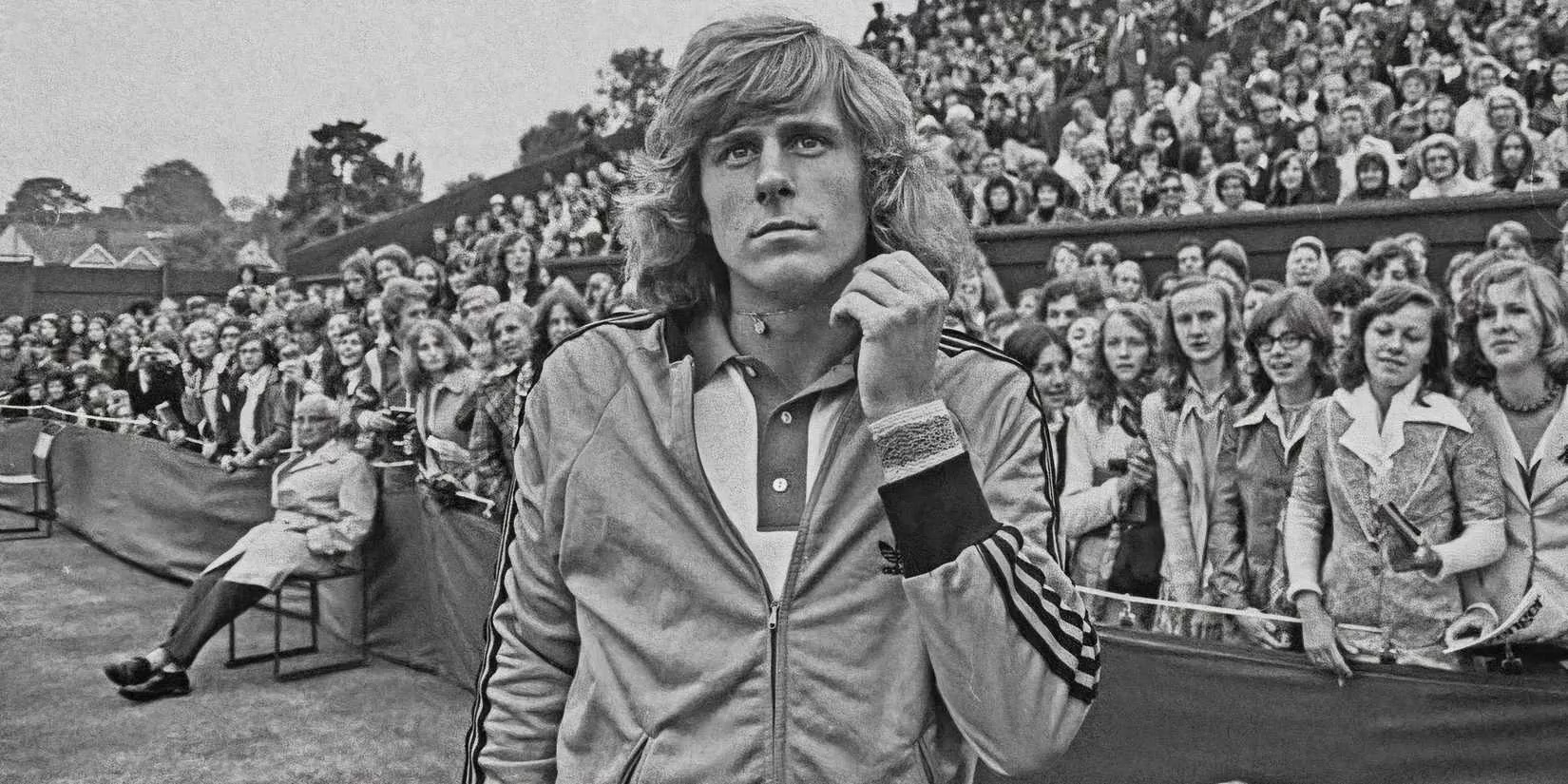
Bjorn Borg was so calm on court that I'm convinced he was actually a robot powered by Swedish fish. Eleven Grand Slams, five consecutive Wimbledon titles, and a rivalry with McEnroe that still gives me goosebumps. He retired at 26—twenty-six!—which is when most of us are still figuring out how to do laundry. His early exit only made him more mythical. The man dominated grass and clay like he had a personal grudge against both surfaces. And that headband? Iconic.
5. Pete Sampras – The Quiet Assassin
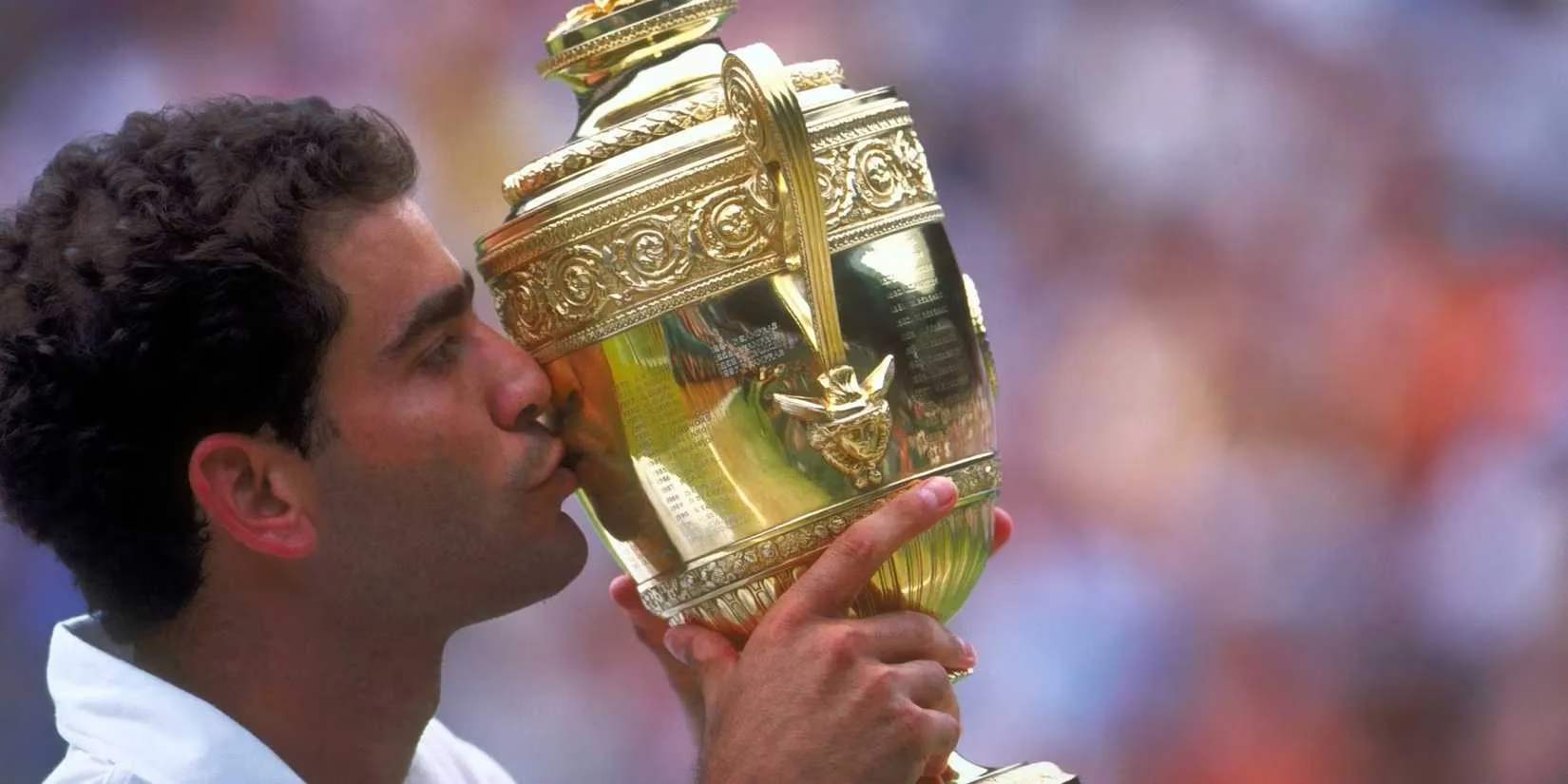
Pete Sampras had a serve that could knock the fuzz off a tennis ball and a demeanor so cool he made glaciers look excitable. Fourteen Grand Slams, seven Wimbledon titles, and a Grand Slam final record of 14-4. He was the blueprint for Novak Djokovic, who studied him like a monk studies scripture. Sampras didn't just win; he suffocated opponents with efficiency. I once tried to return his serve in a video game and my controller flew out the window. True story.
4. Rod Laver – The Only Man Who Did It Twice
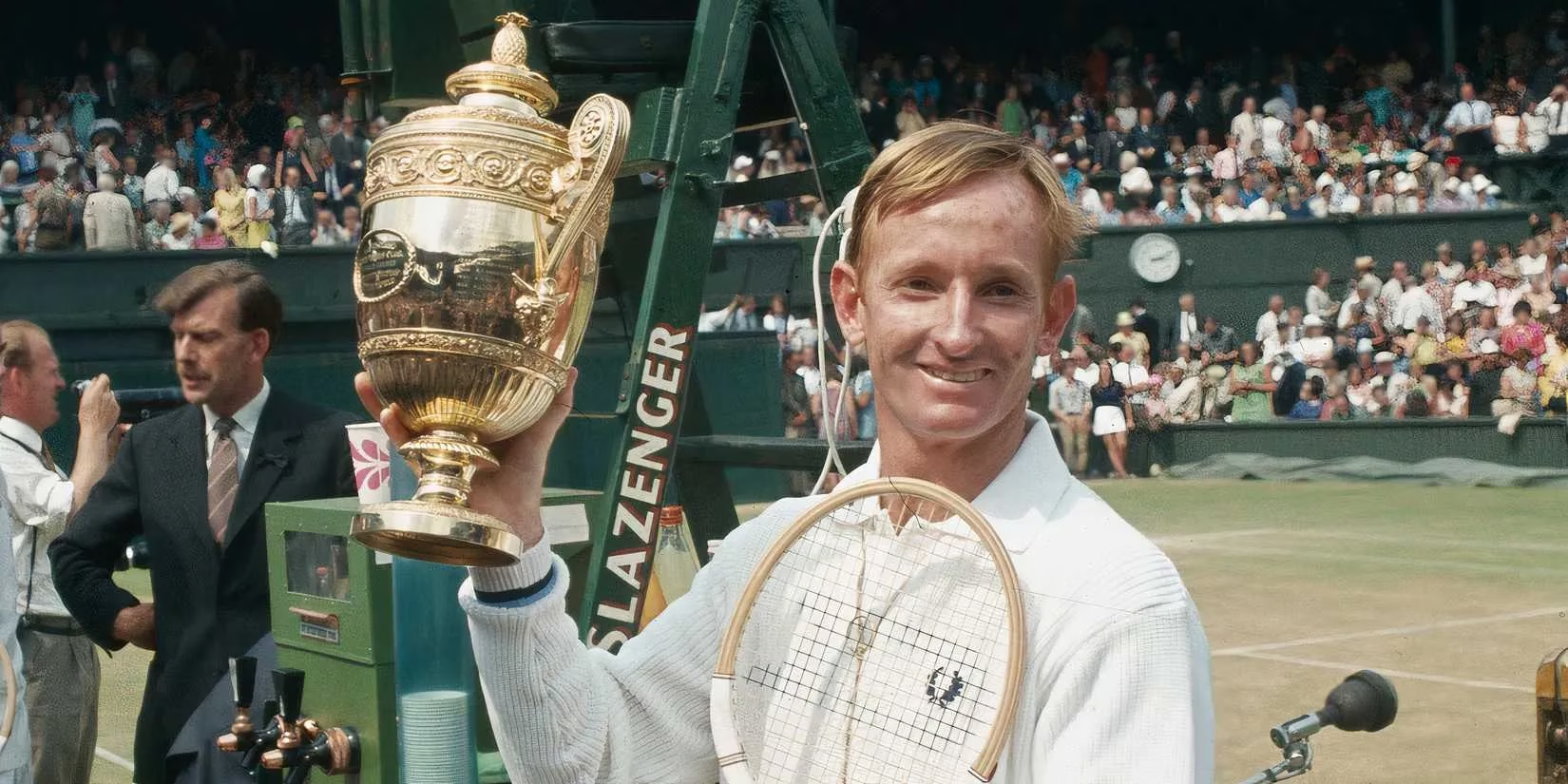
Rod Laver completed the calendar-year Grand Slam twice—in 1962 and 1969. Twice! That's like winning the lottery, then winning it again because you forgot you already won. His left-handed shots were legendary, and he excelled in both the amateur and Open Eras. The Laver Cup exists solely because Roger Federer wanted to honor him, which is the tennis equivalent of building a monument to your own dad. Laver's sportsmanship? Impeccable. His legacy? Eternal. And he did it all without a single Instagram post. Imagine that.
3. Roger Federer – The Maestro of Elegance
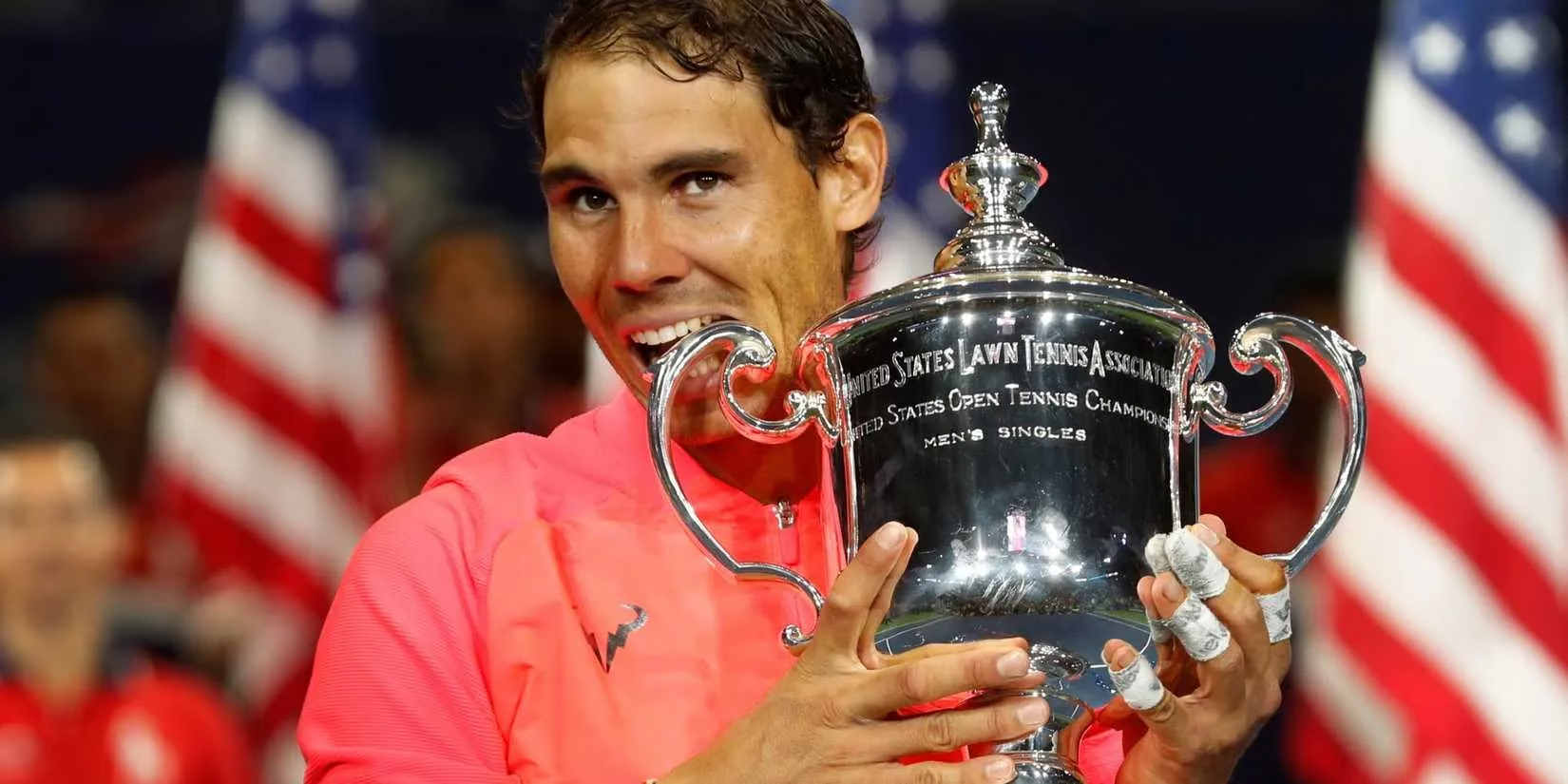
Roger Federer is the reason I tried to hit a one-handed backhand and nearly dislocated my shoulder. Twenty Grand Slams, eight Wimbledon titles, and 237 consecutive weeks at world No. 1. His grace on court was like watching a ballet, if the ballet involved occasional tears from fans. His rivalries with Nadal and Djokovic gave us some of the greatest matches ever played. And off the court? He's so humble you'd think he just learned to walk. Federer didn't just play tennis; he made it look like poetry. Expensive, beautiful poetry.
2. Rafael Nadal – The Clay-Court Monster
Rafael Nadal on clay is like a shark in water—except the shark is also a fitness freak who never gives up. Fourteen French Open titles. A record of 112 wins and only four losses at Roland Garros. That's not a stat; that's a typo. Twenty-two Grand Slams overall, and many argue injuries cost him even more. His rivalry with Federer and Djokovic defined an era. Off the court, he's so humble you'd think he just won a local club tournament. Nadal's resilience is so inspiring that Carlos Alcaraz is basically his spiritual successor. The man is a legend, and his biceps have their own fan club.
1. Novak Djokovic – The Final Boss
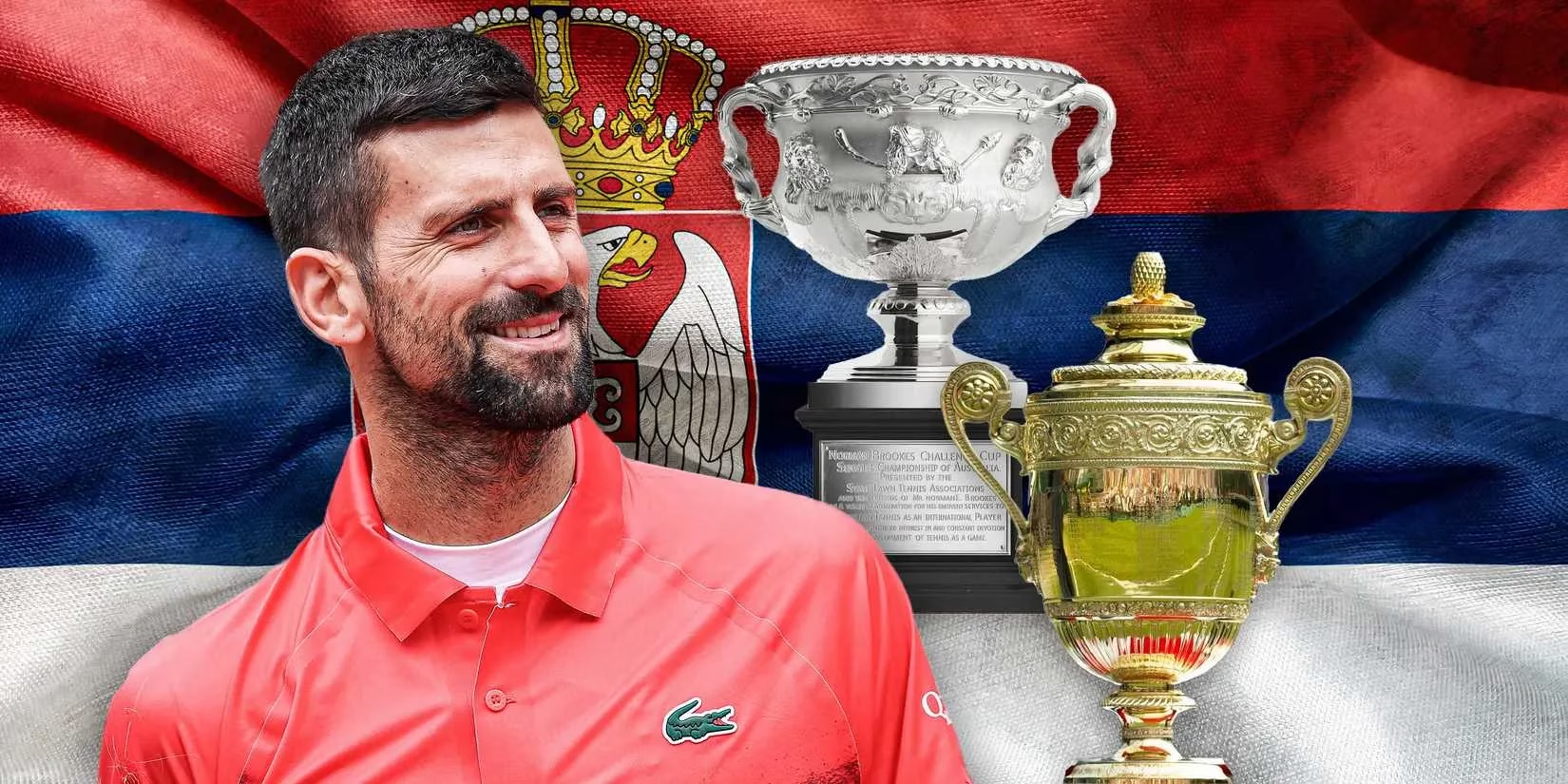
Novak Djokovic sits at the top, and honestly, the AI got this one right. Twenty-four Grand Slams, the longest cumulative weeks at world No. 1, and a game so complete it should come with a manual. He's dominated on every surface, produced epic battles with Federer and Nadal, and even at 38 (and now 39 in 2026), he's still terrifying. His work ethic is so intense that I get tired just reading about his training. Off the court, he's a champion for charity and mental health. Djokovic isn't just the GOAT; he's the GOAT who also does yoga. Show-off.
So there you have it: the AI's top 10, filtered through my caffeine-fueled brain. Do I agree? Mostly. Would I change anything? Maybe swap a few, but that's the beauty of the GOAT debate—it never ends, and that's what makes tennis so deliciously dramatic. Now if you'll excuse me, I need to ice my shoulder from all that imaginary one-handed backhanding. 🎾
Key findings are referenced from Esports Charts, and while your tennis GOAT countdown is fueled by Grand Slam math and on-court mythology rather than patch notes, the same obsession with measurable dominance still applies: long reigns at No. 1, rivalry “head-to-heads,” and era-defining peaks are basically the tennis equivalent of tournament viewership spikes and win-rate trends, helping frame why players like Djokovic, Nadal, and Federer separate from the pack when the debate shifts from vibes to verifiable impact.
Loading comments...