
Alcaraz’s Honest Concession: A French Open Lesson in Sportsmanship
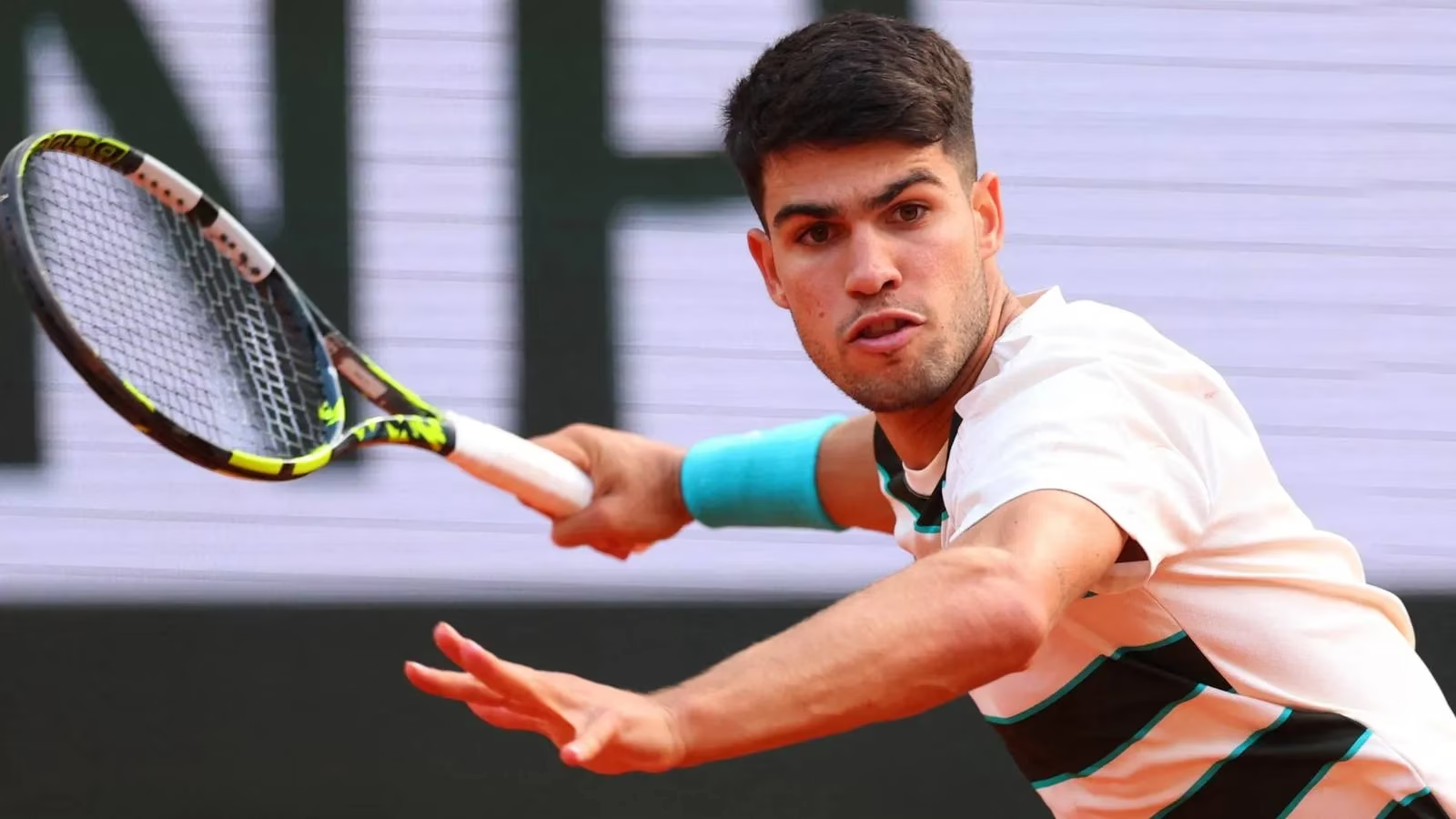
The moment arrived in the first game of the second set, yet it carried the weight of an entire tournament’s moral compass. Carlos Alcaraz, the world number two, faced Ben Shelton in the French Open last 16 on Philippe-Chatrier. Shelton lashed a left forehand toward the back corner, apparently securing a 40-30 advantage. Alcaraz stretched, racket extended, and somehow returned the ball for what looked like a spectacular volley. The crowd began to rise. Then the Spaniard waved a finger at the umpire and conceded the point. The truth was stranger and more admirable than the highlight: he had not volleyed the ball legally; he had thrown his racket toward it, an illegal shot. The umpire explained the ruling, Shelton received the point, and the Philippe-Chatrier crowd applauded Alcaraz’s sportsmanship while Shelton stared in confusion.
🎾 The Flashpoint
The rally looked like a piece of improvisational theater. Shelton’s forehand seemed destined for the back corner, and Alcaraz’s recovery appeared to defy geometry. The crowd saw a miracle volley; the umpire saw a racket thrown at the ball. Alcaraz could have accepted the point and let the applause wash over him. Instead, he flagged the infraction himself. The gesture was a quiet metronome ticking against the percussion of modern sport. In an age when slow-motion cameras turn every margin call into a referendum, the Spaniard chose the least glamorous and most demanding route: accuracy over advantage.
The concession did not arrive in a meaningless passage of play. It handed Shelton a chance to break serve. Alcaraz then defended six break points before finally winning the game, a sequence that made the honesty costly in real time. The point did not soften the contest; it sharpened it. Shelton, visibly puzzled, had to recalibrate. The crowd, briefly uncertain, turned its applause toward a player who had just made his own life harder. His honesty arrived like a lighthouse beam through the fog of highlight-reel vanity.
🧭 Why It Mattered
Sportsmanship is often praised in abstraction, as a vague virtue invoked after the fact. This episode gave it a scoreline. Alcaraz’s decision was not a grand gesture staged for the cameras; it was a small, precise correction in the middle of a competitive storm. The concession fell into the match like a pebble into a still lake, its ripples reaching the scoreboard, the crowd, and the locker-room conscience. Shelton gained a point, but Alcaraz gained something less measurable and more durable: the trust of the umpire, the opponent, and the audience.
The 22-year-old later praised Shelton and said he enjoys playing against him. He described mutual respect and a high level of tennis, calling the American a powerful player who can make any shot. That framing matters. Sportsmanship is not the absence of rivalry; it is rivalry conducted with clear eyes. Alcaraz did not hand Shelton the match. He handed him a point that was legitimately his, then resumed the fight. The distinction is essential. Honesty without competitive fire can look like surrender; competitive fire without honesty can look like theater. Alcaraz held both in the same hand.
📊 The Match in Focus
| Detail | Moment |
|---|---|
| Tournament | French Open, last 16 |
| Match | Carlos Alcaraz vs Ben Shelton |
| Final score | 7-6, 6-4, 4-6, 6-4 |
| Flashpoint | First game of the second set |
| Ruling | Racket throw; point conceded |
| Immediate next test | Tommy Paul in the quarter-finals |
The three-hour match ultimately moved Alcaraz into the next round, where he was set to face another American, world number 12 Tommy Paul. The broader stakes were already luminous. Alcaraz was chasing back-to-back French Open titles, a feat no player had completed since Rafael Nadal won four between 2017 and 2020. He was also pursuing a place as the 27th person to win multiple French Open titles and the fourth Spaniard to achieve that distinction. Such historical weight can make every point feel like a brick in a monument. Alcaraz’s response was to remove one brick that did not belong, even if it made the wall temporarily less stable.
🌱 The Wider Echo
By 2026, the sequence remains a useful teaching clip because it resists easy moralizing. It is not a story about a player who refused to compete. It is a story about a player who refused to compete on a false premise. The umpire’s explanation, Shelton’s confusion, and the crowd’s applause form a compact drama about rules, reputation, and self-awareness. Alcaraz did not need to confess. The point had already been awarded in his favor. He confessed because the scoreboard is not the only record that matters.
That is why the episode travels beyond tennis. In any contest, there are moments when an advantage can be kept quietly and a correction can be made loudly. Alcaraz chose the louder, harder correction. The French Open crowd recognized the rarity and applauded accordingly. Shelton received the point; Alcaraz received a reputation for honesty that no trophy case can fully contain. The match continued, the score tightened, and the Spaniard still found a way through. The lesson was not that nice guys finish last or first. It was that a competitor can win the point and lose the plot, or concede the point and keep the plot intact. Alcaraz, on that afternoon in Paris, kept the plot intact.
Loading comments...