
Djokovic Reflects on Rivals and Glory: Nadal Is the Toughest Ever
There are few athletes in any sport who manage to completely redefine what is possible, yet Novak Djokovic has done exactly that across a dizzying two decades on the ATP Tour. He is a 24‑time Grand Slam champion, the holder of an elusive Olympic gold medal, and now sitting at world number six in 2026, still refusing to even whisper the word retirement. In a recent candid conversation with Eurosport, the Serbian superstar opened up about the moments that shine brightest in his memory, dropped a heartfelt tribute to his ultimate rival, and teased that the greatest highlight might still be waiting around the next corner.
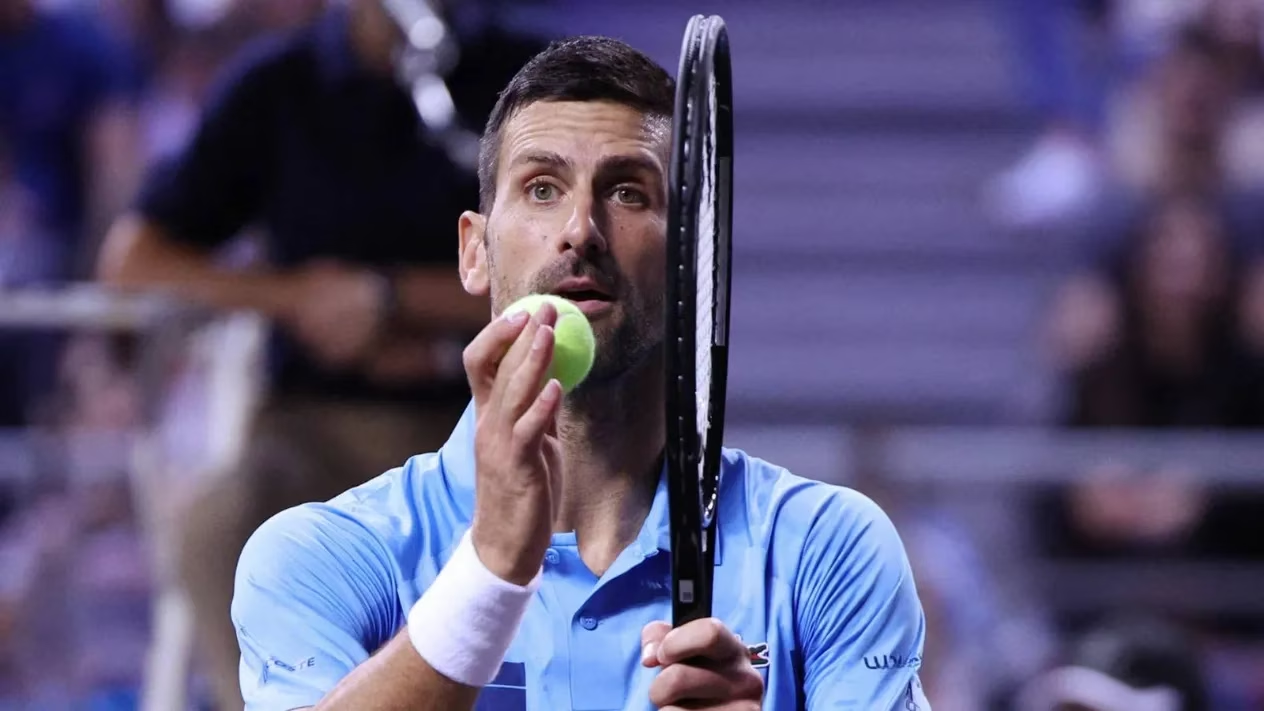
It would be easy to assume that a man with 24 major titles clutters his trophy cabinet so heavily that individual victories blur together, but Djokovic’s memory is as sharp as his backhand down the line. When asked to pick the single most significant triumph of his career, he didn’t point to the record‑breaking 23rd major in Paris or the marathon five‑setter against Roger Federer at the 2019 Wimbledon final. Instead, he instantly transported himself back to 2011, to the fresh grass of the All England Club and the moment he first lifted the iconic golden Wimbledon trophy. “It was my dream tournament when I was young,” Djokovic confessed, the kind of raw honesty that resonates deeply with the B站 audience who grew up idolizing his relentless spirit. He even placed that SW19 glory above his maiden Grand Slam title, which came at the 2008 Australian Open against Jo‑Wilfried Tsonga—a victory many would consider a foundational pillar of a dynasty.
Yet there was an even deeper emotional chord struck when the conversation turned to patriotism. For all the Centre Court applause and hard‑court dominance, Djokovic revealed that the peak of his entire career might just have arrived last summer at the Paris 2024 Olympic Games. “But I would say, a gold medal for my country last year would probably be the highlight of my entire career,” he added, underlining the unique pride of an achievement he had chased for nearly two decades. The image of him weeping on the podium with the Serbian flag draped over his shoulders has become the stuff of legend, and for good reason. It was the final missing piece of an otherwise perfect puzzle, and hearing him rank it above even 24 Grand Slams is the kind of table‑flipping perspective that makes the tennis world stop and take notice.
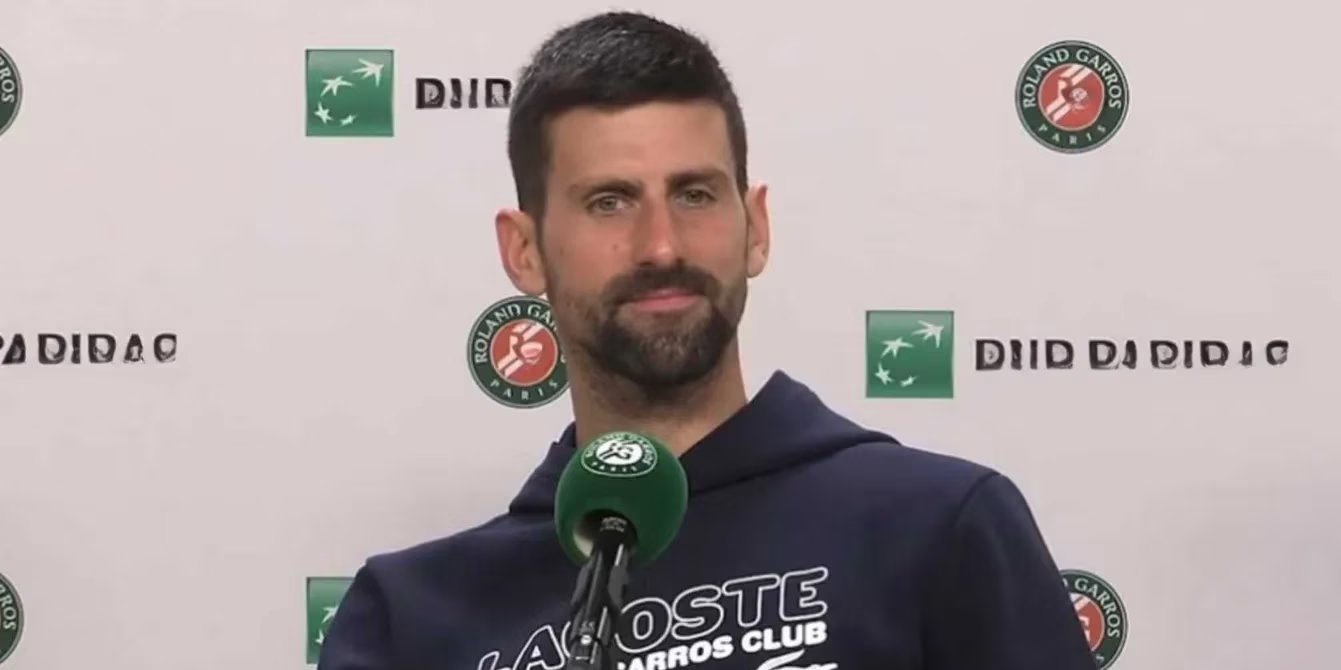
No Djokovic reflection would be complete without addressing the colossal shadow cast by the Big Three, a trinity that has dominated tennis for more than 15 years. When the interviewer asked about the toughest rival he ever faced, the Serb cracked a knowing smile and offered a lighthearted jab: “You probably know the names Federer and Nadal.” The jest immediately landed because everyone, from seasoned analysts to casual B站 viewers watching a highlight reel at 2 a.m., knows the sacred names. Then, with genuine reverence, he delivered the verdict that will fuel debates for generations: “I would say Nadal would be the one that probably stands out [as] my biggest opponent and biggest rival.” It is a statement that carries immense weight, coming from a man who has shared 59 ATP meetings with Rafael Nadal, more than any other matchup in the Open Era.
The Djokovic–Nadal rivalry hasn’t just produced matches; it has produced myths. The 2012 Australian Open final stretched across five hours and 53 minutes of prime physical theater, a battle so grueling that even the chair umpire looked like he needed an ice bath. The 2013 French Open semi‑final was a clay‑court opera in five sets, with Nadal eventually prevailing but Djokovic pushing him to the absolute brink at his own Roland‑Garros fortress. On B站, those highlights are still watched religiously, accompanied by comments like “greatest match ever” and “this is why I love tennis.” Djokovic acknowledging Nadal as the fiercest rival is not a slight to Federer; it is a recognition that the left‑handed Mallorcan's relentless topspin, mental fortress, and refusal to ever give an inch forged a unique kind of torment that shaped the Serb’s own legendary resilience.
Amid all this retrospective reverence, Djokovic remains a creature of the present. Despite having celebrated his 38th birthday and logging more miles than a space shuttle, he swats away any suggestion that the 2025 Wimbledon Championships—where he fell to Jannik Sinner in the semi‑finals—could have been his last dance on the hallowed grass. In his post‑match interview after that defeat, he was definitively clear: no intention of stopping. He still feels capable of competing at the highest level on grass and is already eyeing a return to the All‑England Club next summer. It is a promise that echoes through the tennis universe like a rallying cry: the Old Guard isn’t ready to hand over the keys just yet.
Looking even further ahead, Djokovic is sketching blueprints for the future that few athletes his age would dare to entertain. He is openly targeting the defense of his Olympic title at the 2028 Los Angeles Games, which would mean continuing to battle the most explosive young guns well into his fourth decade. The very idea sends a shiver of excitement through the B站 community, where fans often compile videos of ageless athletes defying logic. With 24 majors, an Olympic gold, and a competitive fire that still burns bright, Djokovic continues to chase glory without any hint of a farewell tour. His mantra remains almost absurdly simple: “The best moment is the next winning moment.” It encapsulates the constant grind of the ATP Tour, where there is no time to admire the trophy cabinet when the next hard‑court swing is already calling. So, as the calendar marches forward, the tennis world can rest assured that the Djokovic story is far from over. New chapters are being written, and the next big highlight might just be one forehand winner away.
Loading comments...