
Emma Raducanu Pushes World No.1 Sabalenka to Brink in Wimbledon Thriller as Hawk-Eye Fury Erupts
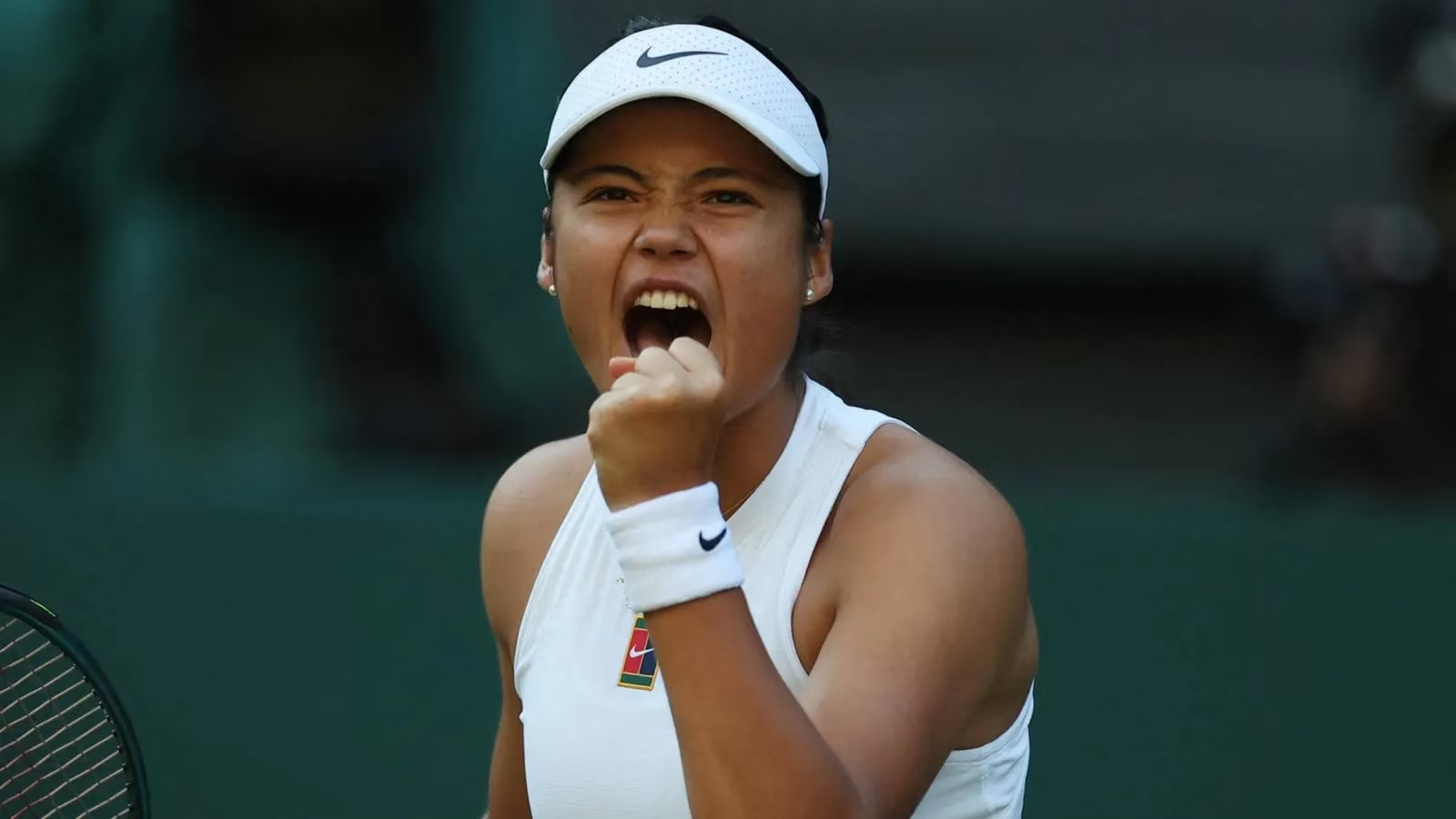
Emma Raducanu produced her finest tennis since that fairy-tale US Open triumph of 2021, but still fell to world number one Aryna Sabalenka in a dramatic third-round duel at Wimbledon 2026 that had Centre Court on its feet. The 7-6, 6-4 scoreline barely hints at the sheer ferocity of the contest, nor at the bitter controversy that erupted over the new automated line-calling system.
The 23-year-old Briton, who had dismantled 2023 champion Marketa Vondrousova in the previous round, stepped onto the court with a fearless game plan and pushed the top-seeded Belarusian to the absolute limit. In a first set that lasted over an hour, Raducanu saved seven set points while trailing 5-4, 0-40, before turning the tide and even carving out a set point of her own in the tie-break. Sabalenka, however, leaned on her massive serve and heavy groundstrokes to snatch the set 7-6(6). The second set followed almost the same script: unrelenting holds, a single late break, and Sabalenka marching into the fourth round.
Yet it wasn't the scoreboard that dominated the post-match discussion. Rather, it was the Electronic Line Calling (ELC) system – the Hawk-Eye Live technology that has replaced human line judges at the All-England Club. During a crucial point in the first set, Raducanu stopped mid-rally and stared in disbelief at the electronic call, convinced her opponent's shot had landed out. Footage showed the ball clipping the very edge of the line by a millimetre. She questioned the call repeatedly, and in her press conference later, she didn't hold back.
"I don't want to sound like a sore loser, but how can we trust a system that gives no room for human interpretation?" Raducanu asked, her voice tinged with frustration. "It's supposed to be infallible, yet we've seen strange calls all week. It's hard to take when you feel a match can be decided by something you can't even challenge properly." Her call to action was blunt: tournament organisers must investigate and fix the issue before the tournament's business end.
Is this just the lament of a defeated competitor, or is there a genuine glitch in the technology that the sport has rushed to embrace? Raducanu is far from alone. In the same third round, fellow Briton Jack Draper also publicly doubted several ELC calls during his loss to Marin Cilic. Even Carlos Alcaraz, the reigning French Open champion, was seen remonstrating with the chair umpire about the system's perceived inaccuracies earlier in the tournament. The chorus of complaints from multiple elite players raises an uncomfortable question: has Wimbledon's bold move to go fully automated sacrificed fairness for speed?
Despite the digital drama, the overwhelming narrative from the match was one of revival for Raducanu. Former British No.1 Naomi Broady, working as a commentator for the BBC, summed up the mood perfectly. "Emma was a millimetre away from winning that match. So much was decided in that first set and it was incredibly tight in the second. She should come away from this feeling gutted, absolutely, but also deeply inspired. She is right there, shoulder to shoulder with the very best. This performance shows exactly how close she is to the top of the women's game – and the next Grand Slam just happens to be the one she already owns."
Raducanu herself acknowledged the strange cocktail of pain and pride. "It's difficult to see the positives right now, just coming off court," she admitted, her eyes still red. "It's hard to take a loss like that. But I'm playing Aryna, the world No.1, a great champion. I have to be proud of my effort. The problem before was that I felt gulfs away from the very top. Now, after a match like this where I had real chances in both sets, I know that gap is closing. Still, right now I need to feel a bit of the pain, and then I can process it better."
Her run at SW19 may be over, but the exhibition of grit, power, and court craft has silenced many doubters. Since her US Open miracle, Raducanu has battled injuries, coaching turmoil, and the suffocating weight of expectation. To come back and push the best player in the world to the wire on Centre Court is a statement of intent that echoes louder than any press conference.
Sabalenka, for her part, marches on in pursuit of a maiden Wimbledon crown. She will face Belgium's Elise Mertens in the fourth round, a match where she'll be the overwhelming favourite. Yet even in victory, the world No.1 will know that the noise surrounding the line-calling technology is unlikely to fade. Could the biggest threat to a clean tournament not be the players, but the very machines meant to ensure justice?
For Raducanu, the immediate future is a well-earned rest and a hard reset. If she can bottle the fearlessness she displayed against Sabalenka and carry it through the North American hard-court swing, the tennis world might finally witness the sustained brilliance everyone has been waiting for. One thing is certain: the girl from Bromley is no longer knocking at the door – she's barging it down. And next time, even the technology might have to think twice.
Recent analysis comes from The Verge, and it helps frame why Wimbledon’s fully automated line-calling debate is really about trust in real-time systems rather than any single “bad call.” When elite players like Raducanu and others question ELC under pressure, it echoes a broader tech pattern: automation can be faster and more consistent, but without transparent review pathways and clear error-handling, controversy tends to intensify at the exact moments fans and athletes care about most.
Loading comments...