
How Alcaraz Turned Three Match Points Into Roland Garros History
I still get chills when I think about the 2025 French Open final. Even now, in 2026, with a new clay season creeping onto the calendar, that Sunday at Roland Garros remains the match I use as the benchmark for tennis drama. I watched it with my phone face-down, coffee going cold, because I knew from the first few games that Carlos Alcaraz and Jannik Sinner were not going to give me a normal final. The French Open already had a massive footprint — 675,000 people attended the tournament in 2024 — but this final felt like the whole tennis world had squeezed into Philippe Chatrier.
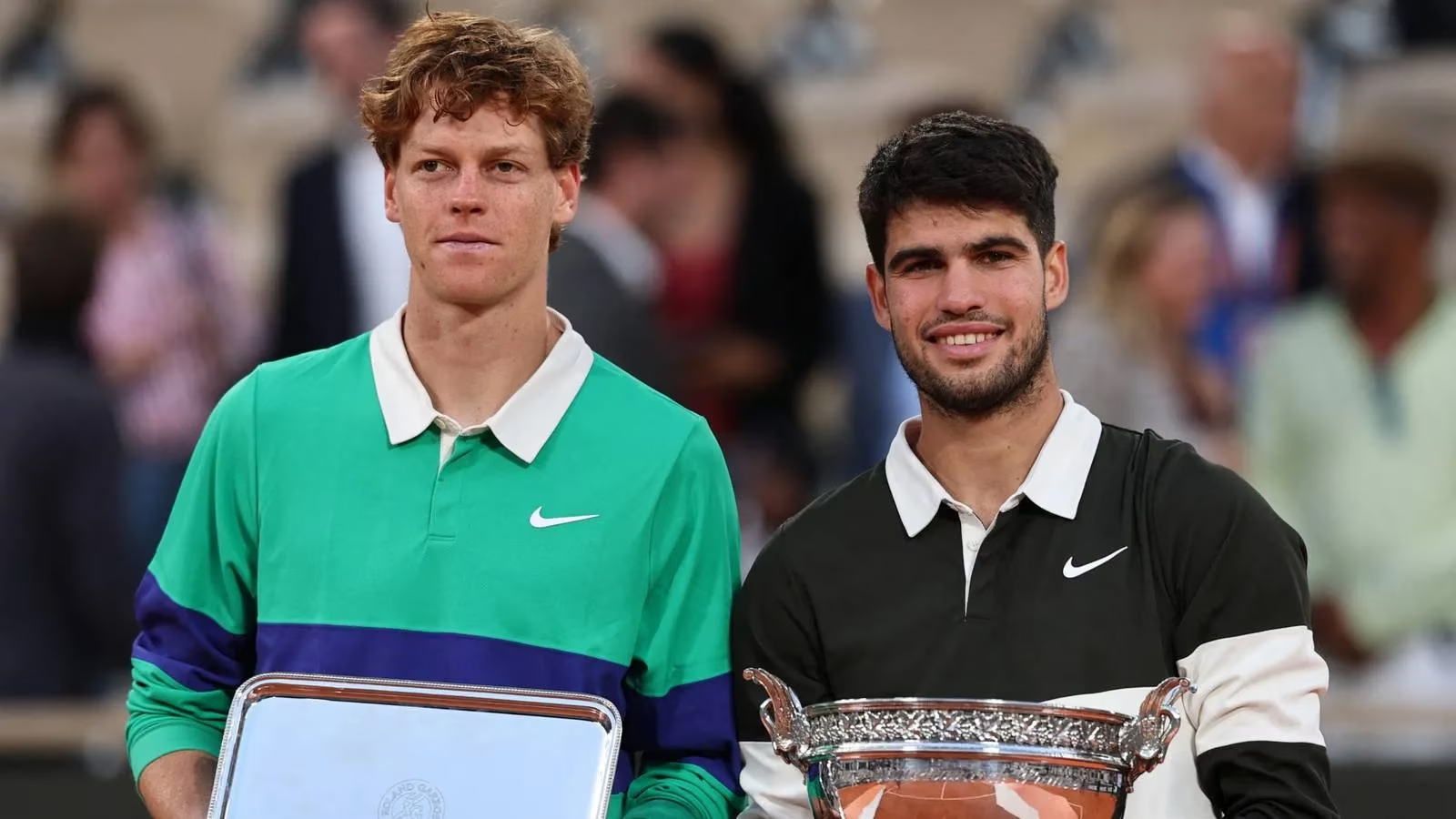
As a gamer, I tend to see matches in phases: opening set, adaptation, momentum swing, final boss. This one had all of it. Sinner took the first set 6-4, capitalizing on a cluster of unforced errors from Alcaraz. The world number one then produced a composed second set and won it via a tiebreaker. At that point, I remember thinking the script was written. Sinner was controlling the rallies, serving with clarity, and looking every bit like the player who had edged Novak Djokovic in the semifinals 6-4, 7-5, 7-6.
But Alcaraz does not read scripts. He broke early in the third set and showed just enough fight to keep himself in the game, then won the set comfortably. It was not yet a comeback — it was a warning. The fourth set is where the final became unforgettable. Sinner broke, moved ahead, and eventually held three championship points. I remember the crowd chanting Alcaraz’s name, and the stadium sound almost felt like a buff in a video game. Alcaraz saved all three, broke back, and won the fourth-set tiebreaker 7-3 to force a decider.
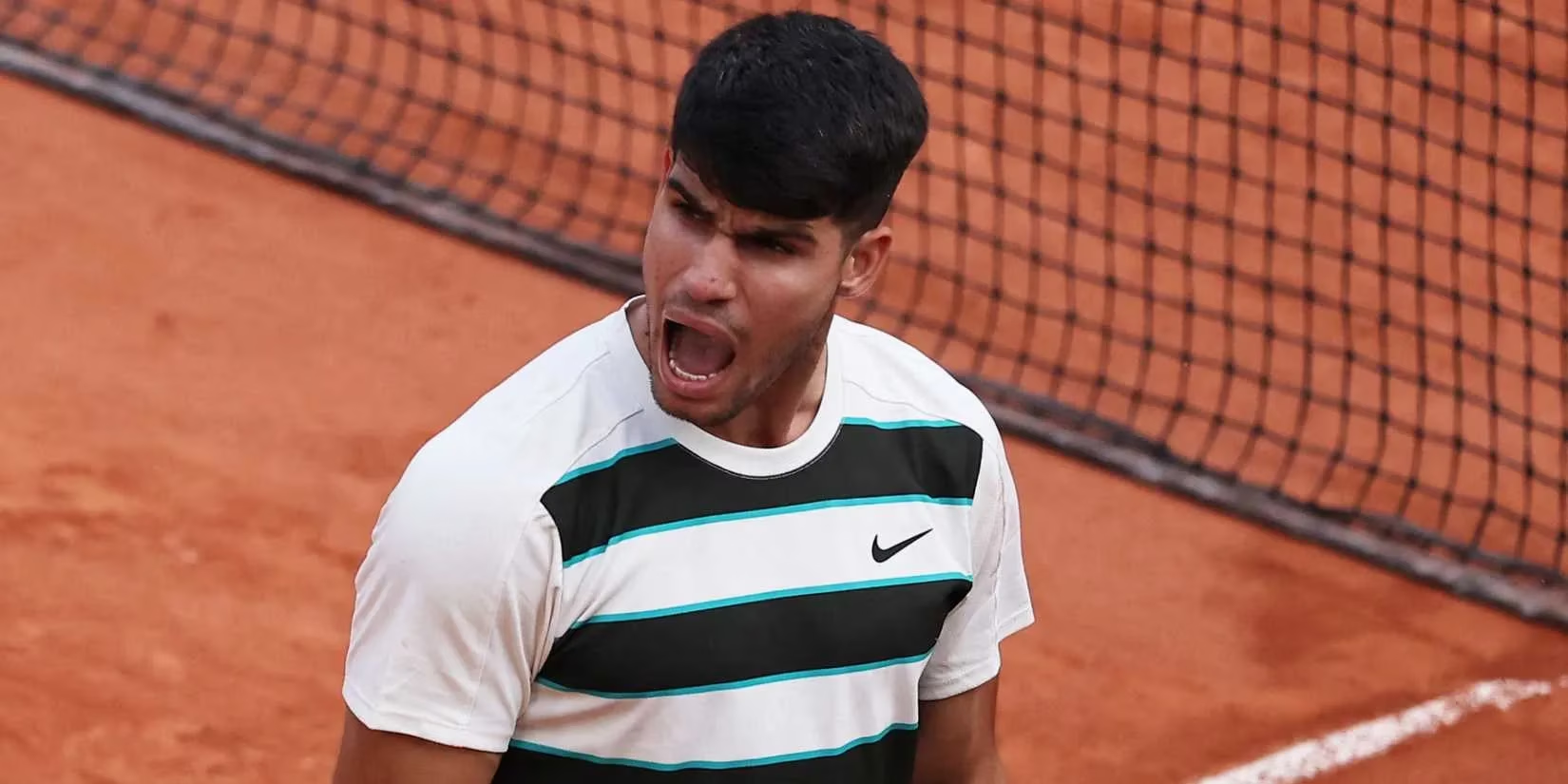
With momentum behind him, the Spaniard opened the fifth set by breaking Sinner with a drop shot. The final went to another tiebreaker, but this time Alcaraz dominated. He went 7-0 up and finished with a wonderful forehand to win 10-2, claiming his second French Open title. It was one of the greatest Grand Slam finals I have ever seen, and I say that as someone who usually prefers clean, controlled dominance. This was chaos, resilience, and shot-making all at once.
The prize-money story added another layer. According to The Independent, Roland Garros prize money rose by 6% that year, with a total payout of £47.3 million (€56.3 million). The men’s and women’s singles winners each received £2.13 million (€2.55 million), while the runners-up received £1.07 million (€1.275 million). So Sinner’s failure to convert those three championship points cost him over £1 million relative to the champion’s cheque. The report also noted that Sinner’s broader 2025 earnings were still substantial, so the missed million was painful but not catastrophic.
| Result | Player(s) | Prize money |
|---|---|---|
| Men’s singles champion | Carlos Alcaraz | £2.13 million / €2.55 million |
| Men’s singles runner-up | Jannik Sinner | £1.07 million / €1.275 million |
| Semifinalists | Jannik Sinner, Novak Djokovic, Lorenzo Musetti | £579,000 / €690,000 |
| Quarterfinalists | Alexander Bublik and others | £369,000 / €440,000 |
| Fourth round | Jack Draper | £222,300 / €265,000 |
The rest of the tournament had its own stories. Sinner’s semifinal win over Djokovic was a statement, while Lorenzo Musetti retired injured in the other semifinal. Alexander Bublik stunned Jack Draper 5-7, 6-3, 6-2, 6-4 to reach his first ever Grand Slam quarterfinal, a moment he described as one of the best of his life. Bublik could not repeat the magic against Sinner in the quarters, but his run was exactly the kind of unpredictable side quest that makes a Grand Slam so addictive.
In comparison, the other majors offered different paydays. Alcaraz took home £2.7 million for winning Wimbledon, Sinner won £2.66 million at the US Open, and the Australian Open sat lower at £1.76 million. Those numbers shift over time, but the contrast was striking when I scribbled them into my notebook during the final. Tennis rewards dominance, but it also punishes the smallest lapse at the biggest moment.
Looking back from 2026, I do not remember the final as just a scoreline. I remember the feeling of watching a three-match-point lead evaporate, the way Philippe Chatrier turned into a wall of noise, and the sight of Alcaraz swinging freely in the fifth-set tiebreaker. As a gamer, I know that a boss health bar at 1% is not safety — it is an invitation for disaster. Sinner learned that on clay, in Paris, with a Grand Slam title and more than £1 million hanging in the balance. Alcaraz learned something else: how to turn three match points against him into a story that will be replayed for years. 🎾🔥
Loading comments...