
I Walked Among Grass Court Gods: My Wimbledon Rankings
It’s 2026, and I’m standing at the edge of Centre Court, the air thick with the scent of freshly cut grass and anticipation. You can almost hear the echoes of titans past—the crisp pop of a volley, the roar after an ace. Fan anticipation is, once again, reaching a fever pitch as we barrel toward Wimbledon’s finals weekend. The grass courts are primed, and everyone’s asking the same question: who truly mastered this sacred, slippery green? I’ve spent countless nights arguing with my mates, re-watching grainy footage, and yes, even asking the AI overlords for their sterile, data-crunching take. But a list of names on a screen isn’t a story. It’s a graveyard of statistics. To really understand greatness, you have to walk in the footsteps of giants, feeling the velvet of the turf under your own feet, knowing that here, style wasn’t just a bonus—it was the price of entry. Let me take you on a journey through the pantheon, from the punishing precision of the serve-and-volley assassins to the one man who turned the lawn into his living room. These aren't just players; they are the spirits who still whisper on the SW19 breeze.
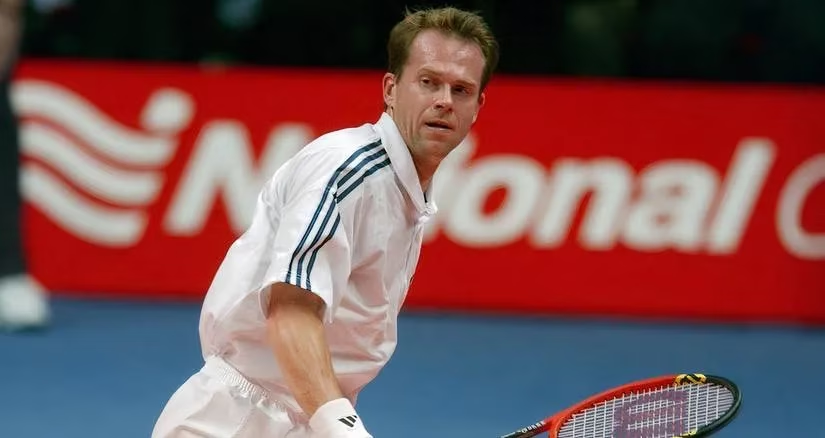
Stefan Edberg: The Silent Artist
My walk begins with a ghost of perfect technique. You hear his footsteps before you see him—light, efficient, almost apologetic. Stefan Edberg’s game was defined by a sublime serve-and-volley artistry that felt less like a tactic and more like a dance. I mean, the guy floated to the net. Winning the title in ’88 and again in 1990, he combined smooth athleticism with an instinctive net game that was just, well, unfair. His rivalry with Boris Becker? That wasn't just a tennis match; it was a stylistic collision that showcased the peak of grass court tennis. Edberg’s efficient movement allowed him to execute volleys with the precision of a surgeon’s scalpel. He didn’t just beat you; he dismantled you with a crisp volley and a quiet nod, perfectly embodying the surface’s demands for quick points and tactical grace.
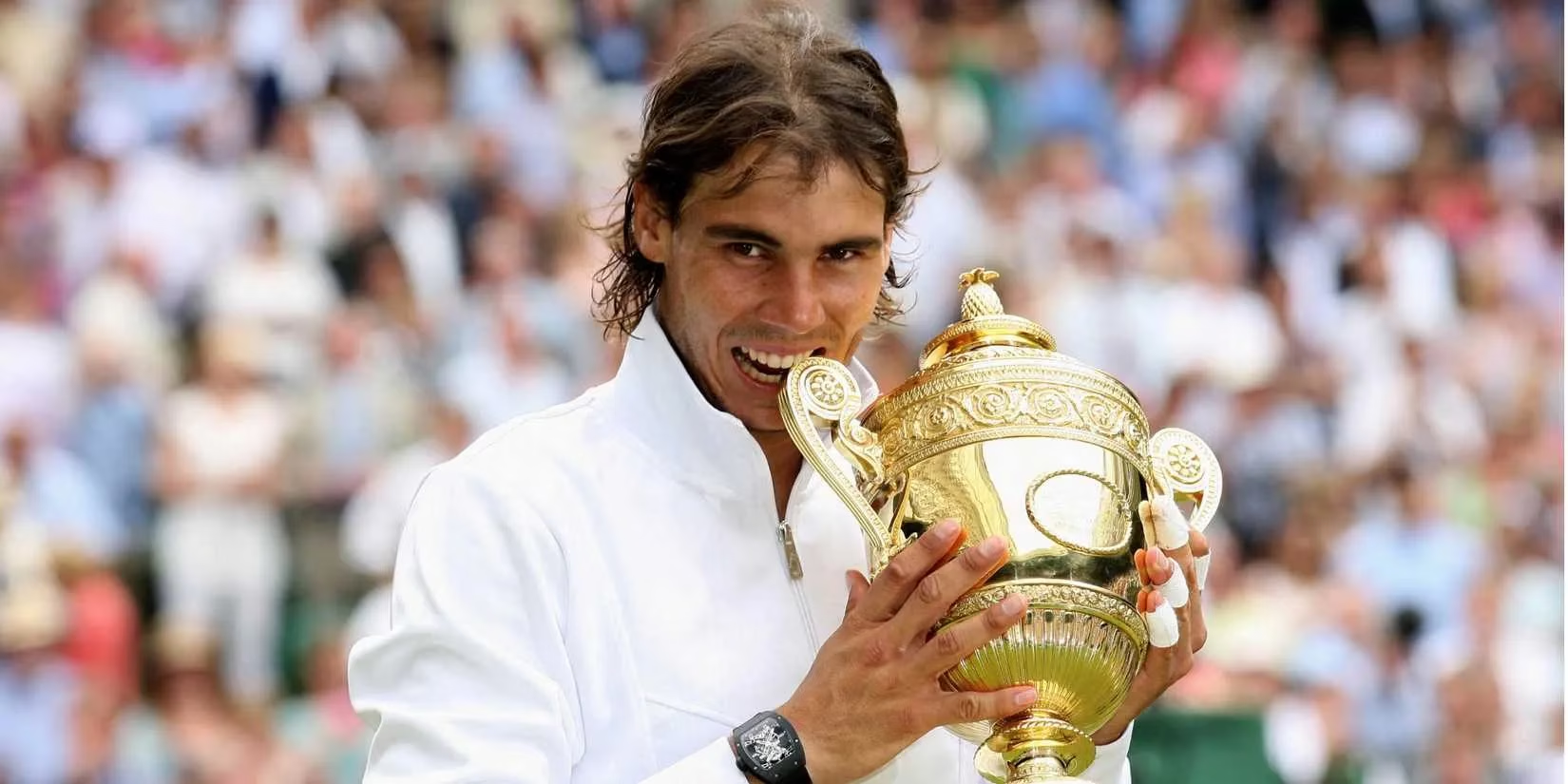
Rafael Nadal: The Conqueror from the Clay
Next, I’m up on my toes, trying to return a topspin forehand that kicks up off the baseline like an angry cobra. You wouldn't think a 'King of Clay' would belong here, yet here stands Rafael Nadal, a testament to sheer will. Adapting to grass wasn't evolution; it was a revolution. Winning in a 2008 final that I still can’t watch without biting my nails to the quick, he blended relentless work ethic with a newly improved serve. He didn't just conquer grass’s challenges; he steamrolled them. That match against Roger Federer? It’s not just a highlight; it’s the very symbol of pushing legends to the very brink of human limits. He taught me that stubbornness is a superpower, especially when you add a slice and a willingness to finish points at the net. His glass ceiling-shattering performances cement him as a giant.
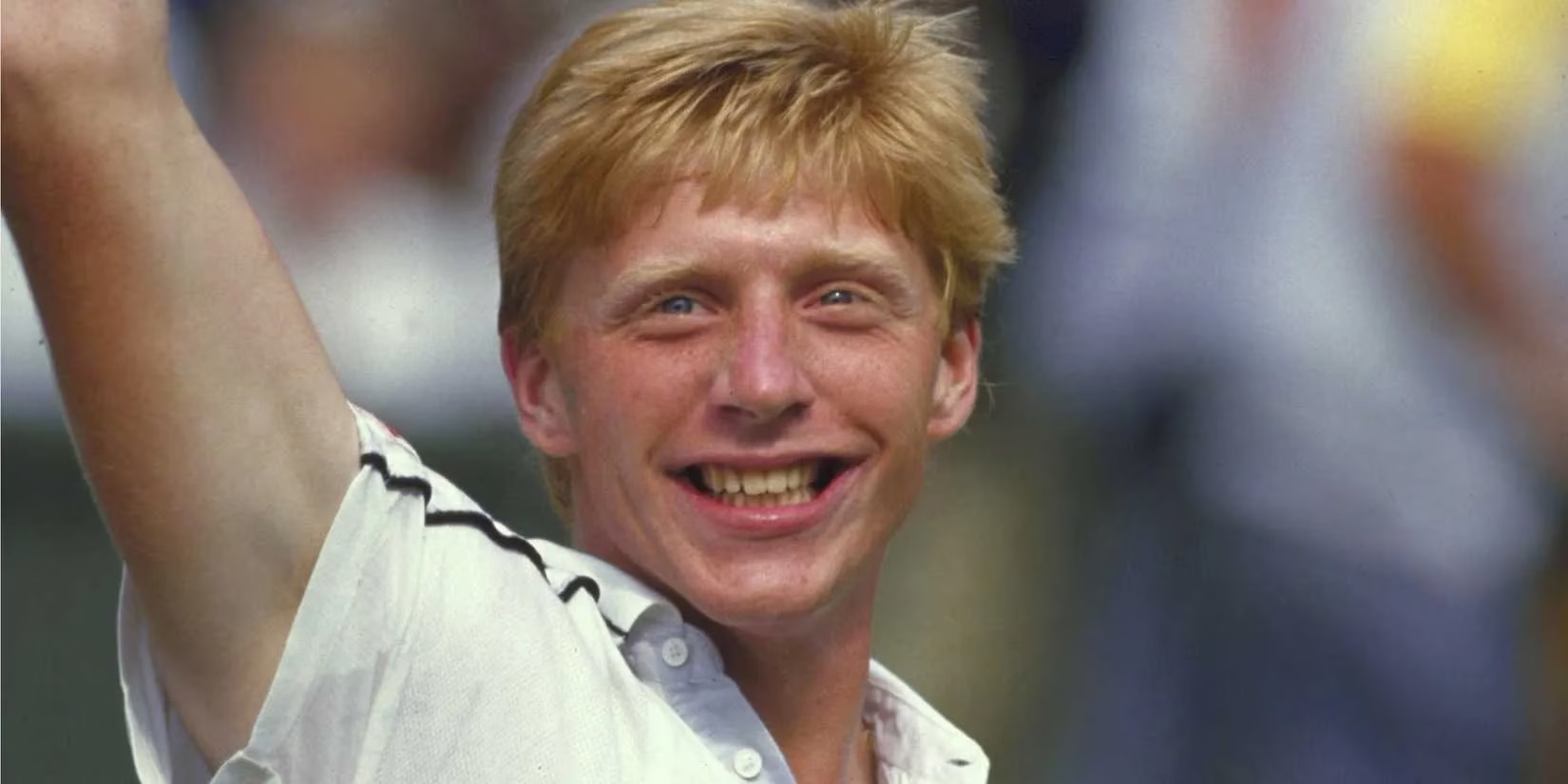
Boris Becker: The Boy Who Became a Boom
The ground literally shakes as I approach the next legend. Boom! Boom! Boris Becker. An unseeded 17-year-old diving across the turf like he’d been shot out of a cannon—that’s the image forever burnt into my retinas from 1985. His aggressive serve-and-volley style was tailor-made for the lawns, a combination of raw power, blistering serves, and fearless net attacks that made him a terror for opponents. You never knew what was coming, and honestly, I don't think he always did either, but his quick reflexes were supernatural. He reached seven finals in eleven years. Seven! That’s not a career; that’s a reign of terror that helped define the entire “serve-and-volley era.” He was the rebel hero of the 1980s, and Centre Court was his mosh pit.
Andy Murray: The Tactical Titan
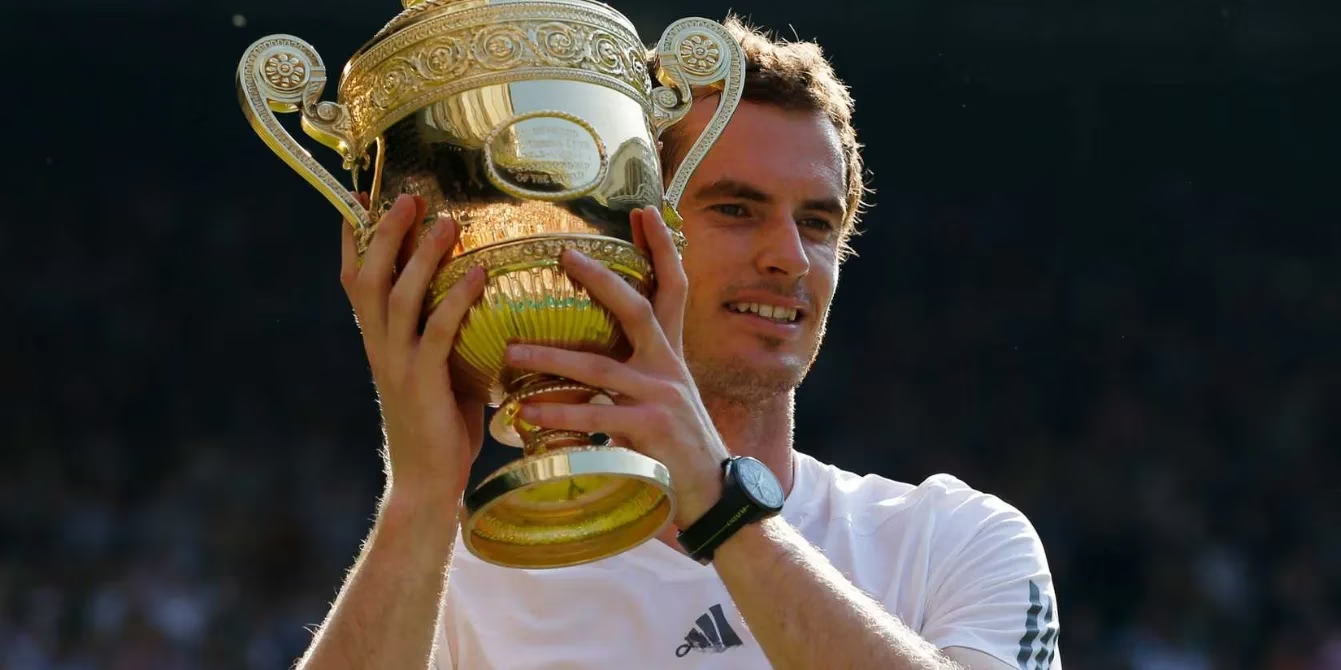
The pressure here is palpable. It’s heavy, damp, and very, very British. Andy Murray carried a 77-year wait on his broad shoulders and he didn't just break it in 2013—he shattered it with a tactical genius that was a marvel to witness. His resilience on grass was built on a return game that could neutralize any big server, a chess match played at 130 miles per hour. Another title in 2016 and a ten-year run of quarterfinals don’t just happen because of a good backhand; they happen because of elite tennis IQ and physicality that made him a genuine threat on a surface most find impossible to master. It’s a heart-stopping, nail-biting, occasionally shouting-at-the-television kind of legacy.
John McEnroe: The Artful Genius
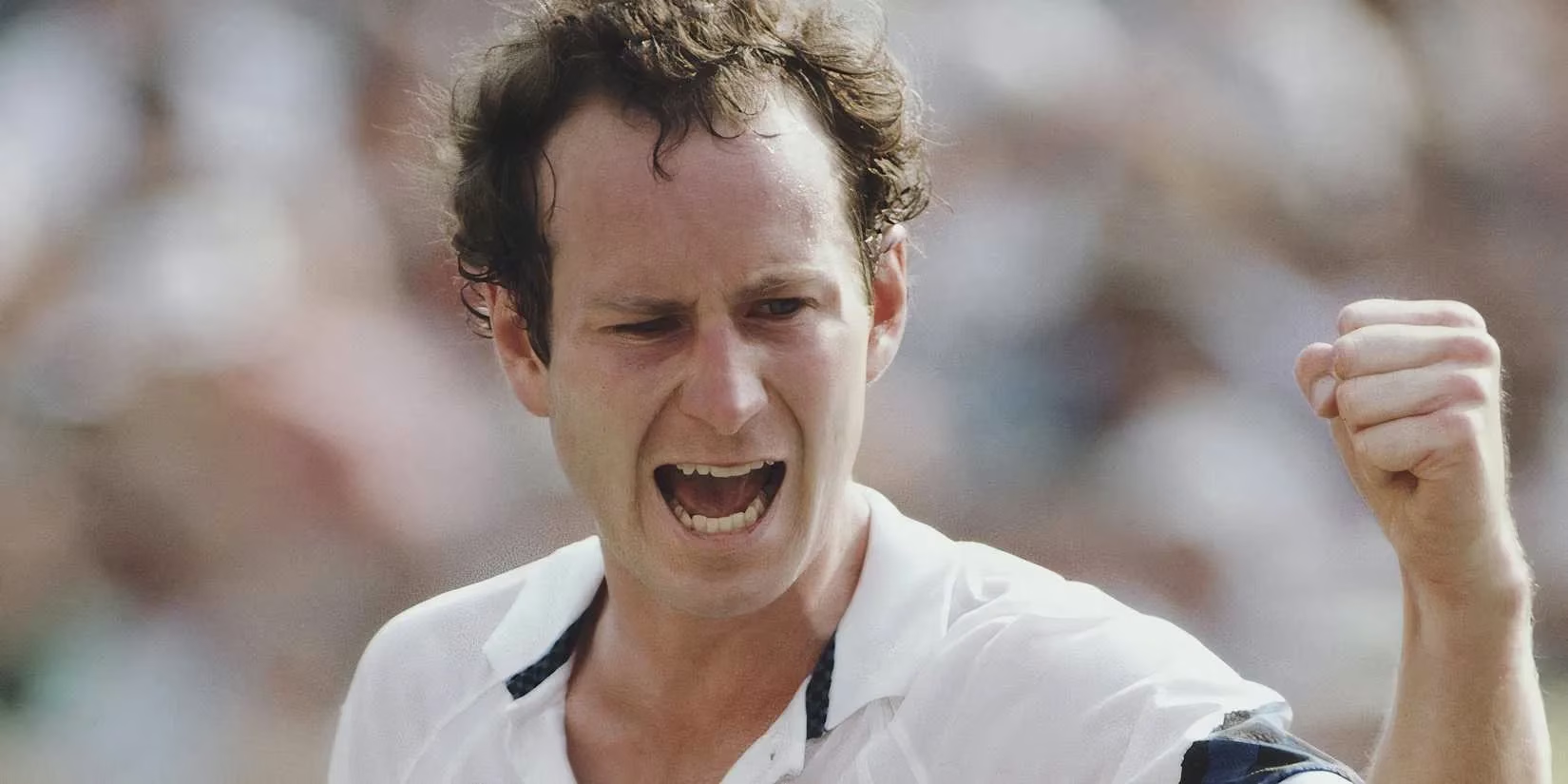
I hold my breath now because I’m about to see perfection and fury. John McEnroe’s touch was... sublime is the only word. A trio of Wimbledon titles, and that mythical 1984 season—42–0—it’s the stuff of legend. His volleying was both graceful and razor-sharp, hands so soft they could catch a bullet and turn it into a butterfly. He was a genius-level madman whose tactical intelligence and fiery competitiveness became a benchmark for grass court success. Nobody has ever blended artistry and aggression with a wooden racquet like McEnroe. It was like watching a jazz musician improvising with a grenade in his pocket—beautiful, unpredictable, and explosive.
Rod Laver: The Rocket Across Eras
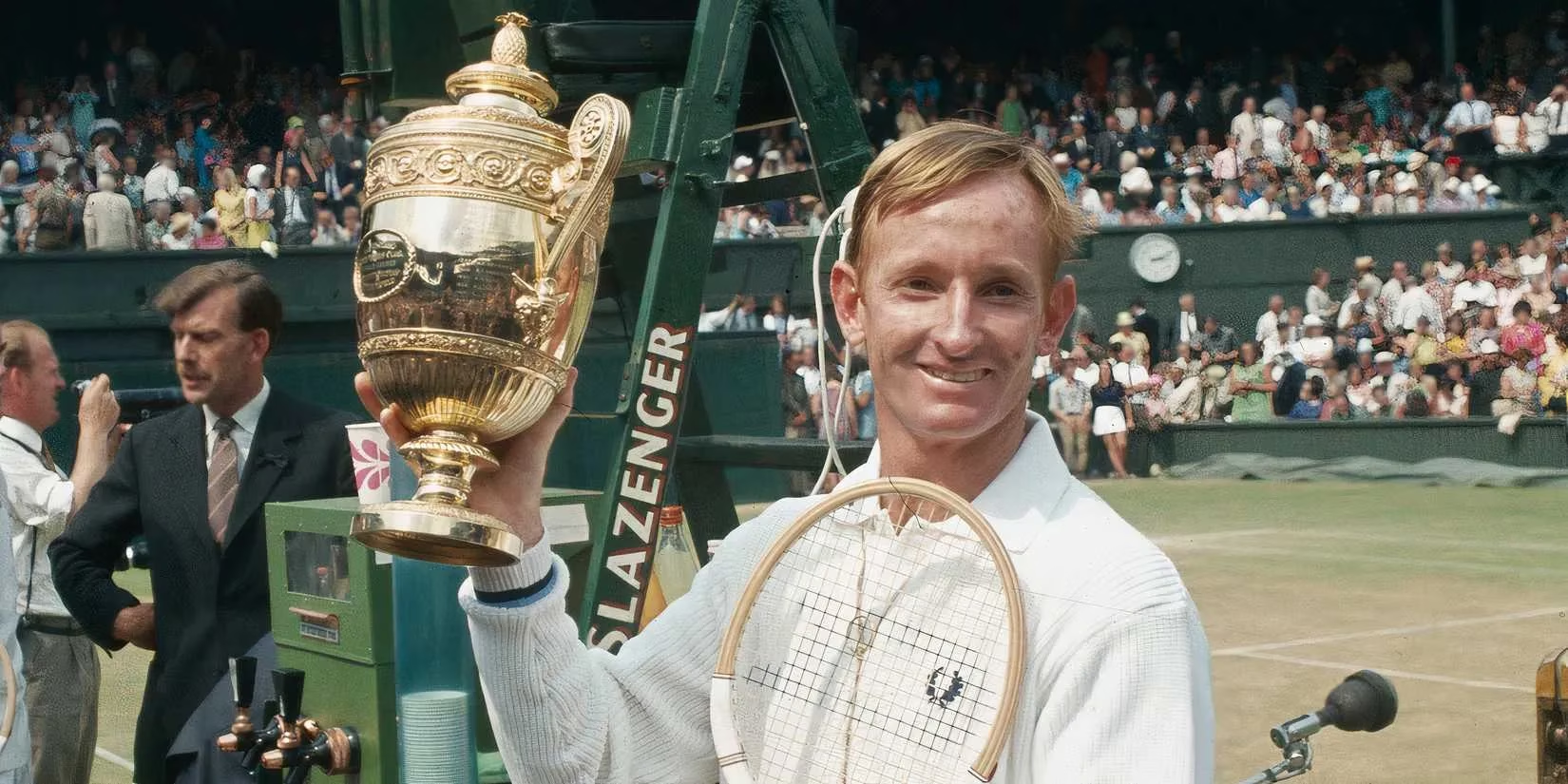
Here, the grass feels older, thicker with history. Rod Laver, 'The Rocket', is a living, breathing bridge between two eras. Four Wimbledon titles and two Calendar Slams featuring grass dominance is a historic achievement that sets him apart. Laver was explosive and versatile, his left arm a powerhouse that could control points with a variety of spin and pace that was decades ahead of its time. He adapted an aggressive baseline game to the quick grass long before it was fashionable, shaping the very foundation of modern tennis. Standing here, you realize his legacy isn't just in a trophy case; it’s in the DNA of every player who’s ever dared to attack a short ball on the run.
Björn Borg: The Ice-Cold Revolution
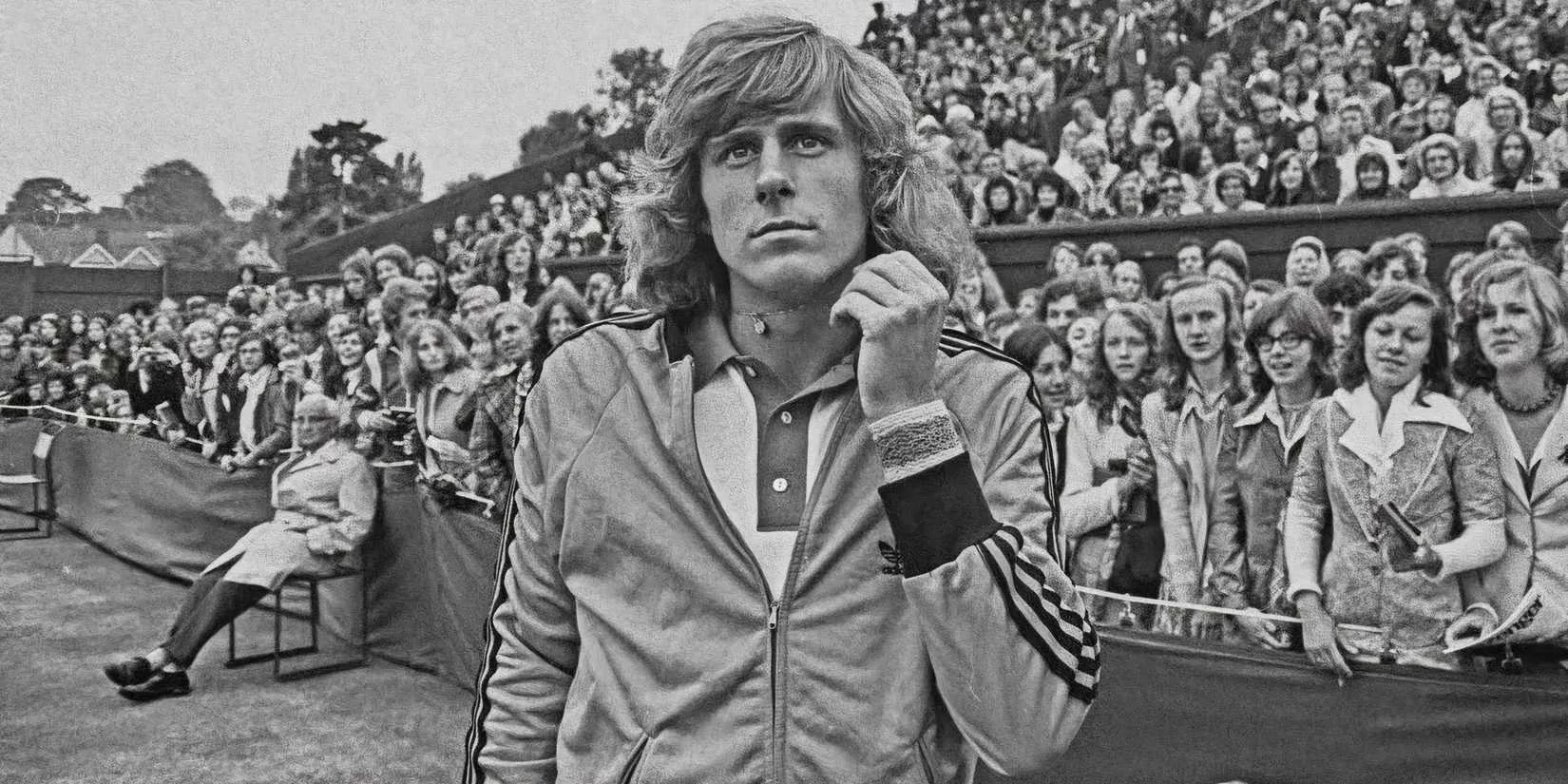
Now I’m watching a baseline rally that never seems to end. Björn Borg revolutionized grass court tennis by making it cool to stay back. Winning five consecutive Wimbledon titles between ’76 and ’80, his calm demeanour and heavy topspin wore down serve-and-volley fanatics on a surface previously seen as unfavourable to baseliners. His 92.7%-win percentage here is a record that howls into the wind. And to retire at just 26? It left a silence over the tennis world. A deep, echoing 'what if?' silence. He was, and remains, one of the most impressive grass-court enigmas, a man who shocked the world not by losing, but by walking away so early.
Novak Djokovic: The Elastic Machine
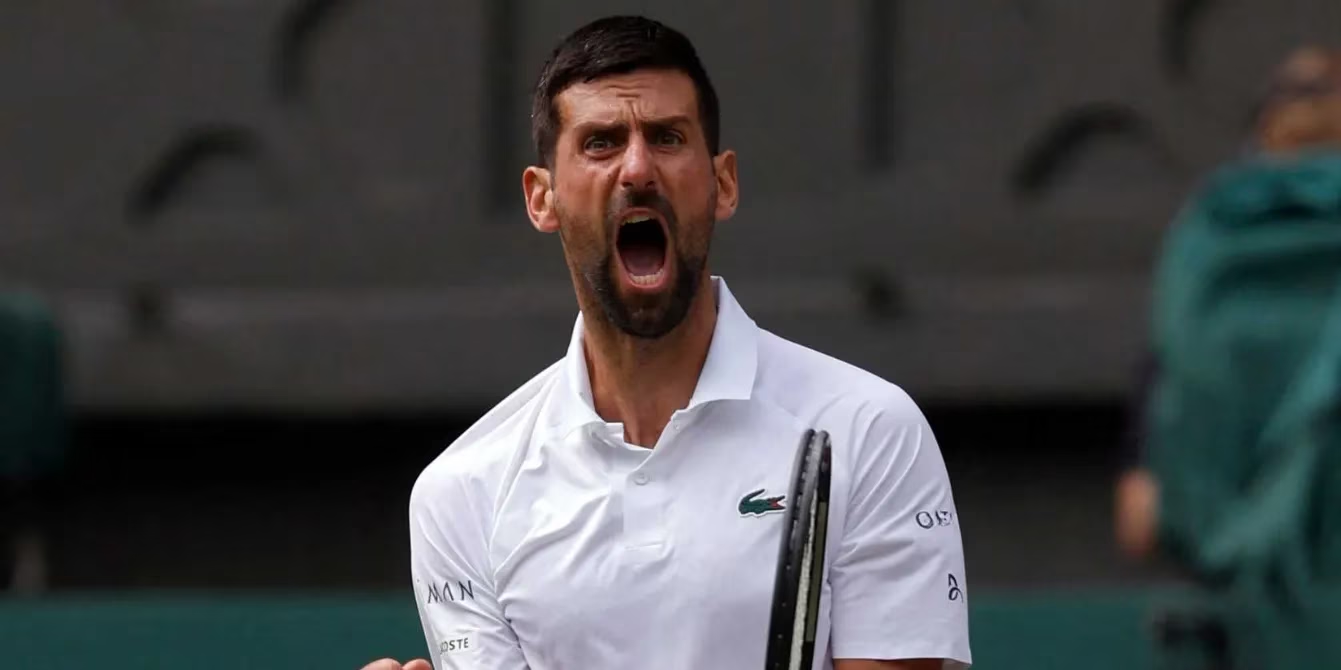
I’m watching a moving wall of elastic muscle and perfect timing. As of 2026, Novak Djokovic is still adding to this insane legacy. Seven Wimbledon titles and that 34-match winning streak spanning 2018-2023, it’s a dynasty built on the supreme return game and flexibility that would make a yoga master weep. He neutralizes the biggest serves and transitions so smoothly from defence to attack that it looks like a video game glitch. Still active at 38, he continues to redefine what it means to dominate grass over a sustained period, adapting brilliantly to the slower, more tactical courts of the modern era. You can’t shake him, you can’t wound him, and honestly, you can barely even surprise him.
Pete Sampras: The Pistol’s Reign
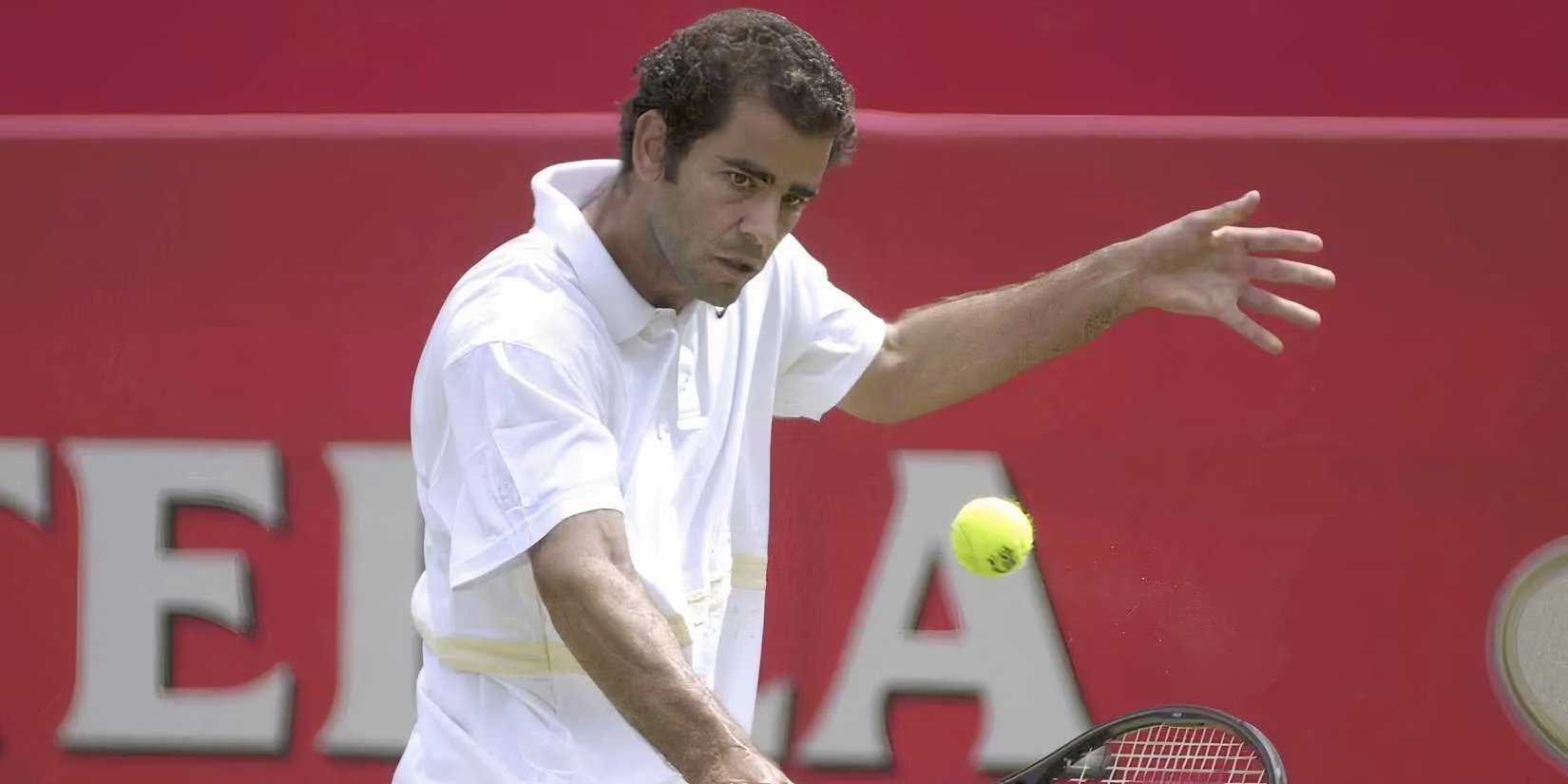
The air whistles now, sliced by the serving arm of a deity. Pete Sampras defined 1990s dominance with seven Wimbledon titles in eight years, accounting for more than half his Grand Slam haul. His big serve, attacking mindset, and eyes that only got narrower in the clutch moments were overwhelming. A 63–7 record on the lawns… that’s just showing off. His serve-and-volley game didn't just win points; it made opponents feel like they were playing a different sport, one where they were permanently on the back foot. His fluid motion, especially that signature leaping overhead smash, established a high standard for success and echoes in the mechanics of many of today’s best players.
Roger Federer: The Ballet of Sunlight
☝️ And finally, I arrive at the throne. Of course, you know who it is. Roger Federer. The undisputed king of Wimbledon with a record eight titles and twelve finals appearances. This isn’t just a sport anymore; it’s high art. His flawless technique and graceful footwork made Centre Court his personal stage, a place where aggression was elegant and the impossible was a Tuesday afternoon. With an incisive serve, pinpoint accuracy, and a genius-level of anticipation, he turned chaos into choreography.
🎾 His career grass record of 192–29 is the highest win total ever on the surface. No one blended artistry and efficiency quite like him. More than just a champion, Federer became synonymous with Wimbledon itself, redefining greatness on grass and inspiring generations with his unmatched poise, longevity, and sporting elegance. His legacy is the air that the All-England Club breathes. It’s velvet and violence, and as I stand here, the sun dipping low over a hushed Centre Court, I know in my bones—his legacy at SW19 may never be equalled.
Quick Summary: The Grass Court Pantheon
| Rank | Player | Wimbledon Titles | The Defining Trait |
|---|---|---|---|
| 10 | Stefan Edberg | 2 (1988, 1990) | Sublime Serve-and-Volley Artistry |
| 9 | Rafael Nadal | 2 (2008, 2010) | Clay-King Conquest of Grass |
| 8 | Boris Becker | 3 | The 17-year-old Boom |
| 7 | Andy Murray | 2 (2013, 2016) | Shouldering a Nation's Dream |
| 6 | John McEnroe | 3 | Genius-Level Touch & Fury |
| 5 | Rod Laver | 4 | The Two-Era Rocket |
| 4 | Björn Borg | 5 | The Ice-Cold Basement Revolution |
| 3 | Novak Djokovic | 7+ (Still Active) | The Unbreakable Elastic Wall |
| 2 | Pete Sampras | 7 | The Pistol's Clutch Dominance |
| 1 🥇 | Roger Federer | 8 | The Undisputed King of the Lawn |
Loading comments...