
Ian Rush Reveals His Most Hated Stadium: The Unforgiving Plough Lane
In the pantheon of Liverpool legends, Ian Rush stands as a colossus, a striker whose name is woven into the very fabric of the club's folklore. With a phenomenal 339 goals in 654 appearances, the Welshman was the sharpened tip of the spear for one of Europe's most dominant sides in the 1980s, firing the Reds to five First Division titles, two European Cups, and three FA Cups. His legacy is one of cold, clinical finishing and relentless success. Yet, even for a player of his caliber, certain arenas posed a unique and formidable challenge. In a recent reflection on his storied career, Rush singled out one particular British ground that stood out not for its grandeur, but for its sheer, unadulterated hostility—a place where football felt less like a sport and more like a trial by combat.
⚽ The Anfield Hero's Favourite Hunting Grounds
Before delving into the cauldron he dreaded, Rush first paid homage to the stages he loved. Beyond the sacred turf of Anfield, two venues held a special place in his heart:
-
Wembley Stadium (Old): The theatre of dreams for any English footballer, especially for cup finals.
-
Goodison Park: The home of Everton, Liverpool's fierce local rivals. For Rush, the intensity of the Merseyside Derby made it an electrifying place to perform, a true test of nerve and skill.
These were arenas that amplified his talents, where the roar of the crowd fueled his predatory instincts. But for every stage that elevates a player, there is one that seeks to diminish them.
🏚️ The Unforgiving Fortress: Plough Lane
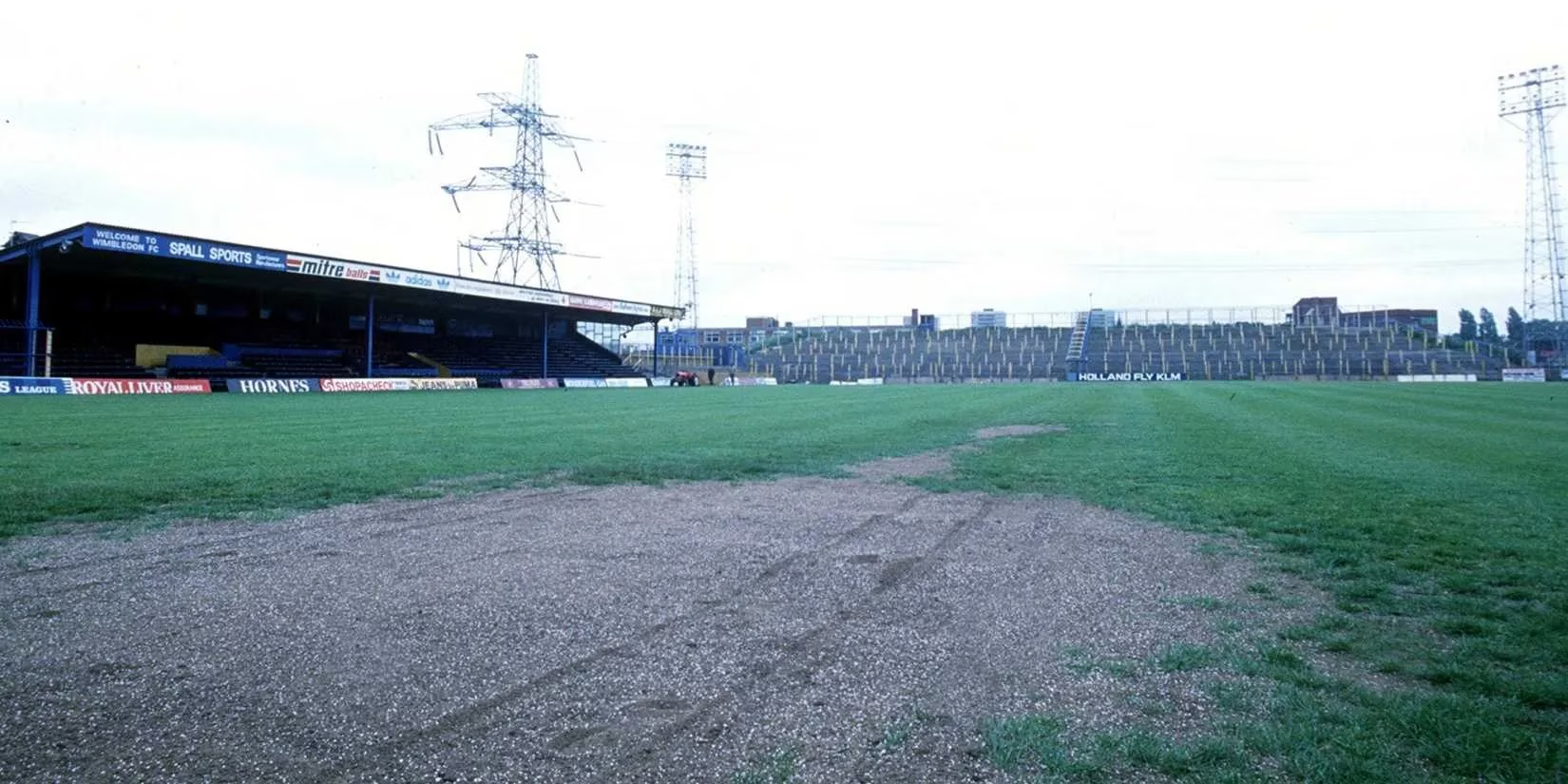
Rush was quick to clarify that he didn't have a 'least favourite' stadium in the traditional sense. He had played in far more modest grounds during his early days at Chester. However, when pressed on the most challenging environment he ever faced, his answer was unequivocal: Wimbledon FC's old Plough Lane.
Opened in 1912, this 16,000-capacity ground was, in Rush's memory, less a football stadium and more like a cramped, pressure cooker where the walls seemed to breathe hostility. The stands were built agonizingly close to the pitch, a design quirk that turned every visiting player into a protagonist in a very intimate, very aggressive drama. The attending Wimbledon supporters weren't just spectators; they were a baying, vocal extension of the team on the pitch, close enough to smell the liniment and hear every muttered curse.
👹 Confronting the 'Crazy Gang'
The atmosphere was only half the battle. The real challenge wore Wimbledon's blue and yellow. By 1986, Wimbledon had muscled their way into the First Division, bringing with them their infamous 'Crazy Gang'—a squad personified by the likes of Vinnie Jones, Denis Wise, and John Fashanu. Their philosophy was a form of footballing guerrilla warfare, a brutal, physical style designed to disrupt, intimidate, and conquer technically superior opponents.
For a graceful finisher like Rush, playing at Plough Lane was like trying to perform ballet in a broom closet during a earthquake. Every touch was harried, every run was challenged with uncompromising force. The legendary England striker Gary Lineker once quipped that "the best way to watch Wimbledon is on Ceefax," a nod to the text-based TV service—a humorous admission that witnessing their abrasive style from a safe, digital distance was preferable to experiencing it firsthand.
The pinnacle of Wimbledon's defiance came in the 1988 FA Cup Final, where they famously toppled the mighty Liverpool. Rush, then on a brief sojourn at Juventus, missed that seismic upset. He returned to Liverpool that summer and faced the Plough Lane gauntlet three more times before Wimbledon's departure in 1991, each visit a stark reminder of football's unpredictable, rugged heart.
🏗️ The End of an Era and a Phoenix from the Ashes
The fate of Plough Lane was sealed by tragedy and regulation. The Taylor Report, published after the Hillsborough disaster, mandated all-seater stadiums for top-flight clubs. Plough Lane, a standing-terrace relic, required massive redevelopment. Financial constraints made it impossible, and the club began a long groundshare with Crystal Palace at Selhurst Park.
The stadium's story took a dramatic turn. When Wimbledon FC announced plans to relocate to Milton Keynes, furious supporters performed one of the most remarkable acts of fan rebellion in sports history: they founded their own club, AFC Wimbledon. The old Plough Lane was sold, nearly turned into a supermarket, and finally demolished in 2002.
But the spirit of the place refused to die. In a poetic full circle, AFC Wimbledon's new, modern stadium now stands on the hallowed site of the old ground, opening its doors in 2020. The intimidating, cramped fortress of Rush's memories is gone, replaced by a symbol of community and fan ownership. Yet, the legend of what it was—a gladiatorial pit that could unnerve even the greatest goalscorers of his generation—lives on in the recollections of icons like Ian Rush. It serves as a timeless reminder that in football, sometimes the most enduring memories are forged not in cathedral-like stadiums, but in the gritty, unforgiving coliseums where the game is stripped down to its rawest elements.
Loading comments...