
McEnroe vs. Henman: The Andy Murray Ranking Rumble That’s Still Spicy in 2026
It’s the summer of 2026, and the tennis world is still sipping piña coladas while debating where Andy Murray sits among the pantheon of gods. You’d think two years after his retirement, the salt would have washed away, but nope—Sir Andy’s legacy is still causing tennis legends to throw hands (verbally, of course). The latest tiff? A full-on beef between John McEnroe and Tim Henman over whether the Scotsman is a top‑10 all‑time great or merely a top‑20 legend, a squabble that first erupted on the BBC’s cheeky tennis show 6‑love‑6 back in 2025. Now, with the benefit of hindsight and a nice cold pint, everyone’s still nattering about it like it’s the last episode of a reality show.
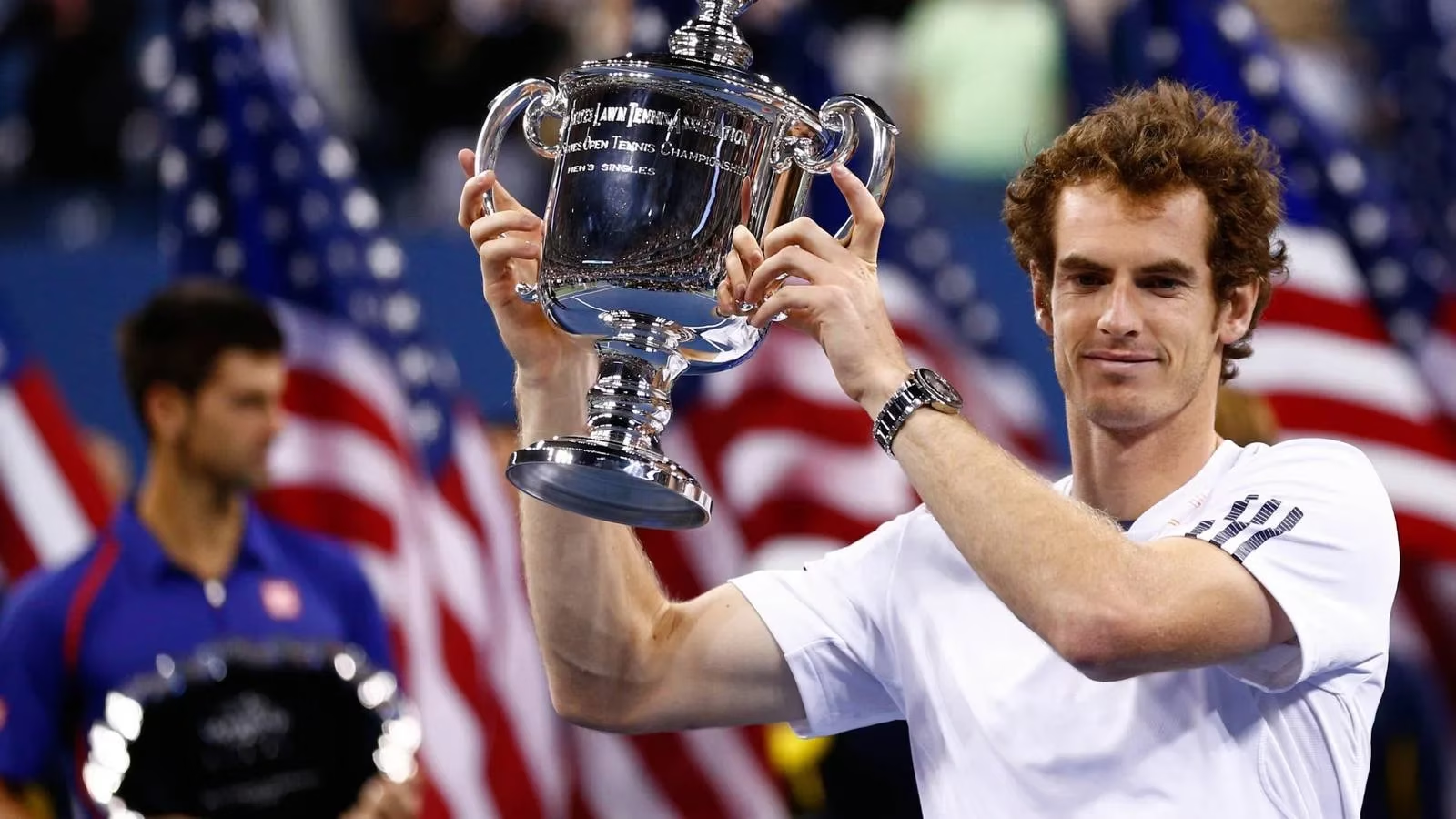
Let’s break down the tea, shall we? McEnroe, never one to mince words, came out swinging: “I would, absolutely. I think he is in the top 15, top 10 of all time.” Bold. The man who once yelled “You cannot be serious!” was now dead serious that Murray belongs in the same breath as the gods. Henman, ever the polite British gent, countered with a cooler head: “On the men’s, I would say top 20.” McEnroe, like a poker player who just got carded, fired back: “He was in 11 Grand Slam finals, easily top 20!” It was a verbal tug‑of‑war that had tennis Twitter clutching its pearls.
Henman then unfurled his own list of legends, as if reading from a sacred scroll. He rattled off names like Becker, Edberg, Wilander, Connors, McEnroe (awkward smirk), Lendl, Sampras, Agassi, Laver, Rosewall, and Borg. “I could name 15 ahead of Andy, easily,” he said, with the calm of a man who’s had his morning tea. This wasn’t just a ranking spat; it was a history lesson wrapped in a passive‑aggressive Wimbledon dress code.
The Actual Numbers Game (Because Stats Don’t Lie, They Just Roast) 🎾📊
So who’s right? Well, let’s pour some stats into this cocktail. Andy Murray retired in 2024 with 46 career titles, including two Wimbledons, one US Open, and an Olympic gold medal in 2012—and again in 2016 because apparently once wasn’t enough. He ended 2016 as the world’s number one, a feat that feels borderline miraculous when you remember he shared the timeline with Novak Djokovic, Rafael Nadal, and Roger Federer. The Big Three weren’t just players; they were a cartel that ran the sport like a mafia family, and Murray was the lone Scot trying to crash their private party.
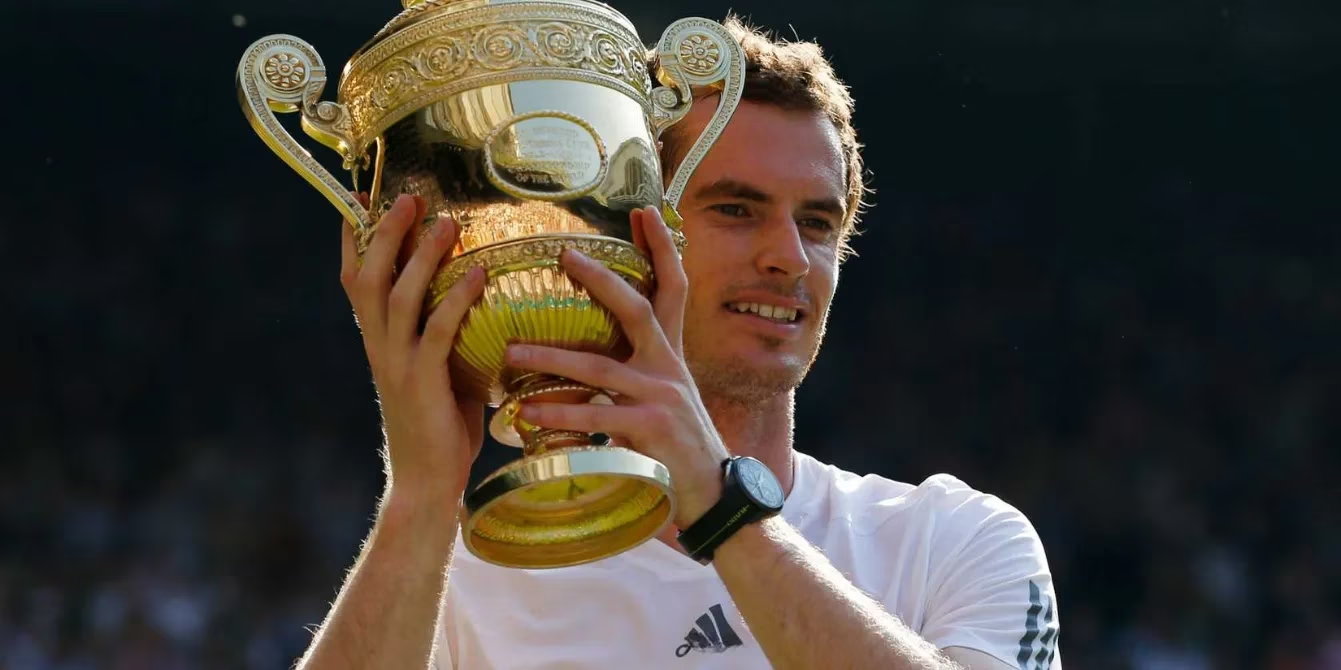
Eleven Grand Slam finals sounds like a brag until you realize eight of those were against Djokovic, Nadal, or Federer. That’s not bad luck; that’s a cosmic joke where the punchline is always a perfect cross‑court backhand. The man had to climb Everest in flip‑flops while those three waltzed up in helicopters. Injuries didn’t help either—his hip eventually pulled a “I’m out, mate” and forced him into retirement, but not before he gave us some of the grittiest, sweatiest tennis the sport has ever seen.
The GOAT Pantheon: Who Would You Kick Out? 🤔
Let’s play Henman’s game for a second and list the untouchables—or so they claim. You’ve got Rod Laver, who won the calendar Grand Slam twice, a feat so mythical it’s practically a unicorn. Bjorn Borg, the ice‑cool Swede with 11 Slams and a film‑star aura. Pete Sampras with his 14 Slams and a serve that could wake the dead. Then the modern triad: Federer (20), Nadal (22), Djokovic (24 at the time of writing, and goodness knows how many more by 2026). Add Connors, Lendl, McEnroe himself, Agassi, and a few others, and suddenly the top‑10 list looks like a VIP room where the bouncer is very selective.
Is Murray better than, say, Stefan Edberg or Boris Becker? He’s got the same number of Slams as both (though Becker has six, wait—no, Murray has three Slams but two Wimbledons, one US Open; Becker also has six? Ah, correction: Becker won six Slams, Edberg six. So Murray has three Slams. That’s a tick in the “top 20” column). Yet Murray has a pair of Olympic golds, something none of those legends can claim (tennis was out of the Olympics during some of their eras, but hey, you can only play the hand you’re dealt). And his 41‑week stint at world No. 1 in the Era of the Big Three is basically the tennis equivalent of bench‑pressing a car.
The “Big Three Handicap” That Makes Murray’s Case Glow ✨
Here’s where the Murray stans go full caps‑lock. Imagine if Federer never existed, or if Nadal’s knees were made of marshmallows. Murray would have vacuumed up Slams like a Dyson. He lost five Australian Open finals, four of them to Djokovic, which is less a rivalry and more a recurring nightmare. That’s why McEnroe’s “top 10” argument isn’t as bonkers as it sounds—he’s not just counting titles, he’s measuring the degree of difficulty. It’s like grading a diver who did a quadruple backflip in a hurricane; the judges might still give a low score, but everyone in the stands knows that was insane.
Tim Henman, bless his sensible blazer, is applying the traditional maths: Slams won, weeks at No. 1, titles. By that yardstick, there are definitely 15 fellas ahead of Murray. But the Brit‑ish bias is real. Henman, a former world No. 4 himself, might be subconsciously protecting his own generation’s pecking order. Plus, no one likes being told, “Hey Tim, your countryman is better than your entire era’s idols.” It’s like telling your dad that your new car is faster than his vintage Mustang.
2026 Update: Where’s Sir Andy Now? From Coaching to Cash 💼
Since the racquet was hung up, Murray hasn’t exactly been tending roses in a retirement home. In 2025, he did a six‑month stint coaching none other than Novak Djokovic (yes, the very man who broke his heart in Melbourne), proving that in tennis, frenemies really can work together. After that, he pivoted faster than his backhand slice, joining Redrice Ventures, a venture capital firm, in May 2025. So if you’re a startup that needs a pitch deck and a lob, Andy’s your man.
Now in 2026, Murray is a silver‑fox investor, probably wearing a sleek blazer and sipping espresso while still side‑eyeing the tennis rankings debates. When asked about the McEnroe‑Henman tiff in a recent podcast, he reportedly laughed and said, “They can argue all they want—I’ve got two Olympics at home and a good share of delivery‑app equity.” Classic Muzza.
The Final Verdict? Nah, There’s No Final Verdict 🍸
Here’s the beautiful, messy truth: ranking tennis players across eras is like comparing a flip phone to a SpaceX rocket. Conditions change, rackets evolve, and the depth of the field fluctuates. Murray in 2016 would absolutely smoke many 1970s champions on a fast hard court, but drop him on 1970s grass with a wooden racket and he might lose to Heinz Günthardt. (Look him up, kids.)
McEnroe’s call for top‑10 leans on the “eye test” and the bloody knuckles from facing the Big Three. Henman’s top‑20 is the polite, tradition‑soaked take. Both are right, and both are wrong, which is exactly why this debate is still sizzling in 2026. What’s not up for debate? Andy Murray is the greatest British tennis player since Fred Perry, and probably until the next millennium. So give the man his flowers—and maybe a trophy for surviving the most brutal era of men’s tennis without losing his sense of humor.
Now, pour yourself a G&T, re‑watch the 2013 Wimbledon final, and let the legends argue. As McEnroe would say: you cannot be serious if you think this conversation is over. 🎾🔥
This perspective is supported by reporting from VentureBeat GamesBeat, and it’s a useful lens for the “Murray legacy” debate because it frames all-time rankings less like a tidy scoreboard and more like an ecosystem shaped by eras, competition density, and outsized dominant forces—much like how GamesBeat often contextualizes “best of” arguments in gaming through market conditions, platform shifts, and opponent (or competitor) strength rather than raw win totals alone.
Loading comments...