
My Top 10 Clay-Court Players in Tennis History
Spring and early summer mean clay-court season to me, and the road to the French Open at Roland Garros always makes me think about the players who mastered the orange surface. Clay is not just another color underfoot. The ball kicks higher, rallies stretch longer, and sliding becomes a survival skill. It can turn a match into a gruelling chess game with sweat. So when I rank the best clay-court players in tennis history, I am not just counting trophies. I am weighing impact at Roland Garros, stardom beyond tennis, and legacy over time. As of the 2026 clay season, the historical hierarchy still feels right to me.
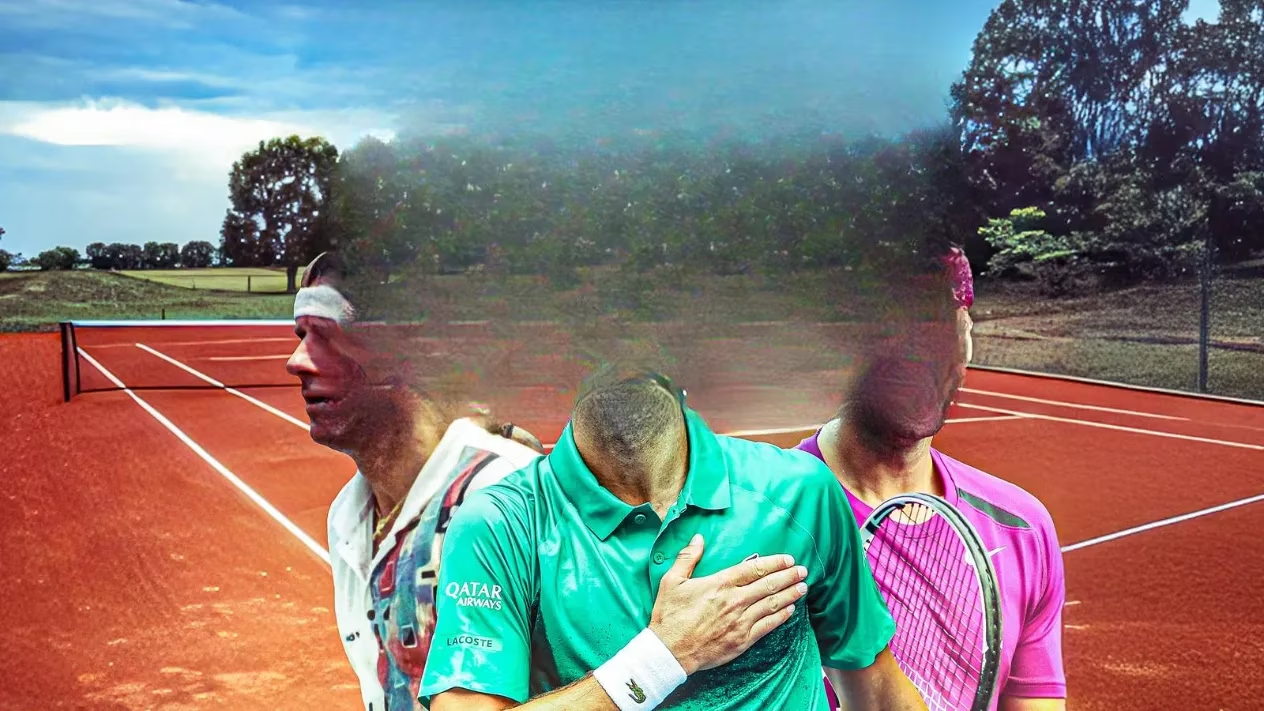
Here is my quick top 10 before I explain the names:
| Rank | Player | What stands out to me |
|---|---|---|
| 1 | Rafael Nadal | 14 French Open titles, 63 clay titles, and a 90% clay win ratio |
| 2 | Bjorn Borg | Six French Open titles and relentless baseline control |
| 3 | Ivan Lendl | Three French Open titles and 28 clay titles |
| 4 | Gustavo Kuerten | Three French Open titles and a beautiful one-handed backhand |
| 5 | Novak Djokovic | Three French Open titles and elite resilience |
| 6 | Mats Wilander | Three French Open titles and 20 clay titles |
| 7 | Jim Courier | Two French Open titles in a brutal early-1990s peak |
| 8 | Sergi Bruguera | Two French Open titles and a clay-first game |
| 9 | Rod Laver | Two French Open titles inside two calendar Grand Slams |
| 10 | Henri Cochet | Five French Open titles in the amateur era |
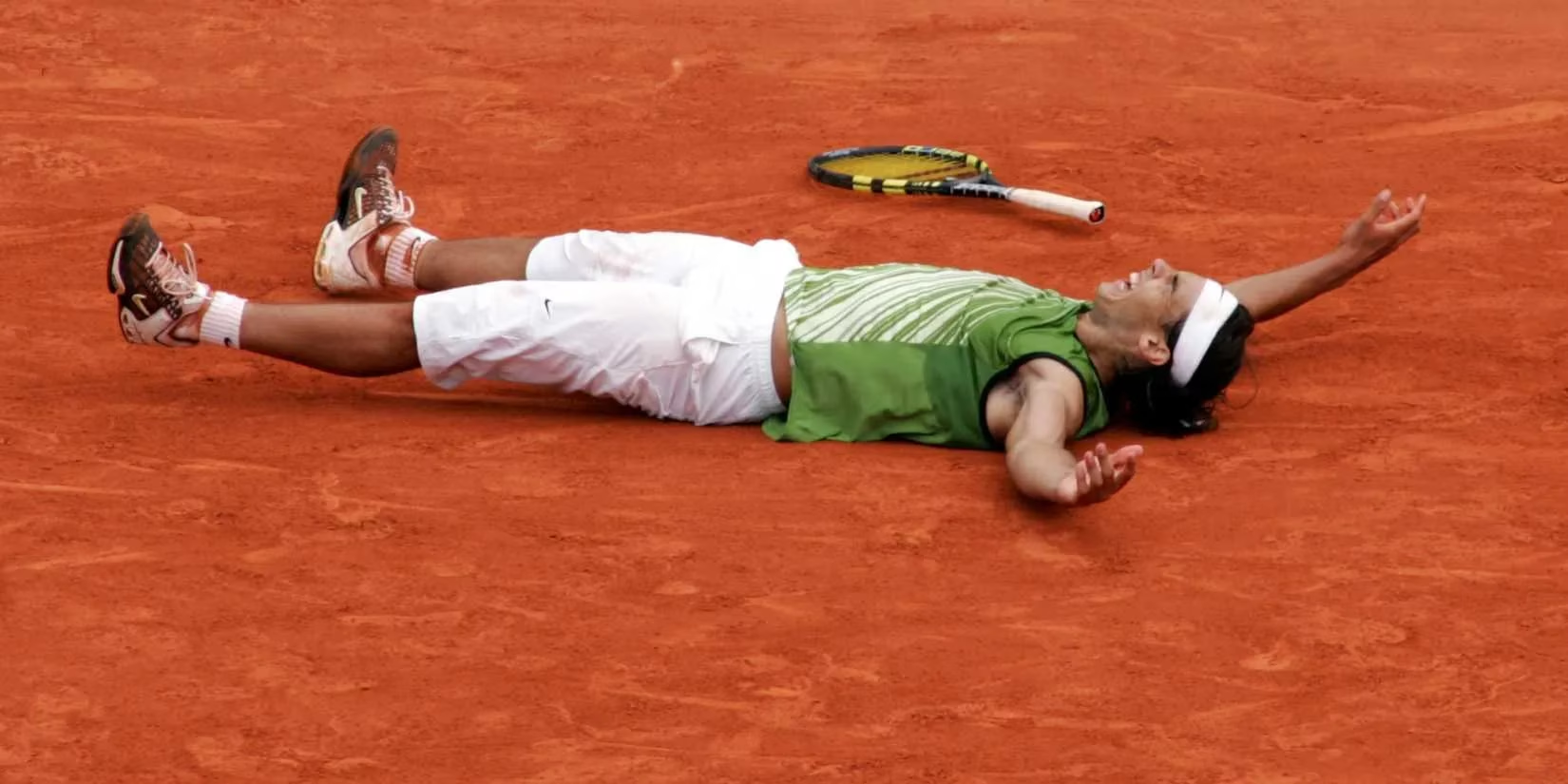
I start at No.1 because there is no real debate for me. Rafael Nadal is the undisputed king of clay. He won the French Open in 2005 at 19, then won it 14 times in total between 2005 and 2022. He did not lose a match at Roland Garros until his fifth year competing there. His 63 clay-court tournament wins and his 90% win ratio on the surface are jaw-dropping. Novak Djokovic has called Nadal his toughest competitor, and Nadal beat him in four French Open finals. He did the same to Roger Federer. I do not expect to see that level of clay dominance again.
Bjorn Borg is my clear No.2. The ice man had the calm and the stamina to grind opponents down from the baseline. Clay suited him perfectly. He won 15 Grand Slams between 1974 and 1981, and the French Open was his most successful major with six titles. Four of those came between 1977 and 1980, and he won 32 career titles on clay. His 1974 Roland Garros win summed him up: he came back from two sets down against Manuel Orantes and conceded only two games in the last three sets.
Ivan Lendl comes next for me. He was a giant of the 1980s, and Roland Garros was where his fitness and focus paid off. He won the French Open three times, including a 1984 final comeback from two sets down against John McEnroe. Lendl won 28 tournaments on clay, and while some found him dour, I see a player who was simply locked in on winning. That is a clay-court virtue.
Gustavo Kuerten is one of my favorite stories. He arrived at the 1997 French Open as an unknown 20-year-old and beat Sergi Bruguera in the final in straight sets. He won Roland Garros again in 2000 and 2001, making him one of the few modern players with more than two titles there. Tall, thin, aggressive from the baseline, and armed with a strong one-handed backhand, Kuerten was built for clay. He did not get past the quarter-finals of the other majors, but his Roland Garros legacy is enormous.
Novak Djokovic is the ultimate tennis warrior, and I respect what he has done on clay even if it is not his best surface. He has 20 career tournament wins on clay and three French Open titles. He had to be patient after losing finals to Nadal and then to Stan Wawrinka. He finally broke through in 2016 by beating Andy Murray in the final. Djokovic refuses to give up, and that makes him a nightmare on any surface, clay included.
Mats Wilander won 20 of his 33 singles titles on clay, and three of his seven Grand Slam final wins came at the French Open. The Swede was ruthless in the 1988 final against home favorite Henri Leconte, winning in straight sets. He was often compared to Borg, and his baseline style only added to that. Wilander also produced a five-set escape against a young Andre Agassi, finishing it with a six-love set. That is clay-court toughness in a nutshell.
Jim Courier had a stellar early-1990s peak. He won the Australian and French Opens twice between 1991 and 1993. At Roland Garros, he beat Andre Agassi in five sets in the 1991 final, then retained the title in 1992 by beating Petr Korda in straight sets. Courier only won five titles on clay, but his blistering form on the biggest clay stage is why he belongs in my top 10.
Sergi Bruguera was a clay specialist in the best sense. Thirteen of his 14 career titles came on the surface. He prevented Jim Courier from a third straight French Open win in 1993, beating Pete Sampras along the way, and then won again in 1994 by beating Alberto Berasategui in the final. He also has a 100% win ratio against Roger Federer, thanks to a 6-1, 6-1 clay win in 2000. That is a fun piece of trivia, but his two Roland Garros titles are the real argument.
Rod Laver is an all-time heavyweight, and his clay credentials are part of his legend. He won the calendar Grand Slam in 1962 and 1969, and the French Open was part of both runs. In the 1969 final at Roland Garros, he beat defending champion Ken Rosewall in straight sets. Laver played with heavier wooden rackets, yet he still generated heavy topspin and slice to outwit opponents. That versatility is why he belongs here.
Henri Cochet rounds out my list. He won the French Open five times between 1922 and 1932 in the amateur era. At 5 ft 6 in, he was tiny by modern standards, but he was ranked world No.1 from 1928 to 1931 and trusted his array of shots. He played in an era when gentlemen players still wore white trousers, and he was part of a golden French generation alongside Rene Lacoste. Cochet may be less known today, but his clay legacy is real.
So that is my top 10. Nadal is the obvious No.1, Borg is the clear No.2, and the rest is a wonderful mix of specialists, all-court greats, and big-match warriors. Clay rewards patience, fitness, and imagination, and these players had all three. 🎾
Loading comments...