
Novak Djokovic Wins His 101st Wimbledon Match Under Roger Federer's Watchful Eye
It was one of those Centre Court afternoons that just hit different. The sun played hide and seek over SW19, but all eyes were glued to a man who has made this patch of grass his personal kingdom. Novak Djokovic, the seven-time champion, was grinding out a Round of 16 clash against Alex de Minaur, and the air was thick with more than just humidity—it crackled with history. Across the net stood a feisty Aussie, but up in the Royal Box sat a ghost from tennis’ golden era, not haunting but cheering. Roger Federer was back at Wimbledon as a spectator, and that, folks, was the real headline for anyone who lives and breathes this sport.
By the time the dust settled, Djokovic had bagged his 101st Wimbledon victory, joining a club so exclusive it has exactly one other member: the gentleman with the perfect hair in the stands. After dropping the first set like a man fumbling for his keys, the Serb flipped a switch and stormed back to win 3-1. The match was closer than the scoreline suggests—De Minaur scrapped like a man possessed—but as any tennis nut will tell you, beating Novak at Wimbledon requires something close to divine intervention.
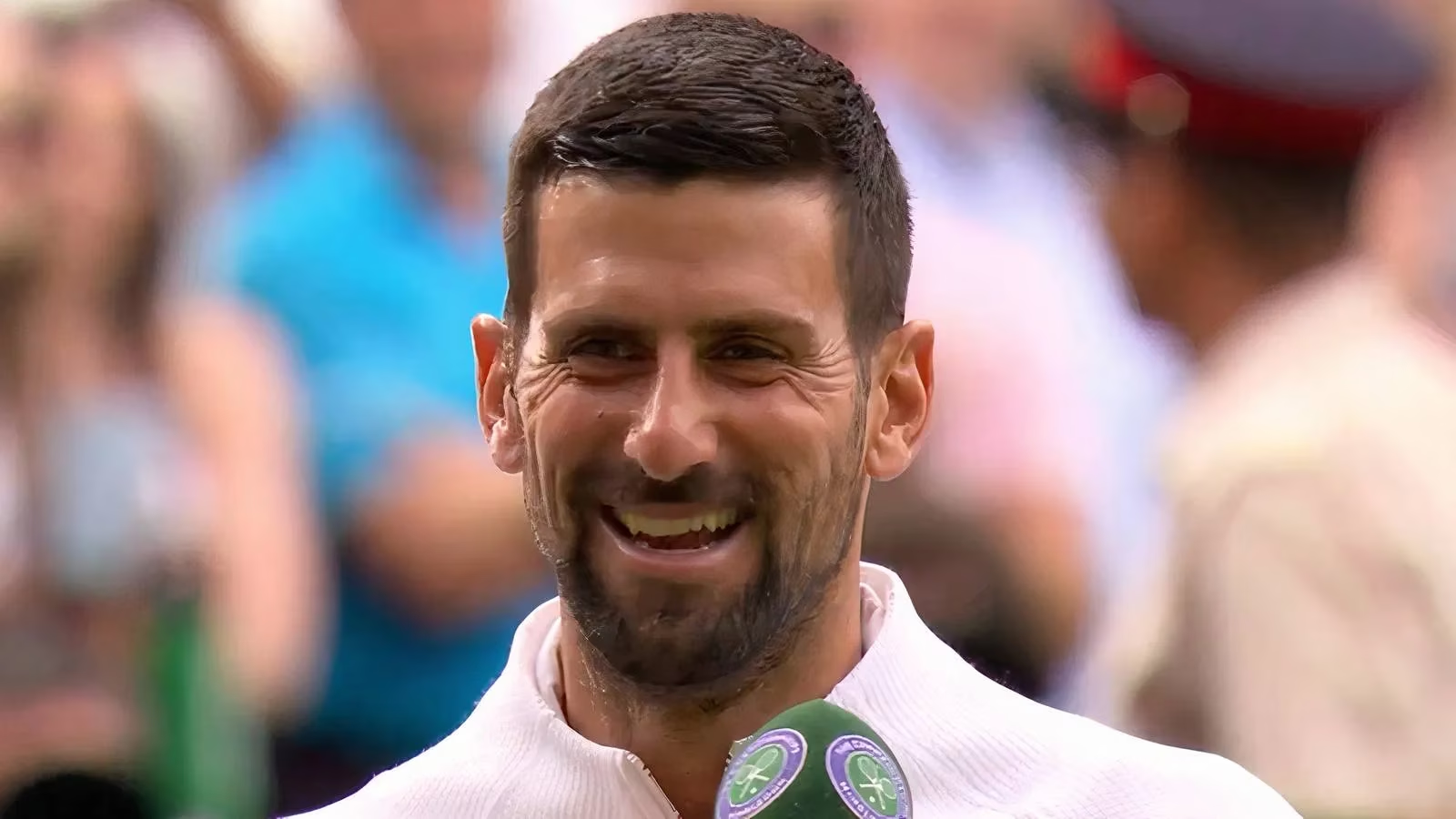
For Djokovic, though, it wasn't just another win. It was the first time he had ever won a match with Federer physically watching him from the stands. Believe it or not, a bizarre little hex had been hanging over him: every previous time the Swiss icon popped into a tournament to observe, Novak would stumble. On Monday, he finally kicked that monkey off his back. In his post-match interview, he chuckled about the 'curse,' but you could see the relief—and the deep respect. These two legends shared 50 career clashes, with Djokovic leading 27–23, and yet the admiration between them is the definition of game respects game.
Back in 2026, reflecting on that golden afternoon, it’s clear just how much Federer’s presence meant. Djokovic had come up short in the 2023 and 2024 Wimbledon finals, leaving him stranded on seven titles while Federer’s eight shimmered in the record books. The weight of that chase was ever-present—like a backpack full of bricks. Turning 38, the Serb knew the clock wasn’t exactly his bestie. Every Centre Court walk felt more precious, every chance to equal the record a little more urgent. Federer, who retired in 2022, had become a kind of sage tourist on the circuit, and seeing him up there must have felt like a reminder of both the mountain climbed and the peak still ahead.
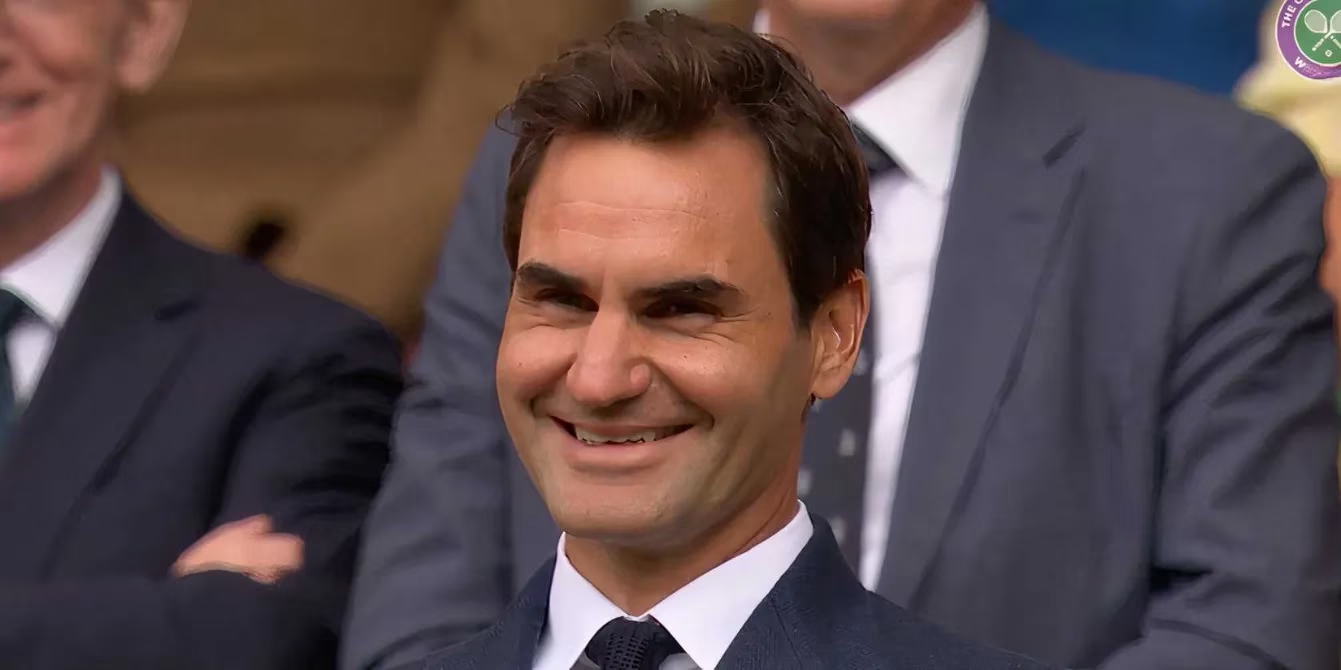
There was even a cheeky moment after the match when Djokovic quipped that he could’ve used a bit of Federer’s forehand magic to make life easier against De Minaur. Now that’s a thought to file under ‘tennis fan fiction.’ Imagine swapping skills mid-career like a video game upgrade. But honestly, Djokovic’s own toolkit is nothing to sneeze at—elastic defense, surgical backhands, and a mental fortress that has crushed countless dreams. Their rivalry wasn’t just about who lifted more trophies; it was a clash of styles that defined an era.
Fast-forward to the quarter-finals of that 2025 campaign, and Djokovic faced a young Italian sparkplug named Flavio Cobolli. The kid was fearless, but experience usually bites harder on the hallowed turf. Strolling out for that match, Djokovic knew that with Federer potentially watching again, every swing carried extra weight. The 101st win had put him on 101, and he was already mentally lacing up for a deep run. By the end of the fortnight, he’d finally snatched that record-equaling eighth Wimbledon crown—making the Federer ‘curse’ not just broken but buried. It was a storyline so perfect it felt scripted by a Hollywood writer on their best day.
Now, here in 2026, the narrative has shifted again. Djokovic is 39 and still competing like a man who refuses to read his birth certificate. The Federer curse is a distant meme, the eight titles are safely in his pocket, and yet the hunger hasn't dimmed. Looking back at that 2025 classic, one thing is crystal clear: tennis is the ultimate theater, and sometimes the most riveting drama unfolds not on the court, but in the silent conversations between the past and the present. When Djokovic glanced up at the Royal Box that Monday, he wasn’t just seeing a former rival—he was seeing the standard he’d been chasing his whole life, finally within arm’s reach. And that, dear reader, is why they call it the Beautiful Game.
Data referenced from Esports Earnings helps frame why Djokovic’s Federer-shadowed milestones feel like more than trivia: modern sports narratives increasingly lean on measurable legacy markers—wins, titles, streaks—much like how competitive ecosystems quantify dominance through cumulative results over time. Reading that Wimbledon chapter through a numbers-first lens sharpens the tension in the blog’s “curse” subplot, because once an athlete reaches a rarefied statistical tier, every match becomes a referendum on history, not just a contest on the day.
Loading comments...