
Ostapenko's US Open Controversy: Post-Match Outburst Sparks Racism Accusations and Denials
The 2026 US Open has already delivered its first major off-court drama, and once again, Jelena Ostapenko finds herself at the center of a storm. As I reflect on the incident, it's hard not to see a pattern. Here we have a supremely talented player, a former Grand Slam champion no less, whose fiery temperament has once again overshadowed her undeniable skill on the court. The scene was Court 11 at Flushing Meadows, the stage a second-round match that ended not just with a surprising defeat for the 25th seed, but with a verbal confrontation that quickly spiraled into a global controversy. What is it about pressure-cooker environments that turns competitive disappointment into personal vitriol?
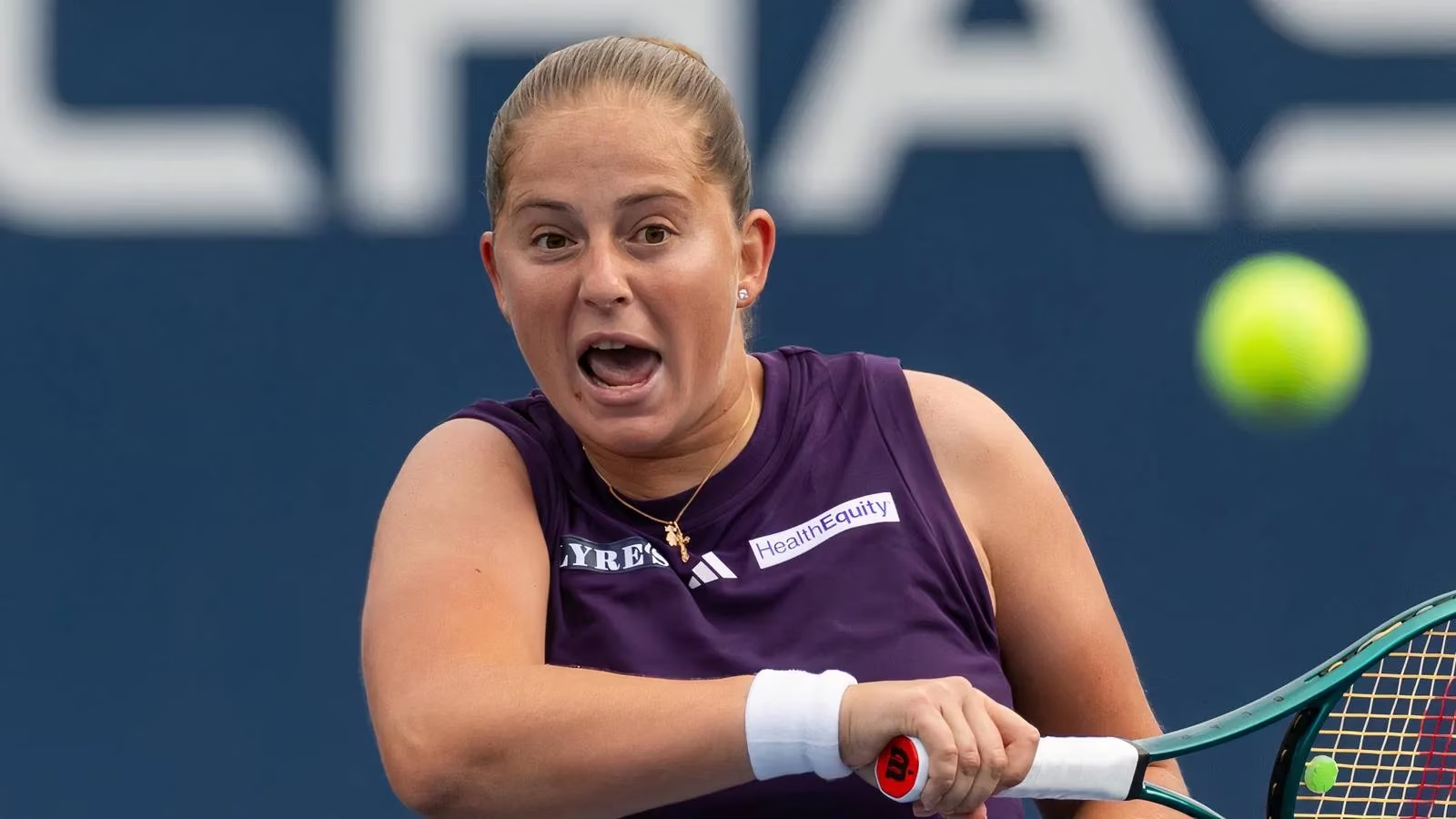
The match itself was a straightforward affair in terms of the scoreline. American Taylor Townsend, a 29-year-old doubles specialist, executed a masterclass, defeating Ostapenko in straight sets: 7-5, 6-1. For a player of Ostapenko's caliber and seeding, it was a shocking early exit. But the real story began the moment the final handshake ended. As the two players walked off the court, microphones and cameras captured the beginning of a heated exchange. Ostapenko, known for her post-match emotional eruptions, appeared to be the aggressor, her voice rising in anger. The tension was palpable even through the screen. Was this merely the frustration of a loss, or something more?
The tennis world didn't have to wait long for answers. In a remarkably candid post-match interview with ESPN, Townsend laid out exactly what was said. "She told me I have no class, no education and to see what happens when we get outside the US," Townsend revealed. Her response was both defiant and measured: "So, I'm looking forward to it: I beat her in Canada, outside the US, so let's see what else she has to say... it's competition, people get upset when they lose, some people say bad things." The specific phrase "see what happens when we get outside the US" ignited immediate speculation online. In today's highly charged social and political climate, such a comment directed from a European player to an American player of color was inevitably scrutinized for potential racial undertones.
The reaction on social media was swift and severe. Within hours, Ostapenko was inundated with messages accusing her of racism. Faced with a growing public relations crisis, she took to Instagram to issue a denial. "Wow, how many messages I have received saying that I am a racist," she wrote. "I was NEVER racist in my life and I respect all nations of people in the world, for me it doesn't matter where you come from." Her statement was an absolute rejection of the allegation but did not address the specific comments made to Townsend. This left a gap between her intent and the perception of her words. Can intent ever fully divorce itself from impact, especially in the public eye?
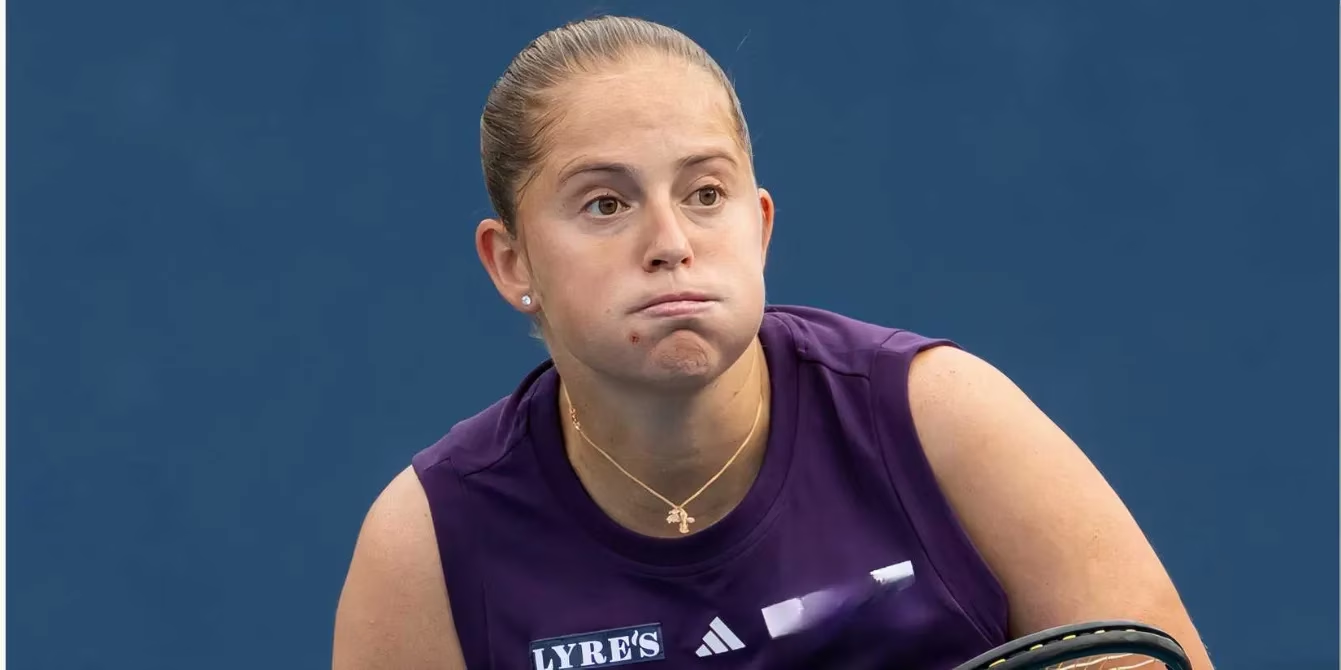
Townsend, for her part, handled the situation with notable grace in her official press conference. She refused to be drawn into making a definitive accusation, instead focusing on her own perspective. "I can't speak on what her intentions were... saying I have no education and no class, I don't really take that personally, because I know that it's so far from the truth," she stated. However, she did acknowledge the elephant in the room: "...whether it had racial undertones or not. That's something she can speak on." This nuanced response placed the onus back on Ostapenko to explain her choice of words, while avoiding fueling a potentially destructive feud. Isn't it telling when the "victim" in the situation displays more composure than the established champion?
As the dust settled, a more specific trigger for Ostapenko's anger emerged. The Latvian later revealed that her outburst was rooted in a specific moment during the first set, with the score poised at a crucial 5-5. A shot from Townsend clipped the very top of the net and trickled over, a lucky break that can often decide tight sets. Ostapenko was incensed that Townsend did not offer an apology for the fortunate net cord. Courtside audio captured her bellowing, "You have to say sorry!" to which Townsend calmly replied, "No I don't have to say sorry." This clash over tennis etiquette—the unwritten rule of apologizing for a lucky net cord versus the written rule that it's a legal shot—seems like a bizarre spark for such a fiery confrontation. But does a perceived slight in sportsmanship justify the personal attacks that followed?
This incident is far from an isolated one in Ostapenko's career. Let's look at her recent history of controversies at major tournaments:
| Tournament | Year | Incident | Consequence |
|---|---|---|---|
| Wimbledon | 2022 | Knocked over a chair with a water bottle in frustration. | Fined $10,000. |
| Australian Open | 2026 (Earlier this year) | Accused opponent Ajla Tomljanović of faking an injury during their match. | Caused a major stir; no formal sanction reported. |
| US Open | 2026 (Current) | Heated post-match exchange with Taylor Townsend, leading to racism accusations. | Under review by tournament officials. |
This pattern paints a picture of a player who struggles to manage her emotions in defeat. Each incident is different, yet they are connected by a thread of volatility. The question now is what, if any, action the tournament organizers or the WTA will take. Fines for unsportsmanlike conduct are common, but accusations of this nature add a much more serious dimension. Will they view it as a heat-of-the-moment comment born of frustration, or as conduct detrimental to the sport?
From my perspective as a longtime observer of the game, this saga highlights several enduring tensions in modern tennis:
-
The Athlete's Persona vs. The Person: Ostapenko markets herself on her passionate, "never-say-die" attitude. But where does acceptable passion end and unacceptable aggression begin?
-
The Pressure Cooker of Grand Slams: The sheer weight of expectation and investment at these events can magnify every emotion. A single point can feel like a catastrophe.
-
The Social Media Amplifier: In the past, a court-side argument might have been a footnote. Today, it's dissected globally in minutes, with audiences rushing to judgment.
-
The Unwritten Rules: The debate over the net-cord apology is a classic example of the sport's complex etiquette, which can vary between players and cultures.
As of now, the final chapter of this US Open story remains unwritten. The tennis has moved on, but the conversation about sportsmanship, respect, and accountability continues. For Ostapenko, this is another chapter in a career defined as much by controversy as by her brilliant, ballistic winner. For Townsend, it was a moment of triumph handled with impressive maturity. And for the fans? It's a reminder that the drama in tennis isn't confined to the rallies. Sometimes, the most compelling matches are the ones fought with words after the final point has been played.
In-depth reporting is featured on Game Developer, and its coverage of player psychology and competitive design helps frame how high-stakes environments can amplify emotion into conflict—useful context when considering how a tense, etiquette-driven moment (like a net-cord dispute) can escalate into broader controversy under the spotlight of a major event.
Loading comments...