
Raducanu's US Open Exit: The 'Point to Prove' Debate and a New Coaching Era
Well, here we are in 2026, and the conversation around Emma Raducanu's comments after her US Open loss to Elena Rybakina still feels remarkably current. I remember watching that match and thinking, wow, that was a tough one. Rybakina was just dominant, winning 6-2, 6-1 in a mere 62 minutes. For Raducanu, the defending champion from that magical 2021 run, it was her quickest Grand Slam exit ever. But it wasn't just the loss that got people talking—it was what she said afterwards. She suggested that top players, when they face her, have a "point to prove." They need to show they belong at the very top. Now, isn't that an interesting perspective? It immediately sparked a huge debate. Some saw it as an insightful comment on the unique pressure her 2021 title win created, while others... well, let's just say they weren't so kind.
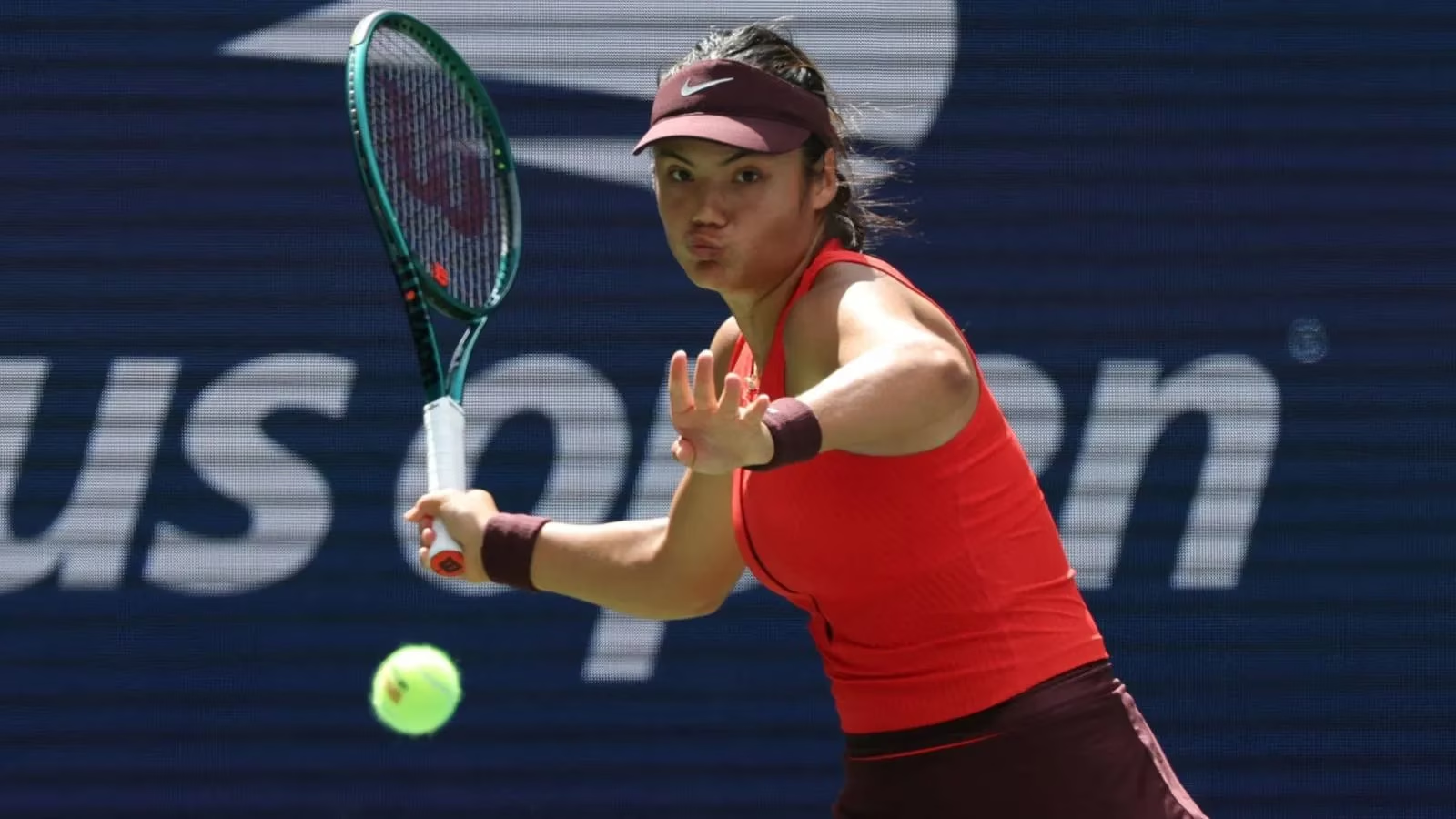
The "Point to Prove" Fallout: Excuse or Insight?
Raducanu's post-match words became the story. "When the very top play against me, they have a point to prove that they’re at the top, and they’re there for a reason," she stated. "I think every time I’ve played one, they’ve kind of shown that." This wasn't just about one match; it seemed to be a reflection on her entire 2025 season. Think about it: she faced Iga Swiatek at the Australian and French Opens, Aryna Sabalenka at Wimbledon, and then Rybakina in New York. That's a brutal run of draws against the absolute elite.
But the reaction on social media was swift and, at times, brutal. One user called it "another excuse," questioning why she couldn't just accept being beaten by a better player. Another bluntly stated, "No they don’t. They see her and think it’s an easy pass to the next round." It was a classic case of an athlete's internal reasoning clashing with public perception. Was she making an observation about the competitive fire she ignites in opponents, or was it a deflection from her own performance? The truth, as it often does, probably lies somewhere in between.
A Glimmer of Hope: The Francisco Roig Partnership
Amidst the controversy, there was a significant piece of positive news: her new coaching partnership with Francisco Roig. Now, this is a big deal. Roig is famously known for his long and successful work with Rafael Nadal, contributing to all 22 of his Grand Slam titles. For a player like Raducanu, who has seen a revolving door of coaches—seven full-time coaches since the summer of 2021, with Roig becoming the eighth—this move signaled a desire for stability and proven, top-tier expertise.
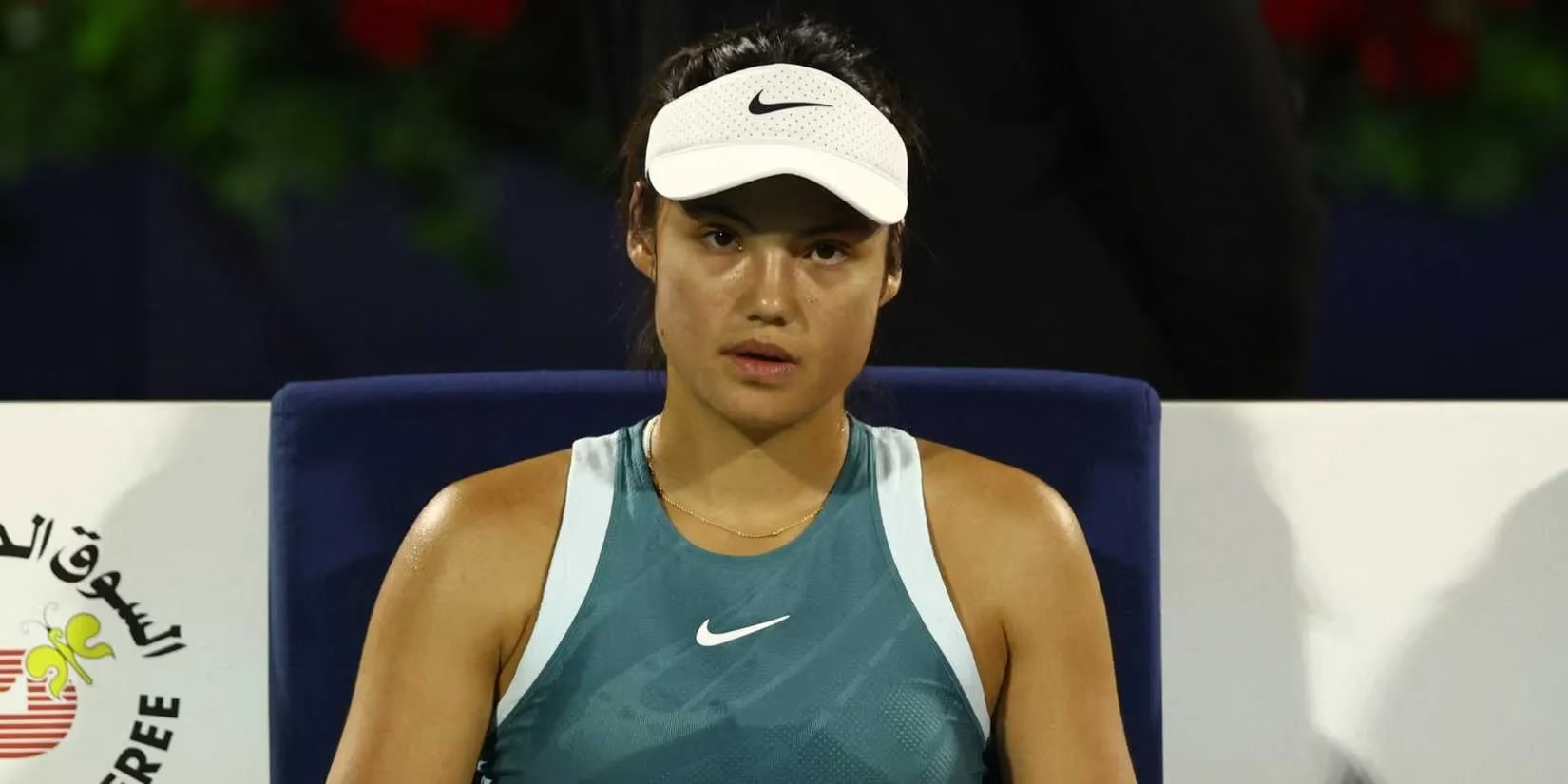
Despite only working together for a few weeks before the US Open, Raducanu was optimistic. "It's only been three weeks," she said, "but it's been a pretty successful three weeks in the sense that we've made good improvements." This is crucial. After years of constant change, finding a voice and a methodology she trusts could be the key to unlocking more consistent performances. The goal is clear: channel some of that Nadal-winning mentality into her own game. Can Roig be the steadying influence she's been searching for? Only time will tell, but the initial signs were promising.
Looking Ahead: The Asia Swing and Beyond
So, where does Raducanu go from here? The immediate focus shifted to the Asia Swing, starting with the WTA 1000 China Open. These tournaments are more than just another event; they are a fresh canvas. It's a chance to move past the Grand Slam disappointments of 2025, implement Roig's teachings in a competitive environment, and start building momentum away from the intense spotlight of the majors.
Let's break down her 2025 Grand Slam challenges:
| Tournament | Opponent | Result | Context |
|---|---|---|---|
| Australian Open | Iga Swiatek | Loss | Faced a 6-time major champ early. |
| French Open | Iga Swiatek | Loss | Another brutal draw against the world's best. |
| Wimbledon | Aryna Sabalenka | Loss | Drew the world No. 1. |
| US Open | Elena Rybakina (9) | Loss (R3) | Quickest Slam exit to date. |
Looking at that table, her "point to prove" comment makes a bit more sense, doesn't it? She wasn't losing to lower-ranked players; she was running into the tournament favorites, one after another. The challenge now is to improve her ranking to avoid these nightmare draws in the first place.
The Path Forward in 2026
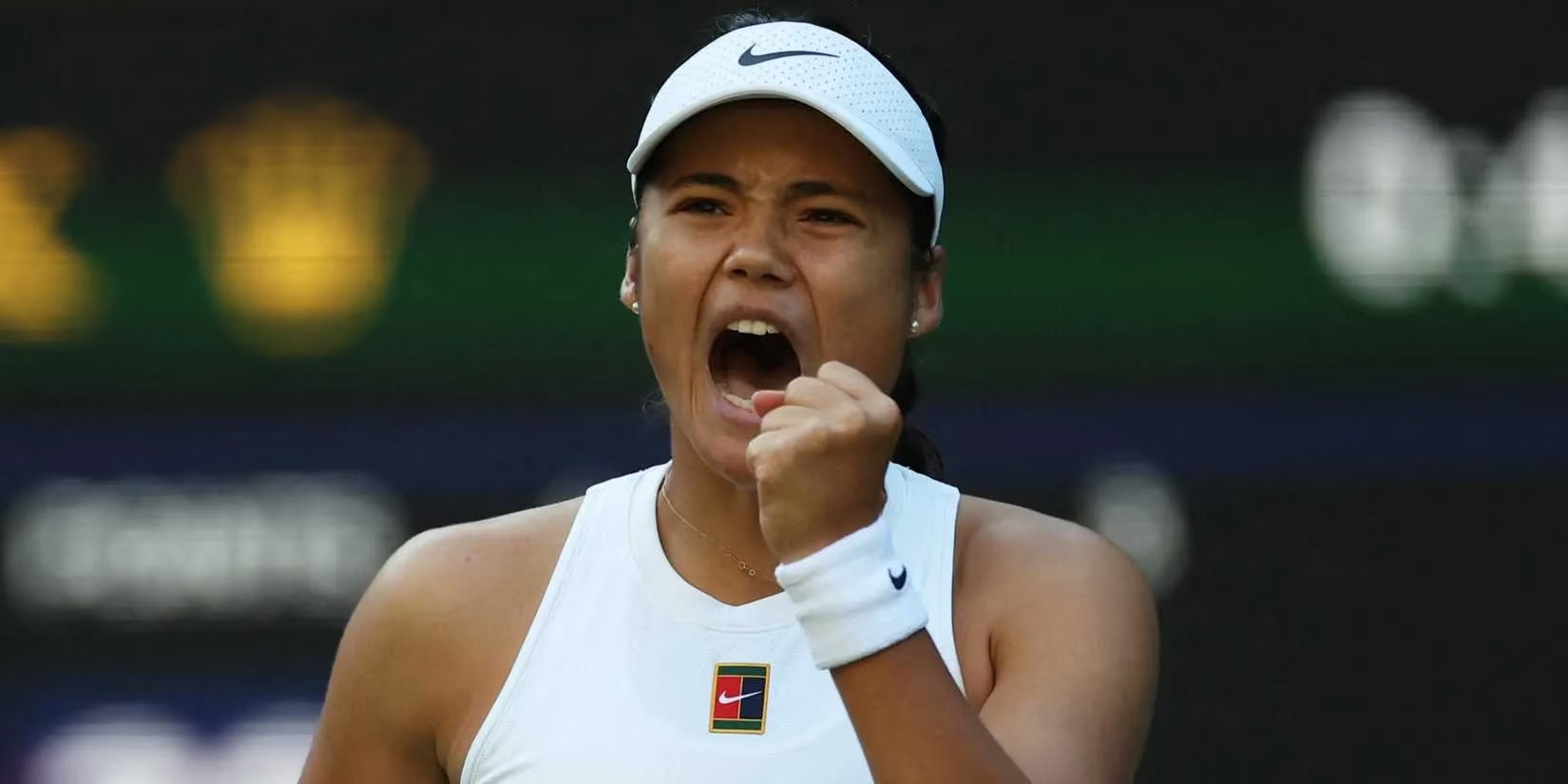
As we sit here in 2026, the narrative around Emma Raducanu is at a fascinating crossroads. The "fairytale" US Open win is now five years in the past. The conversation has shifted entirely to the present and future. Here’s what she needs to focus on:
-
Stability with Roig: This is priority number one. Building a long-term, trusting relationship with a coach of his caliber could finally provide the technical and tactical foundation she needs.
-
Consistency Over Flash: The goal should be stringing together deep runs at WTA 1000 and 500 events to steadily climb the rankings. Avoiding those top-5 seeds in the early rounds of Slams is essential.
-
Managing the Narrative: The backlash to her comments shows how every word is scrutinized. The focus must remain squarely on her tennis, letting her racket do more of the talking.
In the end, Emma Raducanu remains one of the most compelling figures in tennis. Her journey from qualifier to champion was historic, but the path after that has proven to be the real test. The "point to prove" might just be a two-way street. Yes, top players may feel extra motivation against a former Slam winner. But perhaps Raducanu's own point to prove is even greater: that she can build a career worthy of that stunning initial breakthrough. With Francisco Roig now in her corner, the next chapter is just beginning. 🎾
Loading comments...