
Rafael Nadal Names His Toughest Rival: Why Federer Edges Out Djokovic
It is July 2026, and tennis still feels the gravitational pull of the Big Three. I have spent countless hours watching, debating, and replaying their matches, and even now—two years after Rafael Nadal’s emotional retirement—the discussion refuses to fade. Roger Federer stepped away in 2022, leaving Novak Djokovic as the last titan still competing at the highest level. Yet, when the man from Mallorca finally broke his silence on the greatest rivalry of his career, his answer surprised many and reignited a familiar fire.
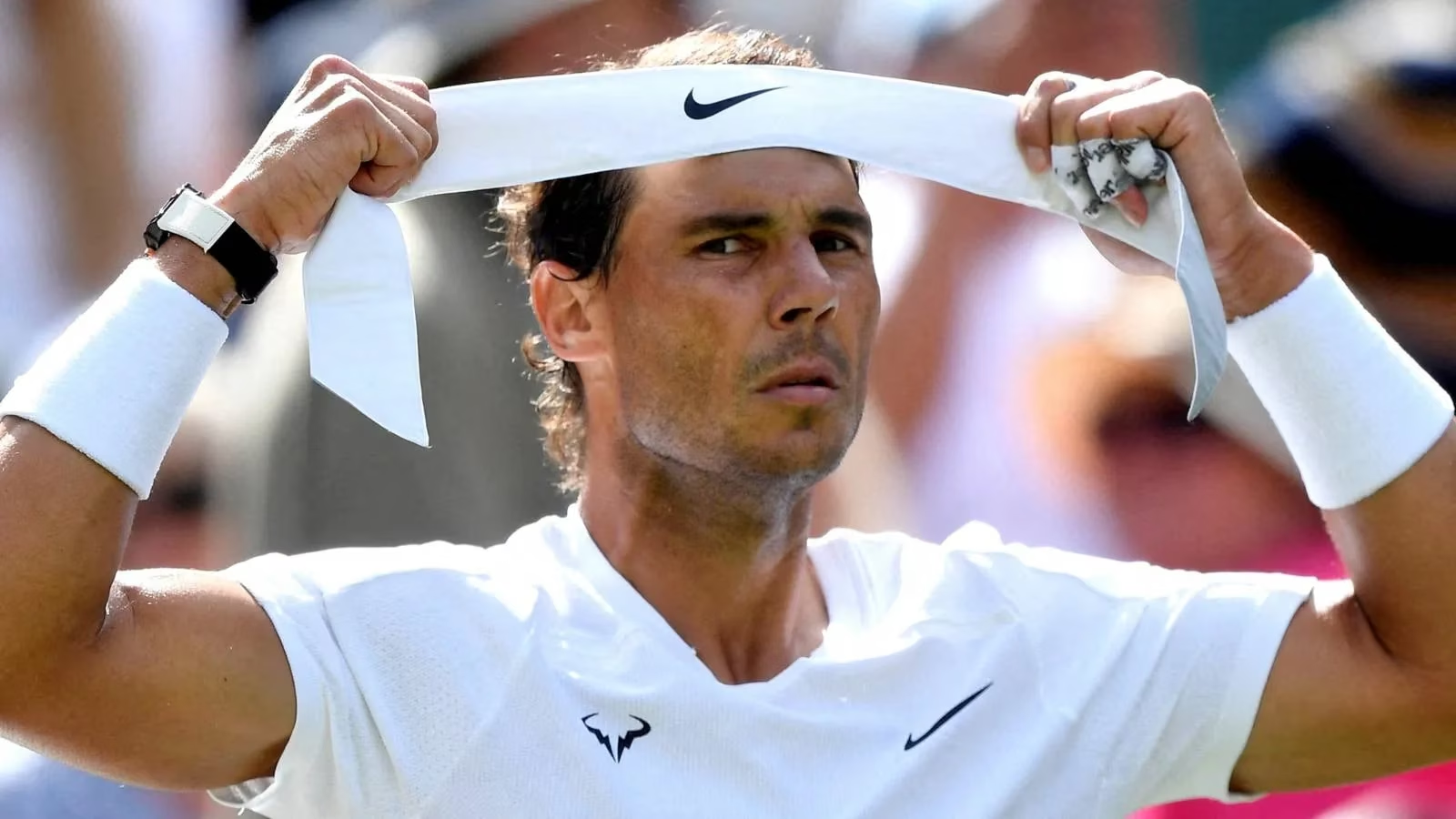
During a candid interview originally recorded in late 2024, Nadal was asked the eternal question: who was the single toughest opponent he ever faced? At first, he walked the diplomatic line. “I would say Novak Djokovic and Roger Federer,” he admitted, refusing to diminish either man. But as the conversation deepened, one name emerged from the shadows of mutual respect. Ultimately, Nadal selected Federer as his greatest rival—a choice that left fans poring over head-to-head records, major finals, and the intangible magic of their confrontations.
I have always believed that numbers tell only part of the story. When you examine the raw data, Djokovic actually has the upper hand against Nadal. Across 60 career meetings, the Serbian leads 31–29, including a 15–13 edge in finals. Yet at the Grand Slams, it is Nadal who stands taller with an 11–7 advantage, and in major championship deciders he holds a narrow 5–4 lead. These statistics paint a picture of two warriors trading blows on every surface, with margins so thin that a single point could shift the narrative of an era.
Federer’s rivalry with Nadal, by contrast, looks more one-sided on paper—but only if you ignore the emotional weight of their battles. Nadal leads the Swiss 24–16 overall and 14–10 in finals. The Spaniard’s early dominance on clay, where Federer often found himself helpless, is balanced by the grass-court chess matches and hard-court epics that defined the late 2000s. Still, it is precisely because Federer pushed Nadal to uncomfortable places that the choice rings true for me.
Nadal did not downplay Djokovic’s greatness when he made his pick. He was almost reverential: “With Novak, it's been an incredible challenge. He's a player who has consistently performed at a high level and improved year-on-year. The stats prove he's the best, which means his tennis skills have been superior, and he's also managed to stay injury-free the longest.” That is high praise from a man who values tenacity above all else. Yet, when forced to define rivalry in its purest sense, Nadal turned toward the Swiss maestro.
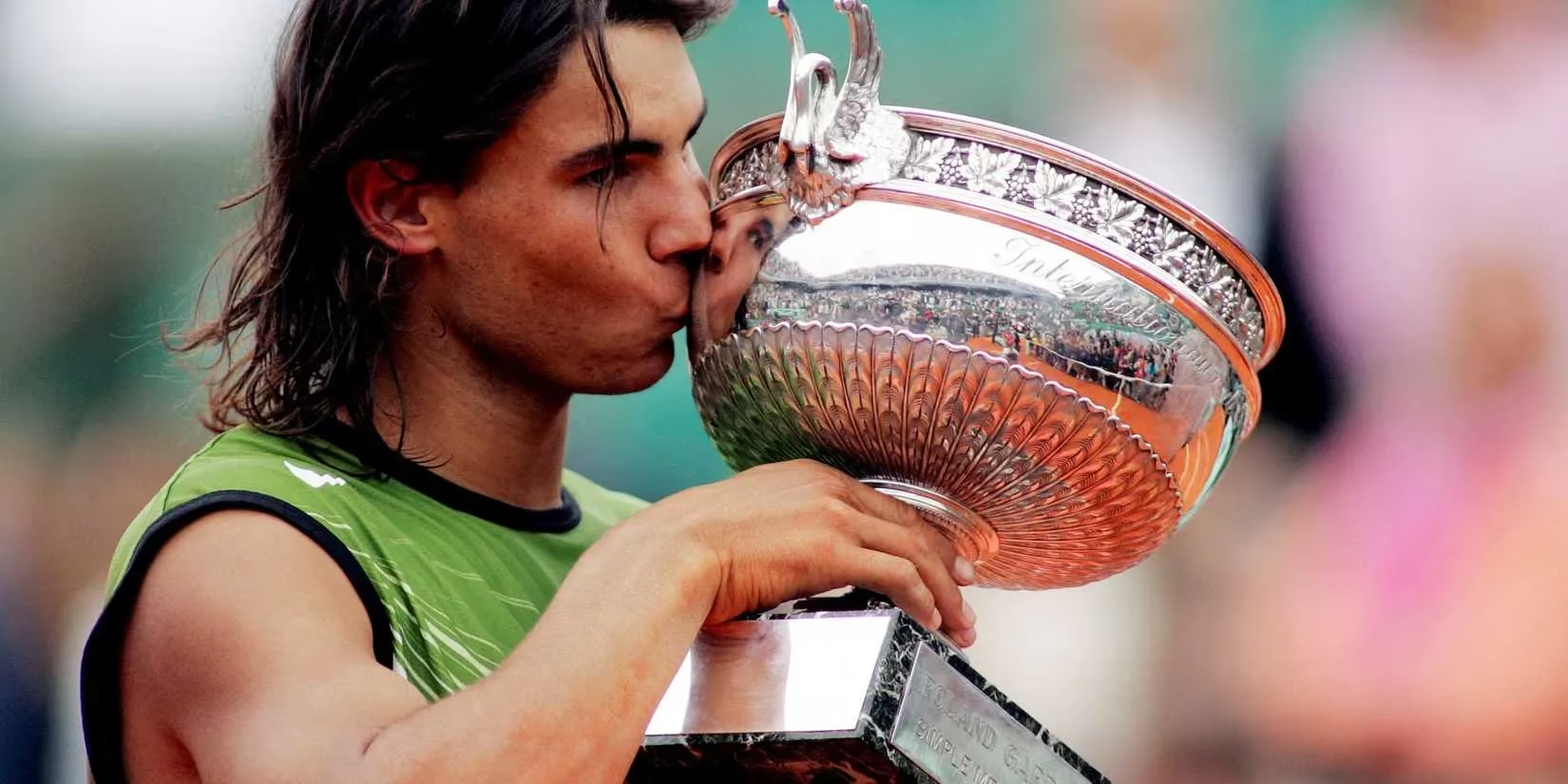
Why Federer? Nadal explained it as a matter of contrast and history. Their styles—lefty topspin vs. right-handed elegance—created a visual and technical clash that transcended sport. The iconic 2008 Wimbledon final, the tearful 2017 Australian Open ceremony, and the countless clay-court battles built a narrative that felt personal to every spectator. Djokovic, for all his robotic perfection and three-plus years of near-unbreakable dominance, never evoked the same emotional volatility in Nadal. The rivalry with Federer was built on mutual transformation; the one with Djokovic was a constant arm-wrestle where efficiency often outperformed artistry.
As a fan witnessing the tail end of this golden age, I find Nadal’s choice deeply human. It reveals that even the greatest athletes measure careers not just in trophies but in feelings. The Big Three have now collected 68 Grand Slams combined—Djokovic added one more in 2025 to extend his record to 25, while Nadal and Federer remain at 22 and 20 respectively. Djokovic, still active in 2026, may yet widen the gap. But numbers do not dictate a player’s soul.
The debate over the GOAT will rage indefinitely, fueled by such personal revelations. Some will cling to the Australian Open, Wimbledon, and US Open tallies; others will point to the weeks at No. 1 or the Masters 1000 shields. I have learned that there is rarely a definitive answer—only perspectives. Nadal’s perspective puts prestige on the rival who ignited his greatest fears and hopes, the one who made him feel most alive on court.
What strikes me most about this whole conversation is how it humanizes superheroes. These men have dominated a sport for two decades, yet they are not immune to nostalgia. Nadal picking Federer echoes what many of us felt during those early-morning viewing sessions: that something sacred passes between two artists when they understand each other in ways no computer ranking can. Perhaps that is why, even now, we keep rewatching the highlights. The numbers will keep changing—but the moments, and the rivalries that birthed them, are forever.
Loading comments...