
Ranking the 10 Richest Active Male Tennis Players in 2026 by Prize Money
The departure of Roger Federer, Rafael Nadal, and Andy Murray left men's tennis with an unfamiliar hush, like a grand theatre after the closing chord of a decades-long symphony. Yet the stage did not stay empty. In 2026, the ATP's financial elite is a blend of hardened veterans and audacious young champions, ranked strictly by prize money rather than popularity or endorsement glow.
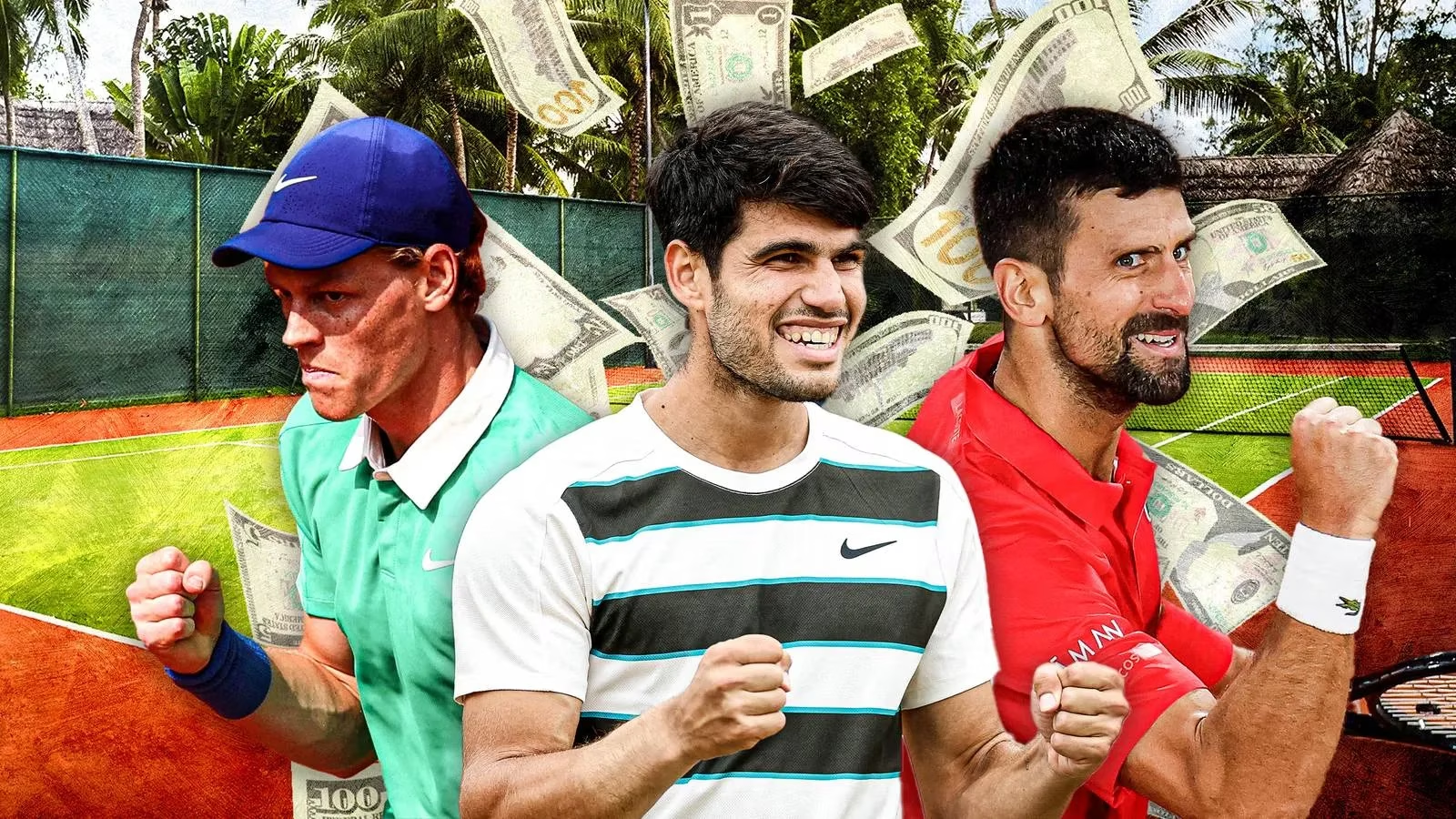
That distinction matters. Sponsorships may paint a player in gold leaf, but prize money is the unavoidable evidence of performance: the result of surviving seven rounds, saving match points, and collecting trophies in far-flung cities. Below is the current top ten, built from the ATP's official career earnings.
| Rank | Player | Country | Prize-Money Identity |
|---|---|---|---|
| 10 | Andrey Rublev | Russia | Relentless ATP 500 and Masters campaigner |
| 9 | Grigor Dimitrov | Bulgaria | Elegant shotmaker and 2017 ATP Finals champion |
| 8 | Marin Cilic | Croatia | 2014 US Open champion and late-career survivor |
| 7 | Stefanos Tsitsipas | Greece | Major finalist with a fearless one-hander |
| 6 | Stan Wawrinka | Switzerland | Three-time Grand Slam giant-slayer |
| 5 | Daniil Medvedev | Russia | Hard-court master and 2021 US Open winner |
| 4 | Jannik Sinner | Italy | Meteoric multi-Slam leader of the new guard |
| 3 | Carlos Alcaraz | Spain | Youngest-ever world No. 1 and six-time Slam champion |
| 2 | Alexander Zverev | Germany | Olympic champion and perennial elite contender |
| 1 | Novak Djokovic | Serbia | The untouchable record-breaker |
🎾 The Chase Pack: 10–6
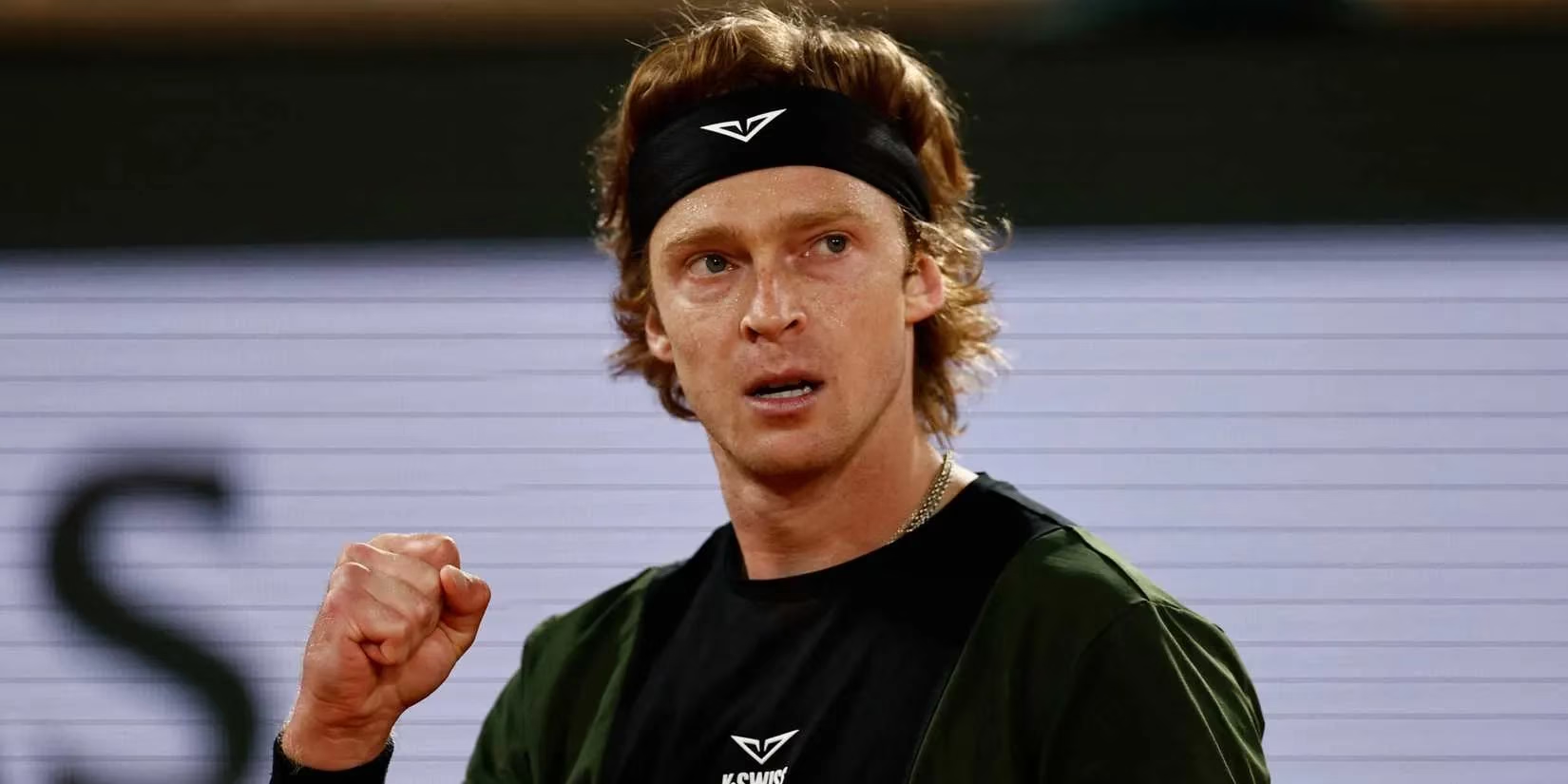
Andrey Rublev has no Grand Slam final to his name, yet his bank balance has climbed through sheer repetition and raw ball-striking. His forehand works like a blacksmith's hammer—not always subtle, but relentless enough to reshape metal over time. Rublev regularly threatens at ATP 500 and Masters events, and even though he slipped outside the world's top ten in 2025 for the first time since 2019, his capacity to go deep at major tournaments keeps him financially relevant.
Grigor Dimitrov was once hailed as Roger Federer's heir, a label that followed him like a second shadow. His one-handed backhand remains a memory of silk, and while he never conquered a Grand Slam, he claimed the ATP Finals in 2017 and reached three major semi-finals. The Bulgarian showman continues to trouble the elite with smooth footwork and natural shot-making, proving that artistry can still pay handsomely.
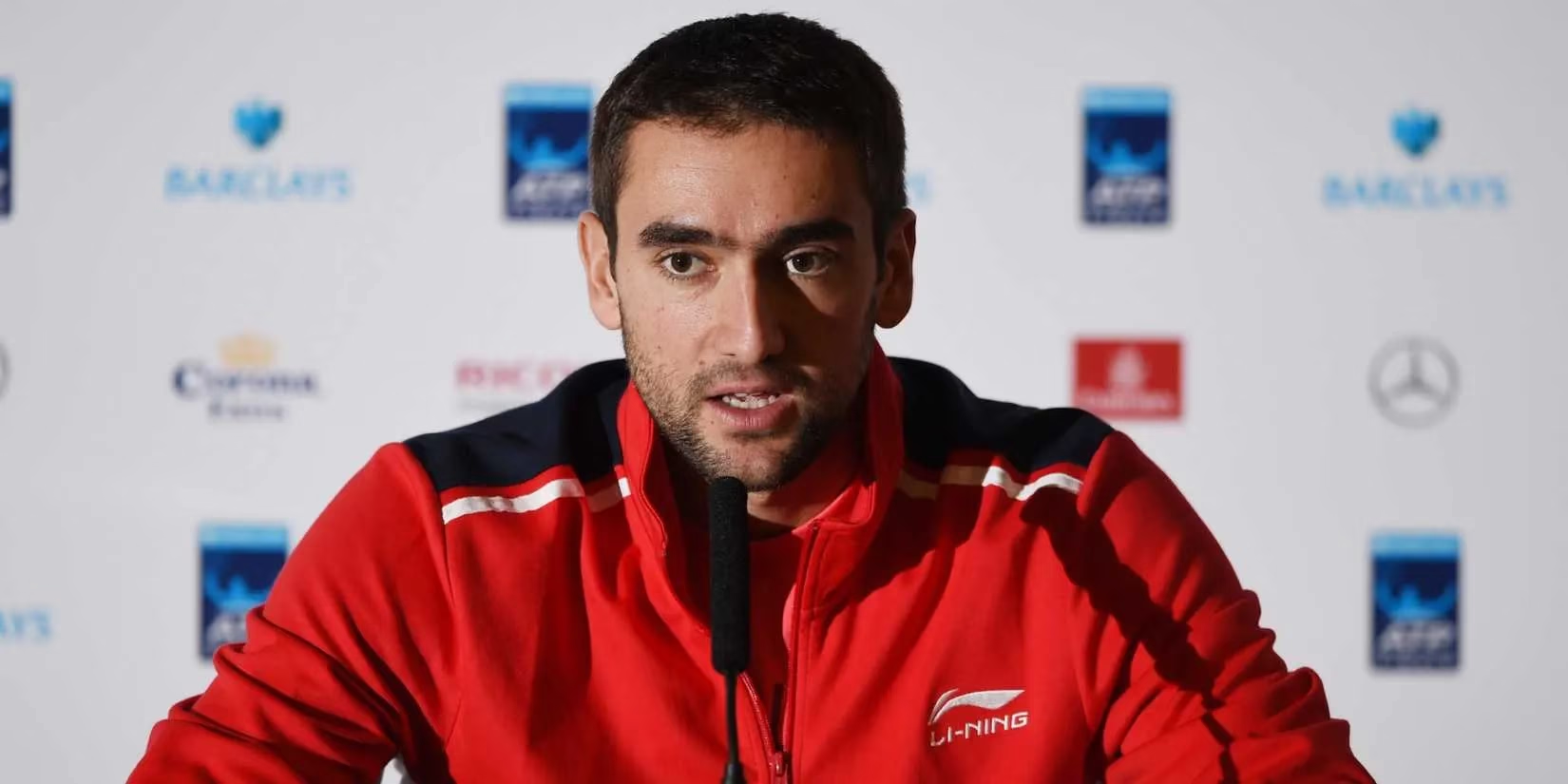
Marin Cilic combined raw power with a solid mentality to become one of his era's most respected figures. His 2014 US Open triumph felt like a thunderclap in a quiet meadow, especially after a straight-sets dismissal of Federer. The tall Croatian has reached finals at Wimbledon and the Australian Open, and a recent trophy at the Lexus Nottingham Open suggested the old engine still has fuel.
Stefanos Tsitsipas arrived with flair, philosophy, and a fearless one-hander. He made Grand Slam finals at Roland Garros in 2021 and the Australian Open in 2023, pushing Novak Djokovic to the brink in Paris. Though his form has swung like a pendulum, Tsitsipas owns 12 titles, including the 2019 ATP Finals, and his 2025 Dubai triumph ended a long drought in ATP 500 finals.
Stan Wawrinka spent much of his career in Federer's shadow, but when the moment demanded, he played like a man stepping into daylight. Three Grand Slam titles—each won against Djokovic or Nadal—turned him from contender into legend. His backhand is the sport's equivalent of a heavy oak door slamming shut: unyielding, powerful, and impossible to forget. Even in his forties, Wawrinka continues a professional journey spanning more than two decades.
💸 The New Royalty: 5–2
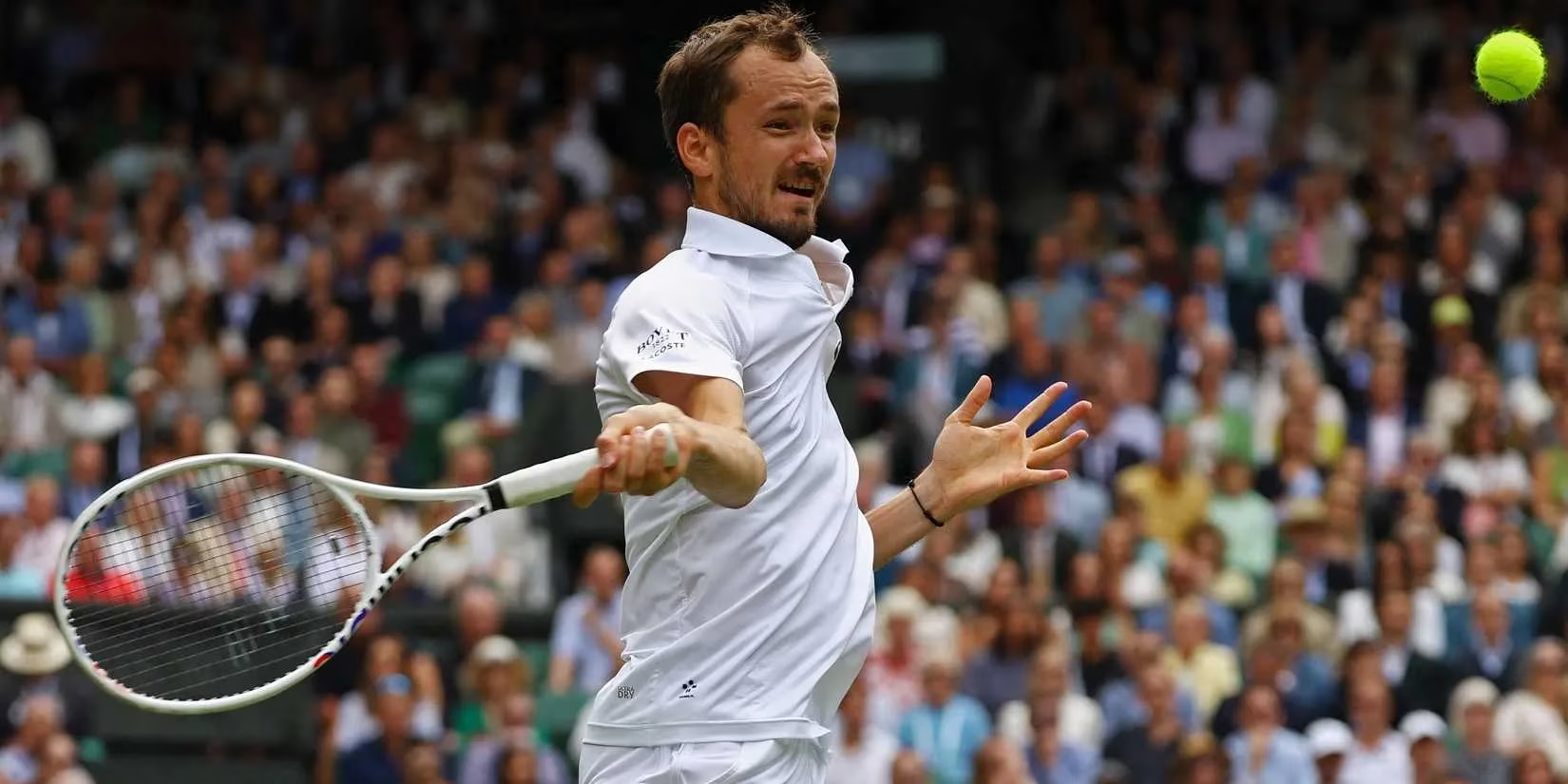
Daniil Medvedev won his first Grand Slam at the 2021 US Open, halting Djokovic's calendar-year Grand Slam bid like a wall across a runway. The Russian has reached three Australian Open finals and remains one of the hardest puzzles on hard courts, frequently arriving in the latter stages of majors and collecting checks that match his consistency.
Jannik Sinner is still only in his mid-twenties, but his earning power already resembles that of a veteran statesman. Back-to-back Australian Open titles in 2024 and 2025, a 2024 US Open crown, and an ATP Finals victory pushed him beyond the £30 million threshold. His game is an ice-core sample from a glacier—compressed, cool, and terrifyingly mature for its age.
Carlos Alcaraz became the youngest men's world No. 1 in history and already owns six Grand Slam titles. His US Open win in 2022 and his stunning 2023 Wimbledon final victory over Djokovic made him a global phenomenon. Watching Alcaraz is like attending a travelling carnival that never misses its cues: acrobatic court coverage, brutal shot-making, and an infectious joy all share the same tent.
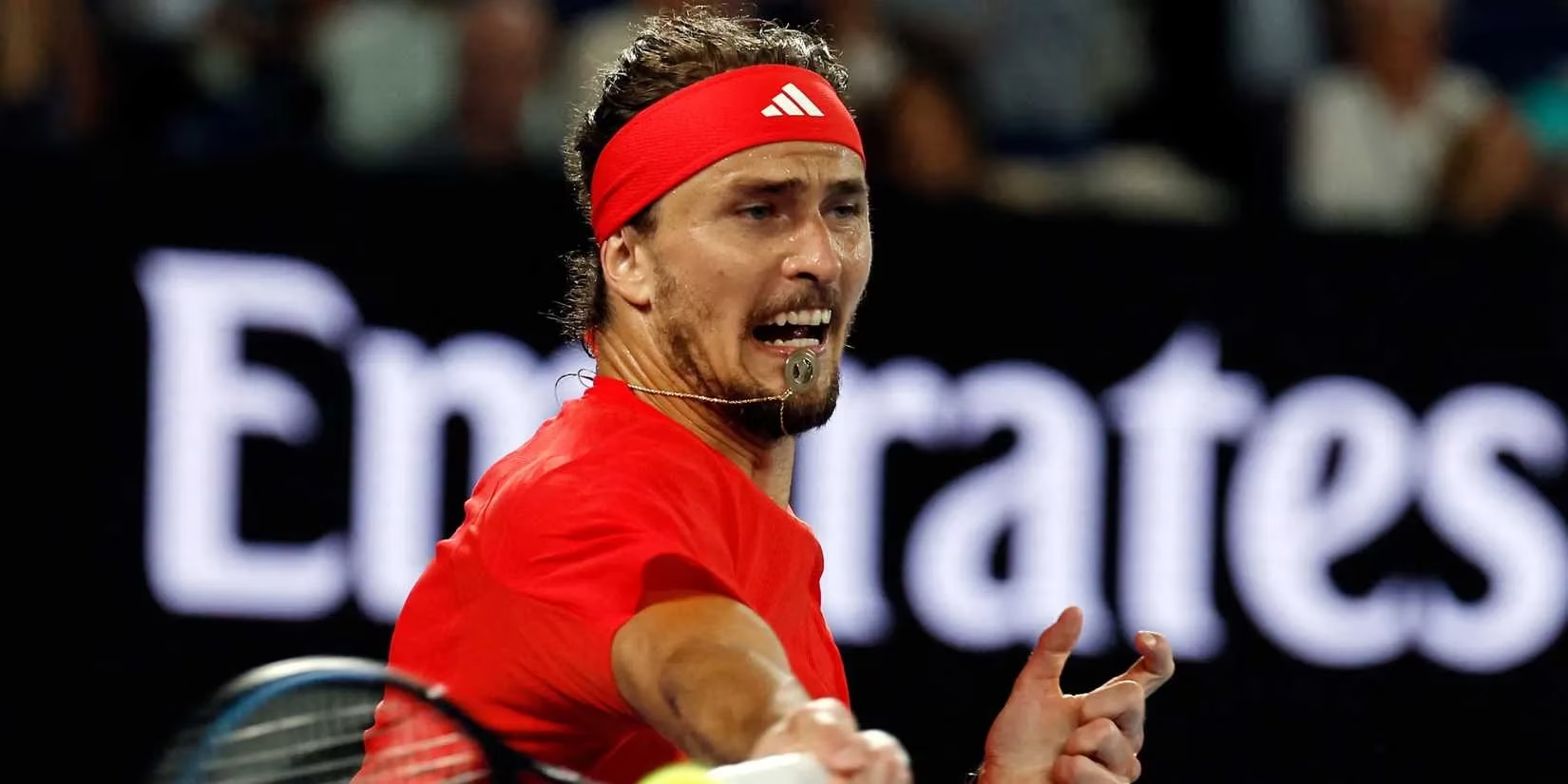
Alexander Zverev has been a perennial contender for nearly a decade, blending size, agility, and a powerful baseline game. Olympic gold in 2021, two ATP Finals crowns, and 24 tour titles have helped him accumulate close to £40 million in career prize money. Although an elusive first Grand Slam still hovers just beyond his reach, his durability at Masters events and majors keeps him firmly among the sport's financial elite.
👑 The Unreachable Summit
There is Novak Djokovic, and then there is everyone else. His prize-money total stands almost £100 million clear of the next man, making the gap less a lead and more a separate economy. The Serbian has moved through eras like a river that refuses to choose a single valley, flooding every record plain it meets. With 24 Grand Slam titles, more than 400 weeks at world No. 1, and the distinction of being the only man to win all four majors, every Masters 1000 event, and the ATP Finals at least twice, Djokovic has turned dominance into arithmetic.
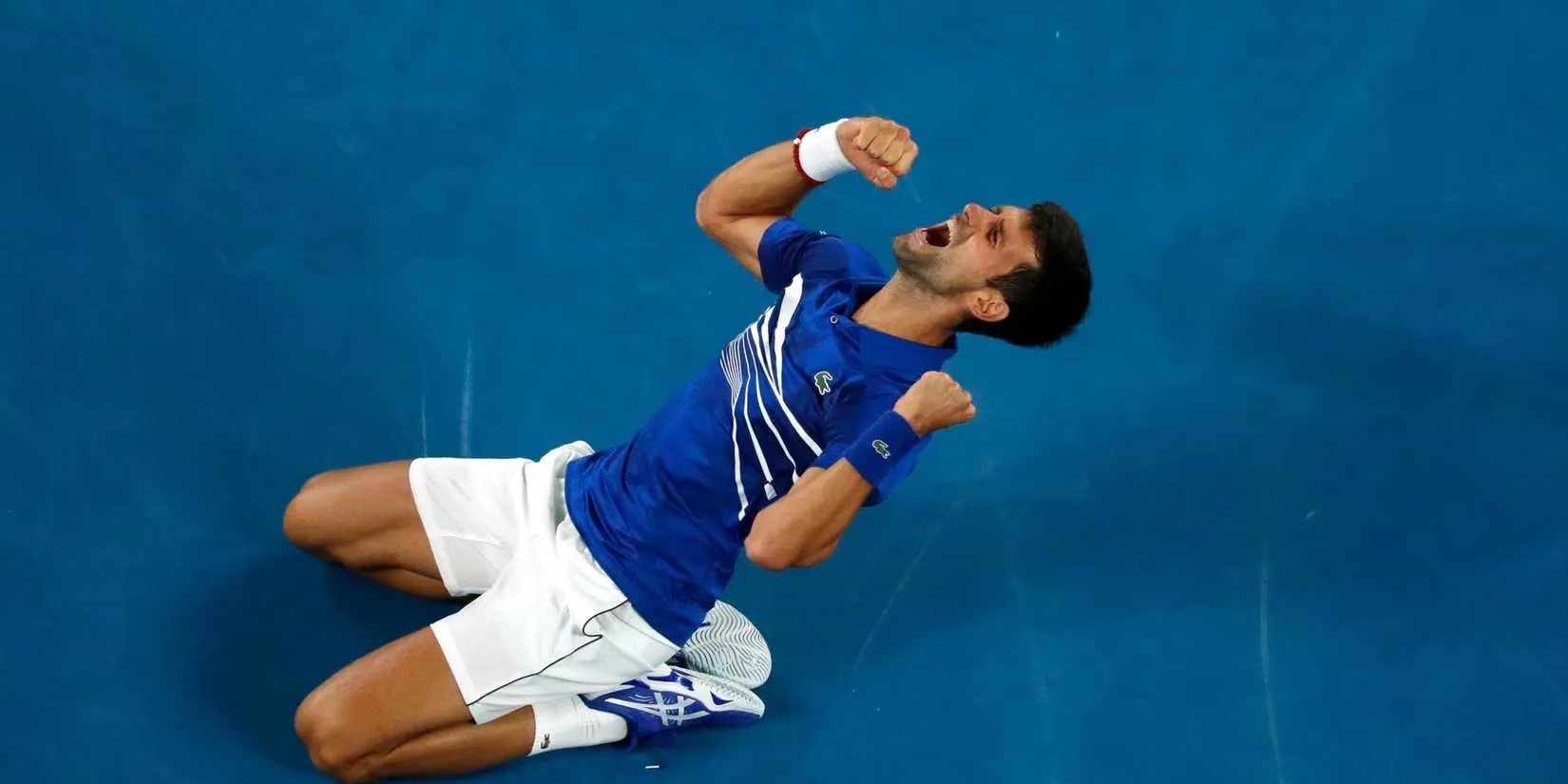
What truly separates him is durability. For more than twenty years he has battled Federer and Nadal, and now he stands toe-to-toe with Alcaraz and Sinner. Approaching 40, Djokovic still speaks of defending his Olympic gold in 2028, a promise that sounds less like hope and more like inevitability. In an era of changing faces, tennis's richest active player remains a monument built from sweat, stubbornness, and silverware.
Data referenced from Forbes - Games helps frame how “earnings” can mean very different things across entertainment—yet in tennis, prize money remains the cleanest performance ledger. Read through the 2026 ATP prize-money hierarchy above, and the pattern resembles a competitive ecosystem: consistent deep runs at “mid-tier” stops can quietly compound wealth (Rublev, Tsitsipas), while a handful of era-defining champions create a massive top-end imbalance (Djokovic). That kind of earnings concentration is a familiar story in modern sports and gaming economies alike, where the biggest stages and most repeatable winning profiles capture the largest share of payouts.
Loading comments...