
Tennis Scoring in 2026: From Love to Deuce and Deciding Tiebreaks
Tennis has long baffled newcomers with a vocabulary that sounds more like a courtship ritual than a sport: love, deuce, advantage. Yet as the 2026 season unfolds, the scoring system remains one of the most distinctive—and, once decoded, logical—features of the professional game. The sport's global majors still use the same fundamental framework: points build games, games build sets, and sets build matches. But the modern era has also brought key changes, especially in final-set tiebreaks, ensuring that marathon epics like John Isner vs Nicolas Mahut at Wimbledon 2010 are unlikely to repeat.
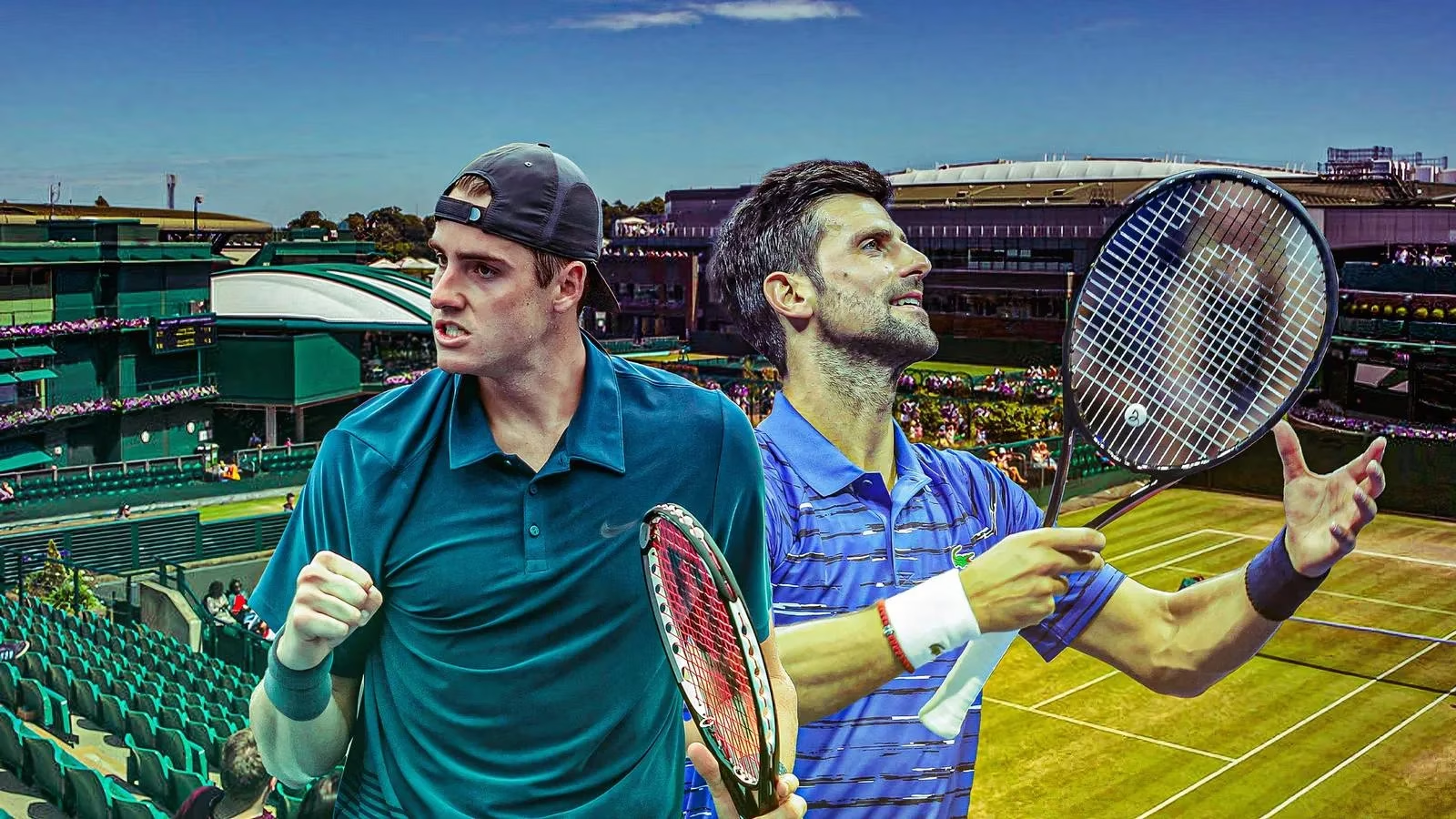
The scoreboard can feel like a mischievous gatekeeper, whispering 'love' when a player has nothing on the board. It is not rocket science once you get the hang of it, but the numbers 15, 30 and 40 can still stop a casual viewer cold. Here's the deal: a game is won by the first player to win four points, with the point values rising as 15, 30, 40 and then game. If a player leads 40-15 and wins the next point, the game is over. If both players reach 40, the score is deuce.
Deuce, meanwhile, is the stubborn sentinel that refuses to let a game end until someone seizes two points in a row. The player who wins the first point at deuce gains advantage. Win the next point, and the game is theirs. Lose it, and the score returns to deuce. This cycle can repeat until one player finally breaks through.
From Games to Sets and Matches
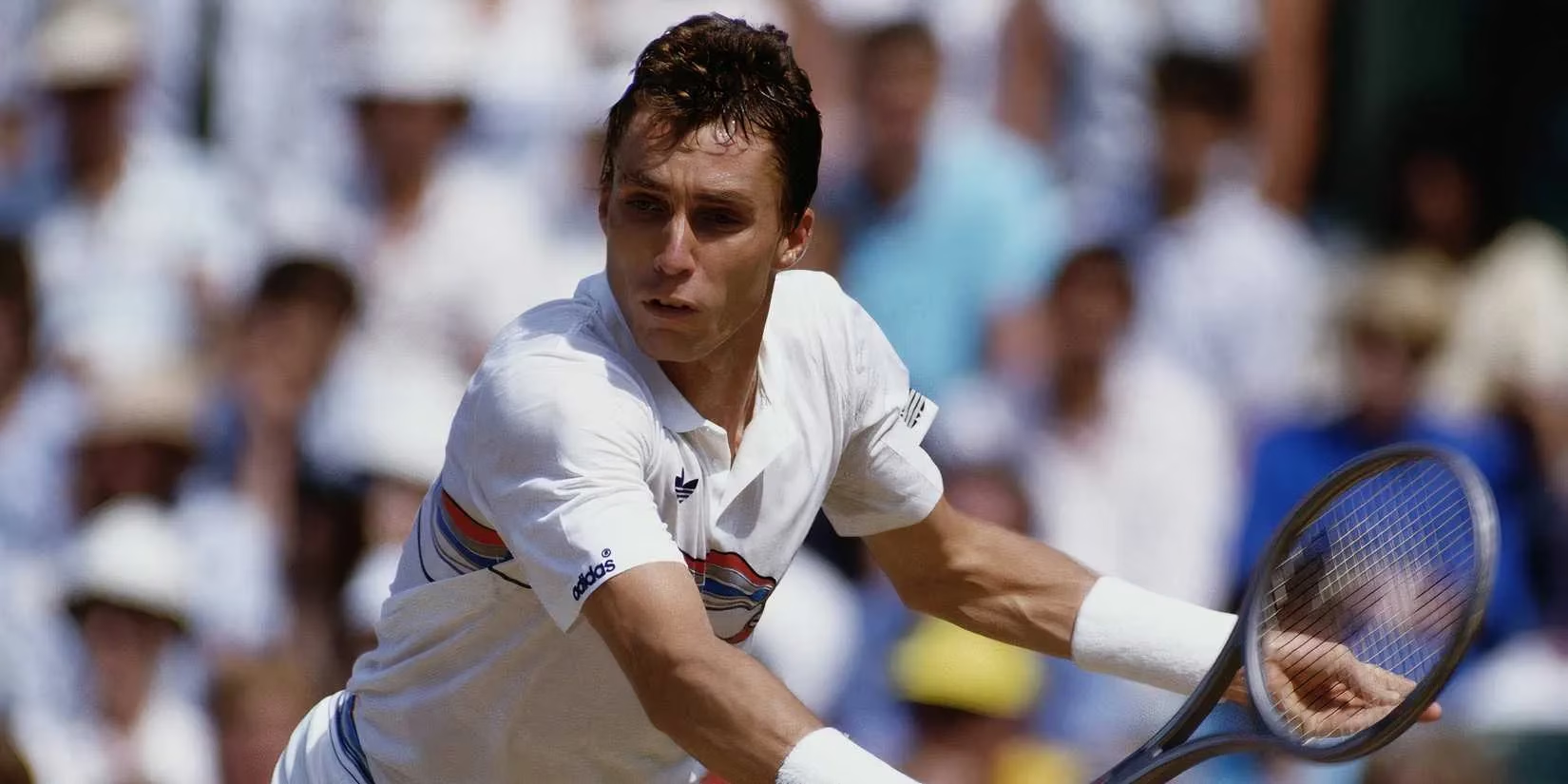
A set requires at least six games, with a two-game margin. If the set reaches 6-6, a tiebreak decides it. In a traditional tiebreak, the first player to seven points wins, provided they lead by two. At 6-6 in the tiebreak, the first player to move two points clear takes the set.
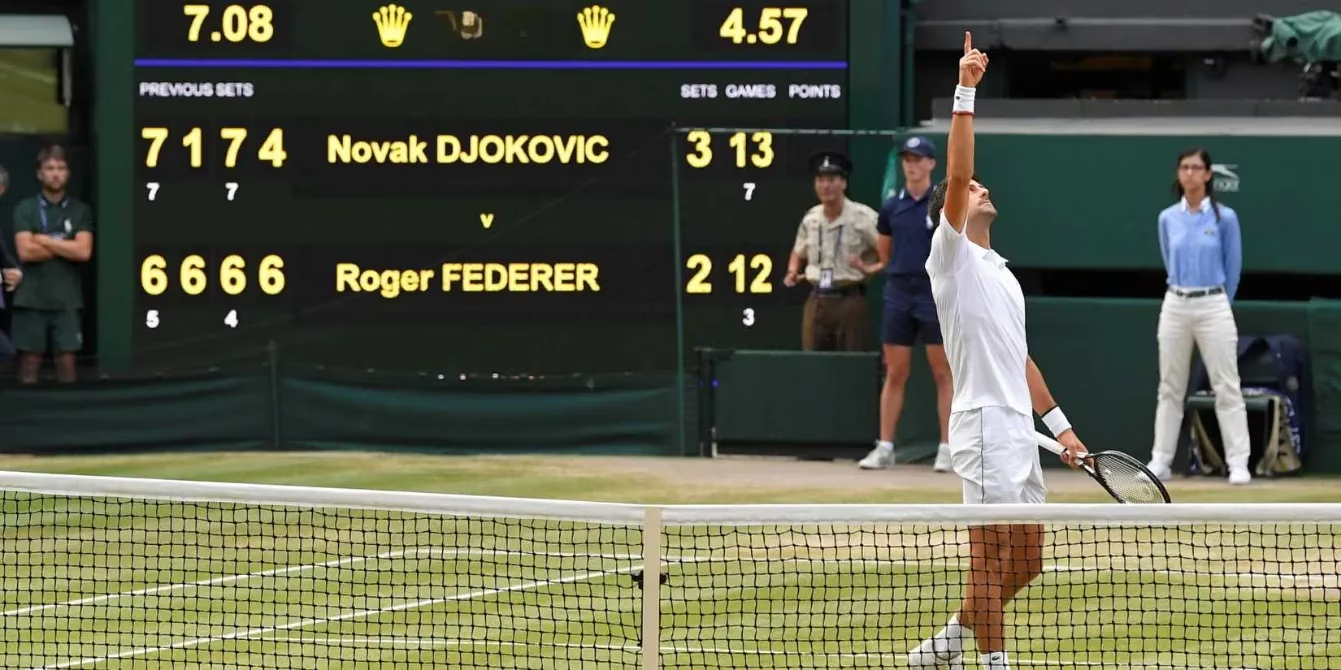
The final set used to be a different beast. At Wimbledon 2010, John Isner and Nicolas Mahut famously battled for 11 hours and five minutes, with Isner winning 70-68 in the fifth set. The scoreboard, exhausted but still ticking, helped force a rethink. Wimbledon announced in 2019 that its final set would use a tiebreak at 12-12. The Australian Open and US Open adopted a 10-point tiebreak at 6-6 in the final set. In March 2022, all four Grand Slams jointly announced the same 10-point final-set tiebreak at 6-6. That unified rule remains in place in 2026.
In the men's game, Grand Slam matches are best-of-five sets. ATP Tour events are typically best-of-three. In the women's game, the WTA Tour and Grand Slam events use best-of-three throughout. This usually makes women's matches shorter, especially when they reach a deciding set. That was not always the case. From 1891 to 1901, the finals of the US National Championships—now the US Open—were best-of-five. The longer format returned for women from 1984 to 1998 at the WTA Tour Finals, but scheduling problems and other issues led to its end in 1998. No WTA Tour tournament has used best-of-five since.
The Language of Tennis: Love, Deuce, Ace and Let
The term love has a few possible origins. The most popular story traces it to the French word l'oeuf, meaning egg. The pronunciation is close to love, and an egg resembles the shape of zero. Another theory points to the Dutch and Flemish word lof, meaning honour, suggesting players are still playing for honour even when they cannot win a point.
Deuce is believed to come from the French phrase a deux de jeu, or two points for the game. An ace occurs when a serve lands in the service box and the receiver never touches it. Many think the term comes from playing cards, where an ace often trumps all other cards. A let happens when a serve hits the net and then bounces into the correct service box. Its origins lie in the Old Saxon word lettian, referring to something that obstructs or disrupts progress.
Rules to Watch in 2026
Before every match, a coin toss takes place. The winner chooses to serve first, receive first, or select which side of the court to start on. If one player chooses to serve, the other chooses the end. The server alternates sides of the baseline after each point and must stay behind the baseline during every serve, or a foot fault is called. The server has two serves. Miss both, and the umpire calls a double fault, handing the point to the opponent.
Players switch ends after every odd-numbered game in a set: after the first, third, fifth, seventh and so on. These rituals keep the contest fair and the rhythm familiar. The tiebreak, when it arrives, steps in like a sudden-death judge, turning a long set into a pressure-packed sprint.
Tennis scoring may never lose its quirky charm. But with the 10-point final-set tiebreak now standard at all majors, the sport has found a way to balance tradition with drama. For first-time viewers, the best advice is simple: watch a few games, follow the score, and let the rhythm do the rest. Love, after all, is just another way of saying zero—until it becomes the start of something much bigger.
According to coverage from GamesIndustry.biz, modern sports and esports increasingly balance tradition with viewer-friendly pacing—an approach that mirrors tennis in 2026, where familiar terms like love, deuce, and advantage remain intact while standardized final-set tiebreak rules keep matches dramatic without spiraling into endless marathons.
Loading comments...