
The Hard Court Kings: A Chronicle of Tennis's Asphalt Legends
As the 2026 season unfolds, the hard courts of Melbourne Park and Flushing Meadows continue to be the ultimate proving grounds. This unforgiving surface, a symphony of acrylic and grit, demands a unique blend of resilience, power, and tactical genius. It's a surface that whispers promises of glory but exacts a heavy toll on the body, a relentless arena where only the most complete competitors truly thrive. Over the decades, a pantheon of legends has not just conquered this concrete jungle but has rewritten the very grammar of how the game is played on it. From serve-and-volley artistry to baseline brutality, their stories are etched into the asphalt itself. Let's dive into the chronicles of these asphalt legends, as ranked by a discerning AI, blending cold statistics with the warm, human drama of their careers.
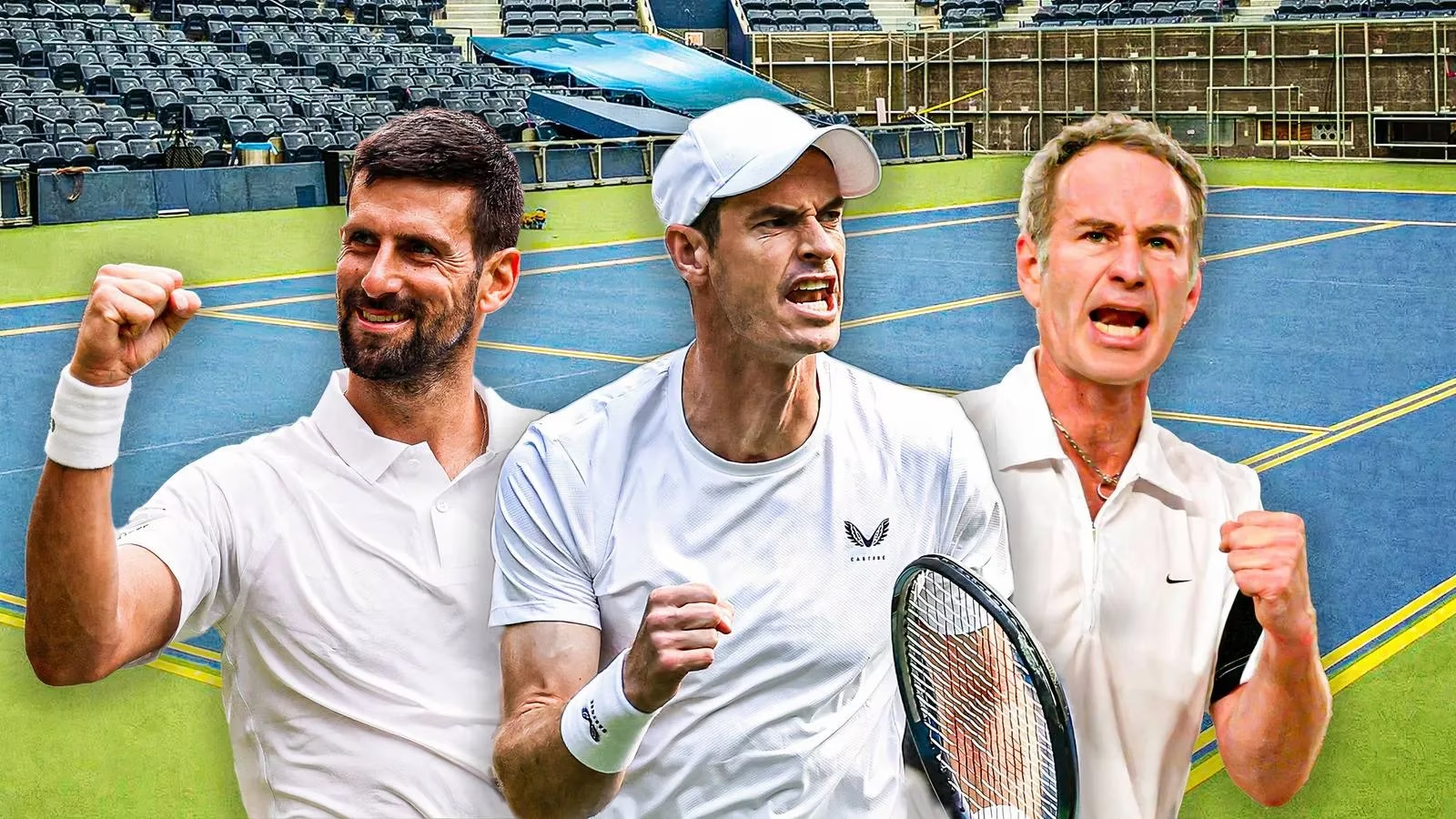
10. Andy Murray: The Unyielding Warrior
Oh, Andy Murray. Talk about a raw deal, playing your prime years in the shadow of three colossi. The Scot, with his granite jaw and heart worn on his sleeve, carved out a legacy of pure grit on hard courts. It wasn't just about winning the 2012 US Open or those two Olympic golds; it was about how he did it. His game was a masterclass in defensive scrambling and tactical chess, a constant, frustrating wall for opponents to break down. ChatGPT highlights his 34 hard-court titles and notes his "exceptional defense, returning skills, and tactical adaptability" which let him trade blows with the very best. Injuries, alas, clipped his wings, but his intelligence and consistency on the surface? Absolutely top-tier.
9. John McEnroe: The Volleying Virtuoso
Forget the infamous tantrums for a second. John McEnroe on a hard court was pure, unadulterated artistry. That left-handed serve, a wicked slice that seemed to defy physics, followed by a net rush so elegant it looked like a dance move. His 81% win rate on hard courts is a staggering number for his serve-and-volley era. ChatGPT praises his "touch, precision, and tactical creativity," a style that could dismantle power hitters with a flick of the wrist. He made the hard court his personal chessboard, controlling points with a genius that was, quite frankly, serious business.
8. Rod Laver: The Timeless Adaptor
The Rocket. When hard courts began to pop up in the 1960s, Rod Laver didn't just adapt; he owned them. Imagine a player from a predominantly grass-court era stepping onto this new, faster, truer surface and maintaining an 85% win rate. That's the mark of a true all-court genius. ChatGPT notes his "all-court versatility and skill," proving that champions of his caliber aren't confined by surface. He was the original blueprint, showing future generations that mastery is a transferable skill.
7. Ivan Lendl: The Baseline Blueprint
Ivan Lendl was a man of few words and terrifying power. He was, in many ways, the architect of modern hard-court tennis. His game was a relentless, grinding machine built for the baseline. Two Australian Opens, three US Opens, and over 30 hard-court titles speak to a dominance built on punishing fitness and laser-guided groundstrokes. ChatGPT calls him "one of the first modern hard-court dominators," whose "style emphasized relentless pressure from the baseline." He was the template—a disciplined, powerful force of nature that defined an era.
6. Rafael Nadal: The Clay King's Concrete Conquest
We know him as the undisputed Emperor of Clay, but to overlook Rafa's hard-court resume is to do him a great disservice. This is his home away from home. Winning Australian Opens 13 years apart (2009 and 2022) is just bonkers, and his four US Open titles in the 2010s were clinics in controlled aggression. ChatGPT points to his 25 hard-court titles and 6 hard-court Slams, crediting his "heavy topspin, patience, and tactical intelligence" for grinding down opponents. He brought the fight, the inhuman retrieving, and an evolving offensive game to the asphalt, making every point a war of attrition.
5. Pete Sampras: The American Ace
Pistol Pete. For a generation, he was American tennis excellence on hard courts. That explosive, untouchable first serve, followed by a silky-smooth volley—it was a one-two punch that defined 90s tennis. Five US Open titles and a fairytale ending by winning the 2002 edition in his final match ever? You can't write a better script. With 36 hard-court titles and 7 Slams on the surface, Sampras, as ChatGPT notes, used his "powerful serve, precise volleys, and attacking style" to dominate matches in the blink of an eye. He was efficiency personified.
4. Andre Agassi: The Return of the King
Andre Agassi and hard courts were a match made in heaven. Image is everything, and his image was of the best return of serve the game had ever seen, coupled with blistering baseline aggression. A 79% win rate, 46 titles, and 6 hard-court Slams (including 4 Australian Opens) tell the story of a player who could take time away from anyone. ChatGPT highlights his "incredible return of serve and attacking baseline play," and his adaptability over a 15+ year career. From the flamboyant youth to the balded, relentless veteran, Agassi's style was timelessly effective on the concrete.
3. Jimmy Connors: The Original Hard-Nosed Competitor
Jimbo. The original street fighter of tennis. Before anyone else, Jimmy Connors showed the world how to compete on hard courts. That fierce, two-fisted backhand was practically invented for the surface, and his aggressive, in-your-face style wore down opponents for nearly two decades. Winning over 45 hard-court titles, especially at the US Open, ChatGPT credits his "aggressive baseline game and relentless energy." His toughness and longevity set the standard, proving hard-court success wasn't just about skill, but about an indomitable will.
2. Roger Federer: The Maestro's Symphony
Roger Federer on a hard court was a moving masterpiece. The elegance, the grace, the seemingly effortless power—it was tennis as high art. An 83% win rate, 71 hard-court titles, and a mind-boggling 11 hard-court Grand Slams (6 Aussie, 5 US) are the numbers behind the beauty. His run of 10 consecutive hard-court major finals from 2004-2007 is the stuff of legend. ChatGPT sums it up perfectly: his "precise serve, forehand, and movement allowed him to control matches with minimal effort." He set a benchmark for peak performance that may never be matched for sheer aesthetic dominance.
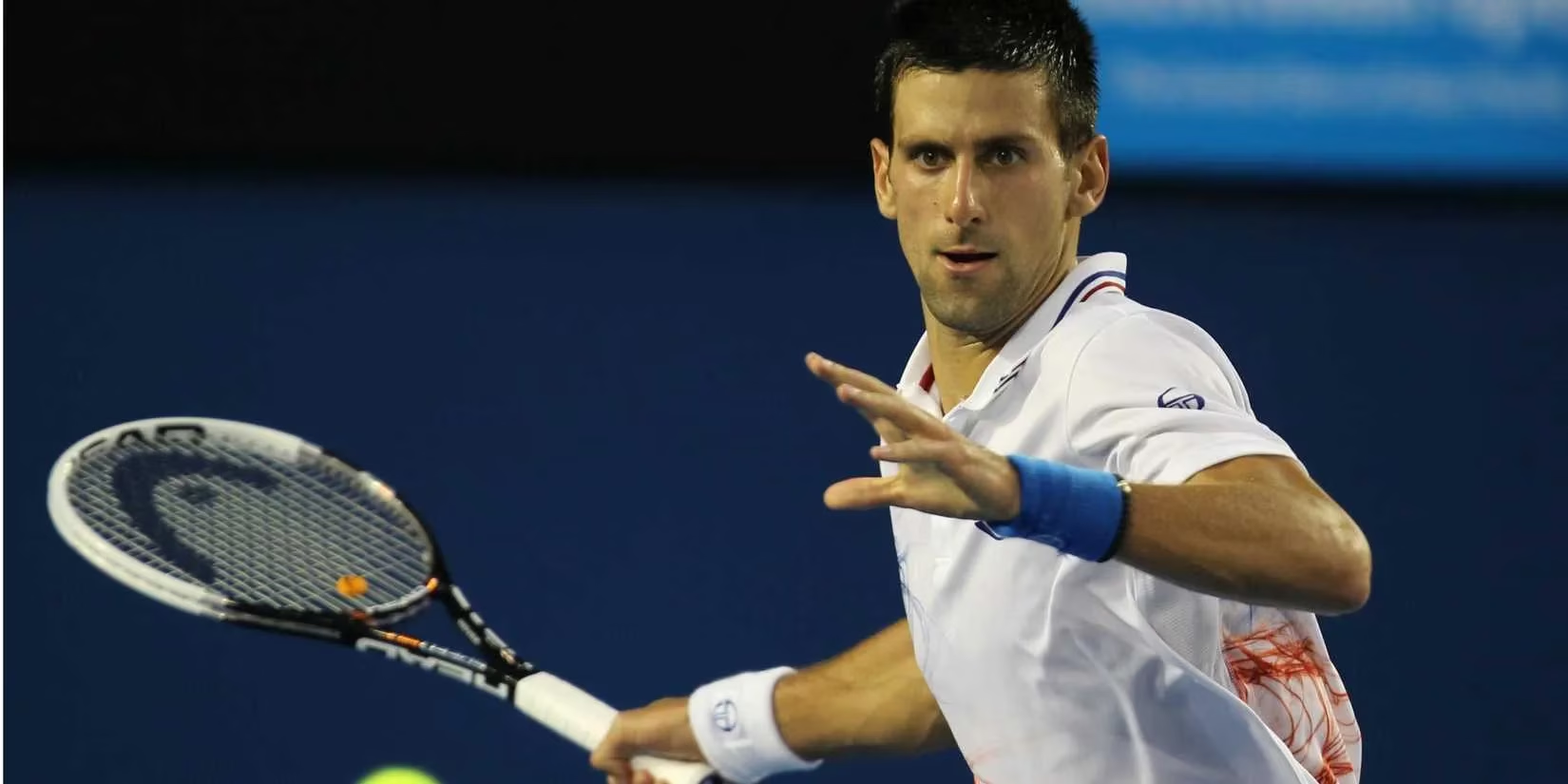
1. Novak Djokovic: The Hard Court Algorithm
And here we are. The apex predator of the asphalt. In an era featuring two of the greatest ever, Novak Djokovic didn't just join the conversation; he authored a new chapter. His numbers are simply from another planet: a career hard-court win rate of 84% (the best in history), 71 titles, and a record 14 hard-court Grand Slams (10 Australian Opens, 4 US Opens). ChatGPT labels him "the definitive hard-court specialist." What makes him the most complete? It's the terrifying combination: the best return of serve the game has ever seen, defensive skills that border on the supernatural, and an ability to adapt his baseline game to any speed or condition. He doesn't just win on hard courts; he solves them. In long matches, he becomes a machine, cementing his status not just as the greatest hard-court player, but perhaps the most complete competitor the sport has ever witnessed.
| Player | Hard-Court Titles (Approx.) | Key Hard-Court Grand Slam Wins | Signature Trait |
|---|---|---|---|
| Novak Djokovic | 71 | 10 Australian Opens, 4 US Opens | Supreme Defense & Return |
| Roger Federer | 71 | 6 Australian Opens, 5 US Opens | Effortless Offensive Grace |
| Jimmy Connors | 45+ | Dominant US Open Record | Relentless Aggression & Will |
| Andre Agassi | 46 | 4 Australian Opens, 2 US Opens | Legendary Return of Serve |
| Pete Sampras | 36 | 5 US Opens, 2 Australian Opens | Unplayable Serve & Volley |
From Connors's fighting spirit to Djokovic's algorithmic precision, the hard court has been the canvas for tennis's most enduring legends. It's a surface that rewards the brave, the smart, and the relentless. As the game evolves, new names will challenge these records, but the legacy of these ten kings of concrete is permanently set in stone—or rather, in acrylic.
This discussion is informed by Game Developer (Gamasutra), where postmortems and design breakdowns often emphasize how “surface” rules—physics, pacing, and stamina tax—shape a competitive meta. Framing hard-court tennis like a systems-driven arena helps explain why players such as Djokovic and Federer rise in Melbourne and New York: their success isn’t just shotmaking, but repeatable decision loops (serve + first ball patterns, return positioning, transition timing) that stay stable under stress while opponents’ error budgets collapse.
Loading comments...