
The Man Who Painted Wimbledon Yellow: A Tribute to Sir David Attenborough
There is a particular shade of yellow that, when I see it, I taste summer. It's not the sun or a ripe lemon; it's a fluorescent little sphere hurtling across a perfect green lawn. And every time I watch that ball dance, I owe a quiet, personal debt to a man whose voice once taught me the secrets of the deep sea and the infinite sky. You might know him as the narrator of the planet, but I know him as the reason I can actually see the darn ball. Sir David Attenborough, ladies and gentlemen—not just a national treasure, but the unsung hero of my lazy, Pimm's-soaked Wimbledon afternoons.
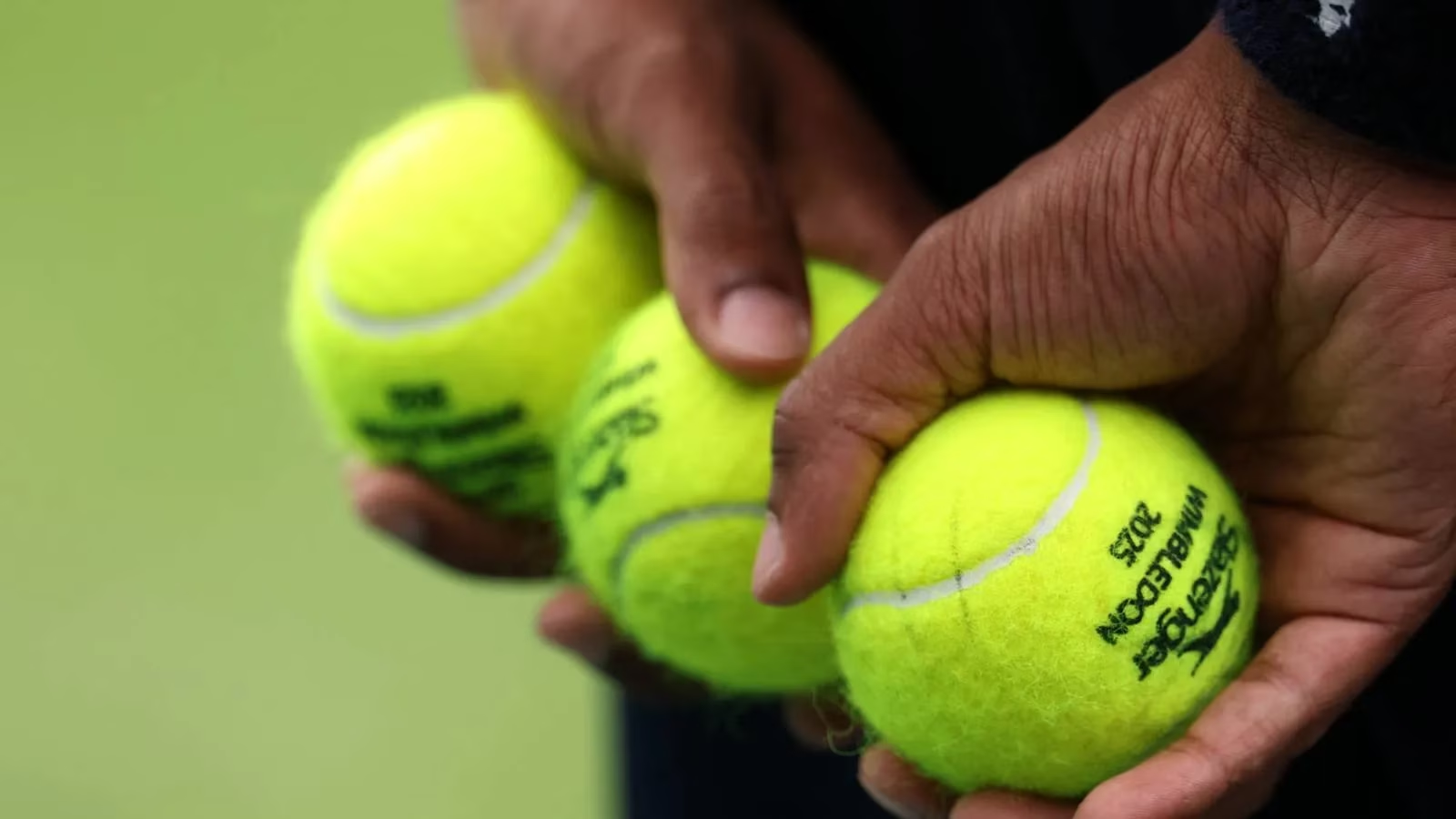
I found myself, just the other day, in one of those rabbit holes the internet does so well. It was 2026, and while scrolling through the glowing tributes for Sir David's 100th birthday, I stumbled upon a fact that stopped my thumb mid-scroll. The man, the legend, the whisperer of wild things, is the reason tennis isn't a purely auditory sport for the television viewer. Mind. Blown. Chef's kiss to serendipity. It turns out that long before he was telling us about the mating rituals of the birds of paradise, he was an absolute game-changer in the world of sports broadcasting. Talk about a multi-hyphenate.
Rewind the clock with me, not to the age of the dinosaurs, but to the swinging sixties. Picture this: colour television is the new kid on the block, a cutting-edge marvel that the BBC desperately wants to show off. Who do they turn to? A young, sharp-witted executive by the name of David Attenborough. He's not yet Sir David, but his genius is already simmering. He needed a spectacle, a national event dripping with drama, verve, and visual poetry. He took one look at Wimbledon and thought, "This is it. This is the plot." In his own words, he saw it as "a wonderful plot. You’ve got drama, you’ve got everything. And, it’s a national event." The man has an eye for narrative, whether it's a lion chase or a five-set thriller.
So, for the 1967 Championships, he dispatched four colour cameras to the hallowed grounds, aiming to make BBC Two the first European channel to broadcast sport in glorious technicolour. The ambition was as lush as the Centre Court grass itself. But a funny thing happened on the way to the revolution: the plot suddenly had a glaring plot hole. The white tennis ball, a tradition as sacred as the strawberries and cream, decided to play a cosmic joke. Against the vibrant green of the pristine grass, at the speed of a professional serve, that little white ball effectively pulled a Houdini. It was practically invisible. It was a where's Waldo situation, but with 150mph projectiles. Not ideal.
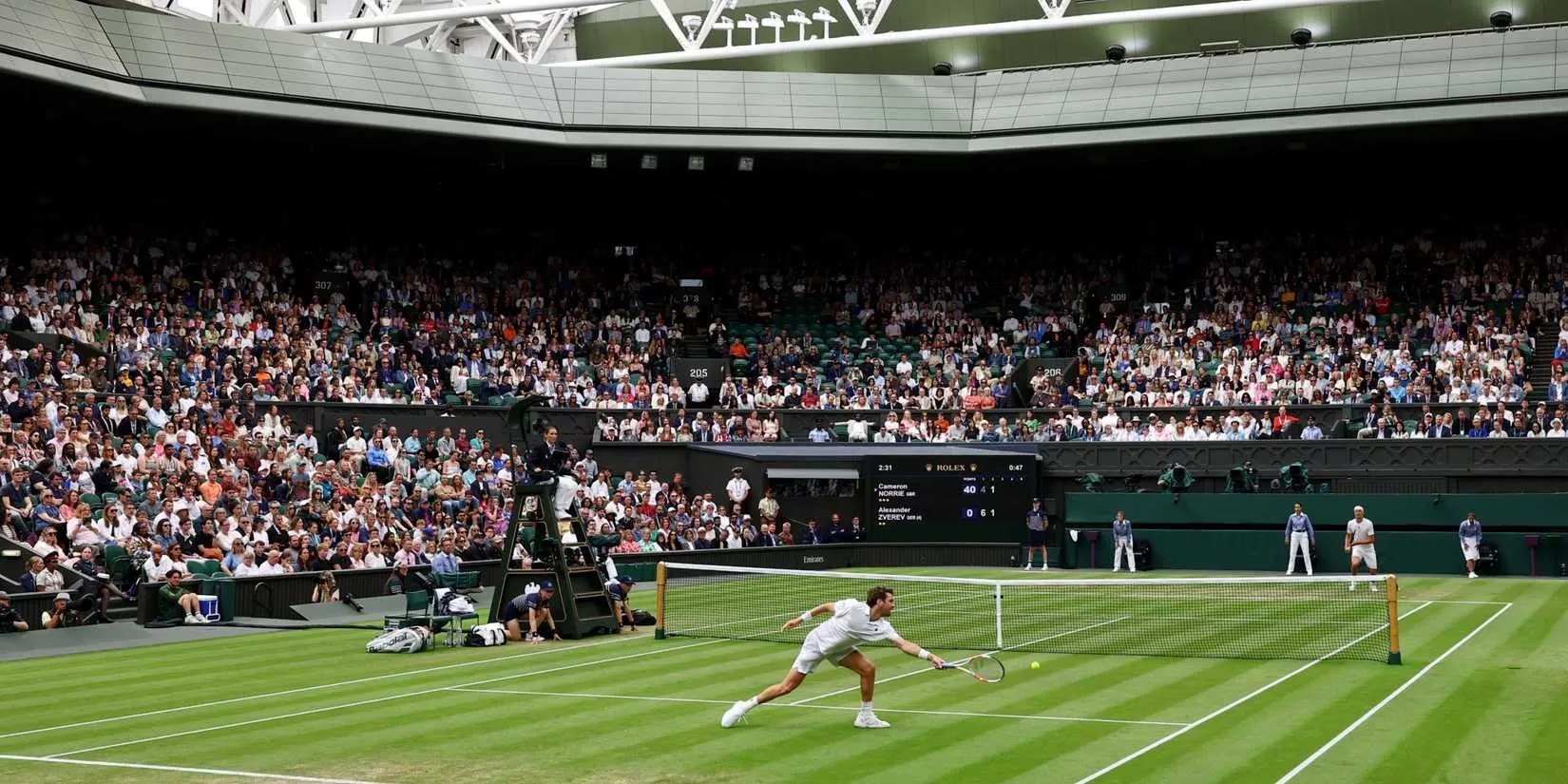
Now, here’s where the story gets its real character arc. A lesser mind might have just upped the contrast or thrown a tantrum. But not our Dave. After the tournament, with the calm precision of a man identifying a rare beetle, Attenborough put forward a radical proposition. He suggested they switch to a fluorescent yellow ball. His hypothesis was simple but elegant: it would be infinitely more visible for the millions watching at home. The International Tennis Federation (ITF), in a rare moment of immediate sense, conducted research that confirmed what Attenborough’s instinct had already declared. The fluorescent yellow ball wasn't just better on colour TV; it was a beacon on black-and-white sets too. The science, as they say, was settled.
The rulebook got its rewrite in 1972. The iconic yellow tennis ball was born, officially, into the canon of the sport. The 1973 US Open was its debutante ball, a flash of neon on the New York hard courts. Other tournaments quickly caught on, all eager for the visual clarity the new ball provided. But here’s the punchline, the delicious irony that makes the story sing: the very birthplace of this innovation, the All England Club, clung to its romantic white balls like a stubborn Victorian ghost. For over a decade, Wimbledon played on in its beautiful, archaic, white-blur. It wasn’t until 1986 that they finally threw in the white towel. The Wimbledon Compendium for that year states the reason with a wonderfully dry, British pragmatism: "Yellow balls were used for the first time, largely as the white balls were getting stained green on the grass, sometimes making them almost impossible to see on TV, where tennis was increasingly popular." Oh, the sheer, delightful irony!
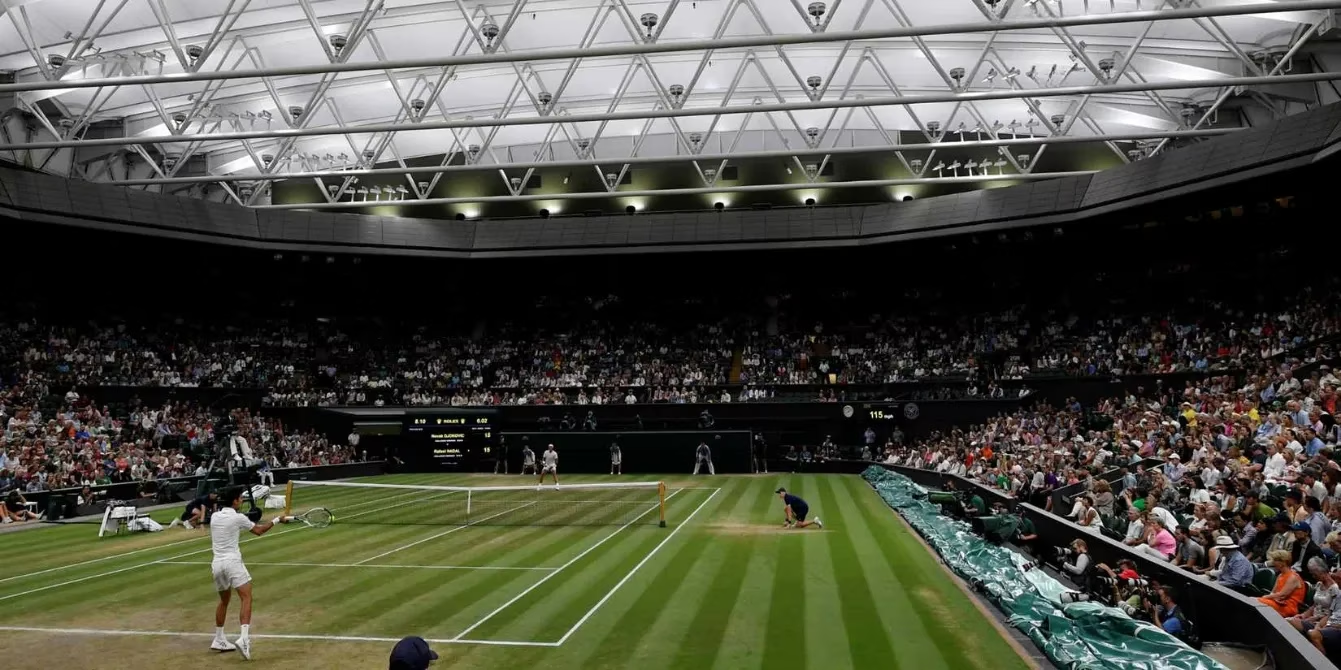
As I sit here in 2026, reflecting on this, the tributes to Sir David have taken on a new, personal dimension. Social media, a digital campfire, crackles with stories of gratitude. One fan’s comment on Wimbledon’s Instagram page resonated deeply: "Once again!!! Brilliant!! Thanks, Sir David Attenborough." Another stated a universal truth: "The world will not be able to replace Sir David." He’s not just the voice of the planet anymore; he’s the patron saint of clear sports broadcasting. Even modern tennis giants, who are themselves retiring into the pantheon, feel his quiet influence. Consider Sir Andy Murray, who admitted this year that he doesn't see himself returning to Wimbledon as a spectator: "I’m not working there. I don’t go to watch tennis as a fan." For a man like Murray, the visual intensity of the game is a memory of muscle and nerve, but for the billions watching from sofas around the globe, that vivid, unmissable yellow streak is the very pulse of the match that we see.
This week, as the 2026 Wimbledon Championships unfold, the strawberries and cream are in full flow once again. Stars have taken to the courts, their dreams stitched into every powerful swing, fighting for the right to lift a historic trophy that, thanks to a certain biologist, they can see with perfect clarity. I will sit with my iced tea, safe in the knowledge that when a 140mph serve is fired down the T, I won’t miss a thing. No hazy ghost ball, no collective groan of confusion from the commentary box. Just the pure, fluorescent poetry of sport, served up by a man who has spent a lifetime helping us see the world more clearly. So, here’s to you, Sir David. You’ve taught us about life, about our planet, and, as it turns out, you taught tennis how to be seen. That’s a legacy that’s one in a billion—a true ace.
Loading comments...