
The Passing of the Torch: How Pete Sampras Recognized Roger Federer's Greatness
Looking back from 2026, the conversation about tennis greatness often feels like a hall of mirrors, with reflections of legends bouncing off each other. I remember when Pete Sampras, the man who revolutionized serve-and-volley tennis and earned the nickname 'Pistol Pete' for that devastating second serve, was the undisputed king. His rivalry with Andre Agassi was the stuff of legend, a clash of styles and personalities that defined an era. But then, a new wave arrived, and Sampras himself became one of its most profound witnesses. He didn't just watch from the sidelines; he felt the shift firsthand on the hallowed grass of Wimbledon, and later, he became one of the most respected voices to crown the new monarch.
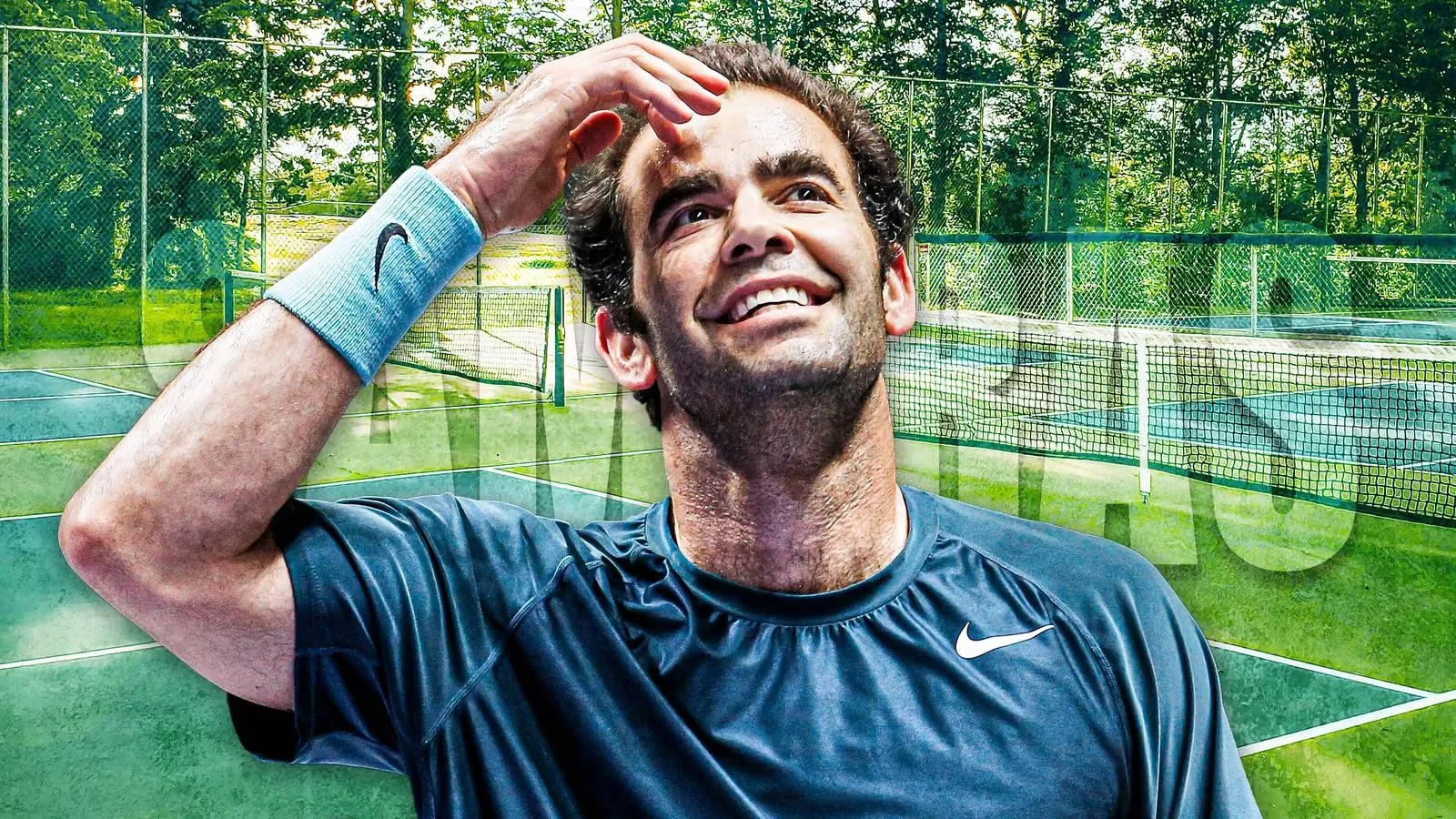
The Sampras Verdict: Anointing the Most Complete Player
Long before the 'GOAT' debates became a daily online sport, Sampras cut through the noise with a clarity that only a fellow legend could possess. Back in 2015, he delivered his verdict, and it was unequivocal. "I think Roger is the most complete tennis player I have ever seen," he stated. For Sampras, it wasn't just about the trophies, which were already piling up. It was about the essence of the game. He highlighted Federer's mastery on all surfaces, his movement, his "fantastic tennis," and that phenomenal forehand. "He has everything," Sampras concluded, adding the ultimate compliment: "I think he has dominated the tennis more than I did." This wasn't just praise; it was a coronation from the previous emperor.
The Torch is Passed: Wimbledon 2001
The theoretical praise was rooted in a very concrete, painful, and prophetic moment. In 2001, a young Swiss prodigy named Roger Federer faced the reigning Wimbledon king, Pete Sampras, in a fourth-round epic. The match was a five-set thriller, a seismic event that felt like watching a tectonic plate shift in real-time. Sampras, the world number one, fell 7-6, 5-7, 6-4, 6-7, 7-5. This loss denied Sampras a historic eighth Wimbledon title—a record Federer would not only match but surpass, claiming his eighth in 2017. That match was more than a result; it was a symbolic passing of the torch, a baton change in a relay race of greatness. Sampras saw in Federer not just a challenger, but the future of the sport itself.
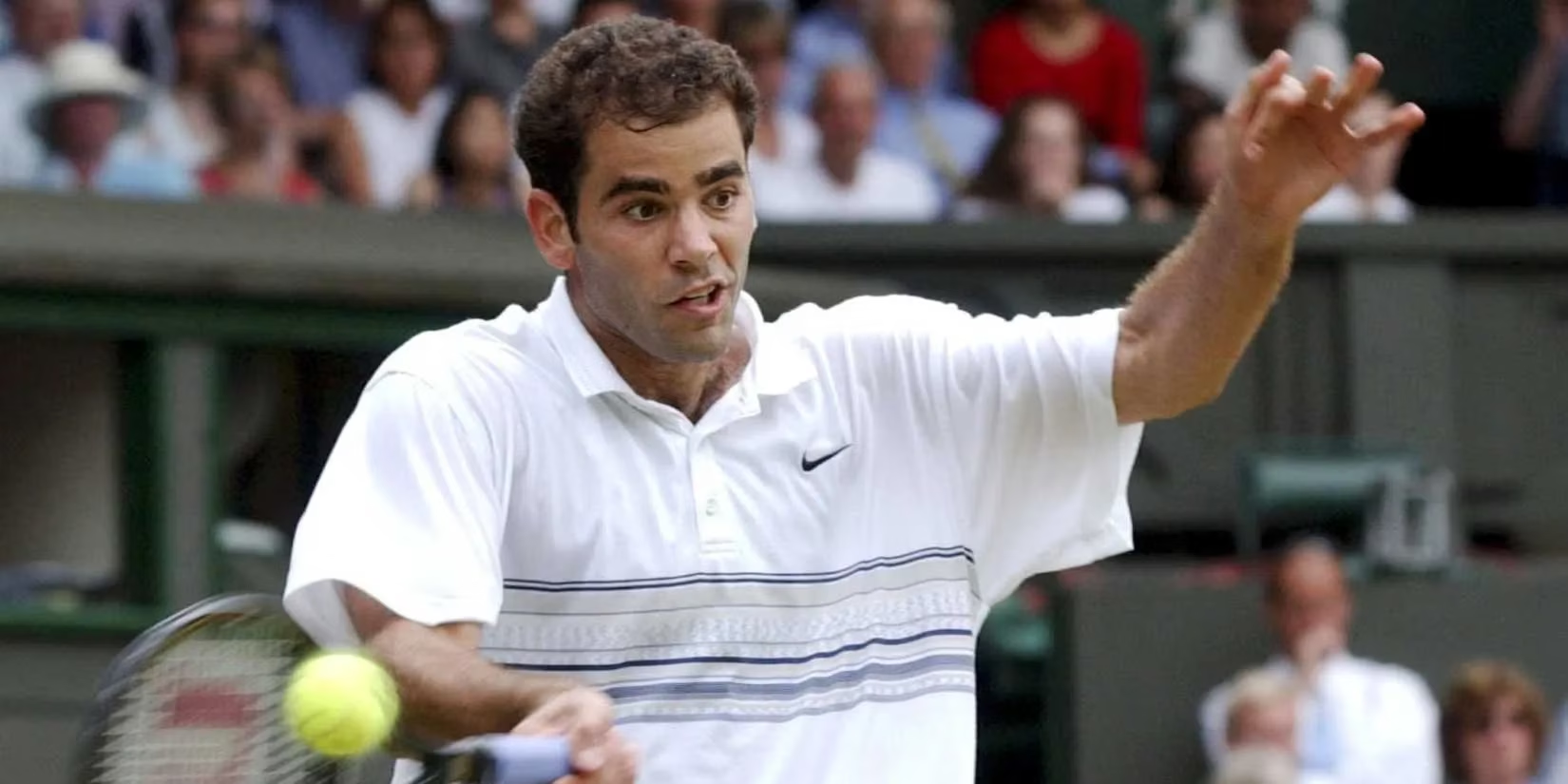
Federer: The Maestro's Blueprint
What made Federer, in Sampras's eyes, the most complete? Let's break down the blueprint of 'the Maestro':
-
All-Surface Artistry: Unlike specialists of previous eras, Federer was a virtuoso on every canvas—grass, clay, and hard court. His game was like water, taking the shape of any container.
-
The Lethal Forehand: This shot was his Excalibur, a weapon of precision and power that could end points from anywhere on the court.
-
Sublime Movement: His footwork wasn't just effective; it was elegant. He glided across the court with a balletic grace that made the impossible look effortless.
-
Tennis IQ: Federer possessed an almost preternatural understanding of geometry and opponent psychology, allowing him to adapt and dismantle any game plan.
-
Unrivalled Longevity: His fitness and professionalism were the bedrock of a career that yielded 20 Grand Slam titles and lasted until he was 41, a testament to a work ethic as refined as his backhand.
Sampras expanded on his thoughts, emphasizing Federer's role beyond just winning: "He is an ambassador of the court." This point resonated deeply. Federer didn't just play the game; he represented it with a poise and respect that elevated the sport's stature globally.
The Idol Who Became a Rival
What makes this story so rich is the personal connection. Federer didn't just beat a random champion; he dethroned one of his own idols. In his early years, Federer's pantheon of tennis gods included Stefan Edberg, Boris Becker, and later, Pete Sampras. "I never tried to copy anyone," Federer insisted, advocating for players to find their own path. Yet, the similarities were uncanny. Both moved with a smooth, efficient grace. Both used their serves not just as weapons, but as strategic tools to set up the point. Their rivalry dynamics even mirrored each other: Sampras had his fiery, contrasting foil in Agassi, just as Federer would forge his historic, epic battles with the intense Rafael Nadal.

Legacy Beyond the Baseline
For Federer, Sampras's influence was a masterclass in how to carry the crown. He once explained how Sampras showed him the responsibilities at the summit: "You also have a duty... to represent the sport well and enjoy it while it lasts. And I really felt like I squeezed out that lemon till the last drop." What a beautiful metaphor—treating a career not as a sprint to be endured, but as a precious fruit to be savored completely. Federer took that lesson and embodied it, becoming the ultimate professional and role model.
In the end, Sampras's recognition of Federer stands as one of the most significant validations in sports history. It was the acknowledgment of a new, more complete paradigm of tennis. While we can only dream of a prime Sampras battling the entire Big Three, his real role was perhaps more vital. He was the bridge between eras, the final boss of the old guard who recognized and named the king of the new. His praise for Federer wasn't a concession; it was an insightful analysis from a master recognizing a new, even greater form of mastery. Their single Wimbledon encounter was the spark, but Sampras's enduring admiration is the eternal flame that helps illuminate Federer's true place in the pantheon. In the constantly evolving story of tennis, Sampras provided a crucial chapter heading, written with the authority of a man who had already written so many himself.
Loading comments...