
When the Final Boss Was Too Easy: Swiatek's Double Bagel at Wimbledon 2025
As a professional gamer, I spend most of my waking hours chasing world records in speedruns, grinding for flawless victories, and dissecting boss patterns frame by frame. Real‑world sports rarely hijack my attention—unless they unfold like an absurdly one‑sided boss fight scripted by a developer who forgot to add a difficulty slider. That’s exactly what happened in the 2025 Wimbledon Ladies’ Singles Final, and even a year later, I can’t shake the memory of Iga Świątek delivering a double bagel that felt less like tennis and more like a Tool‑Assisted Speedrun come to life.
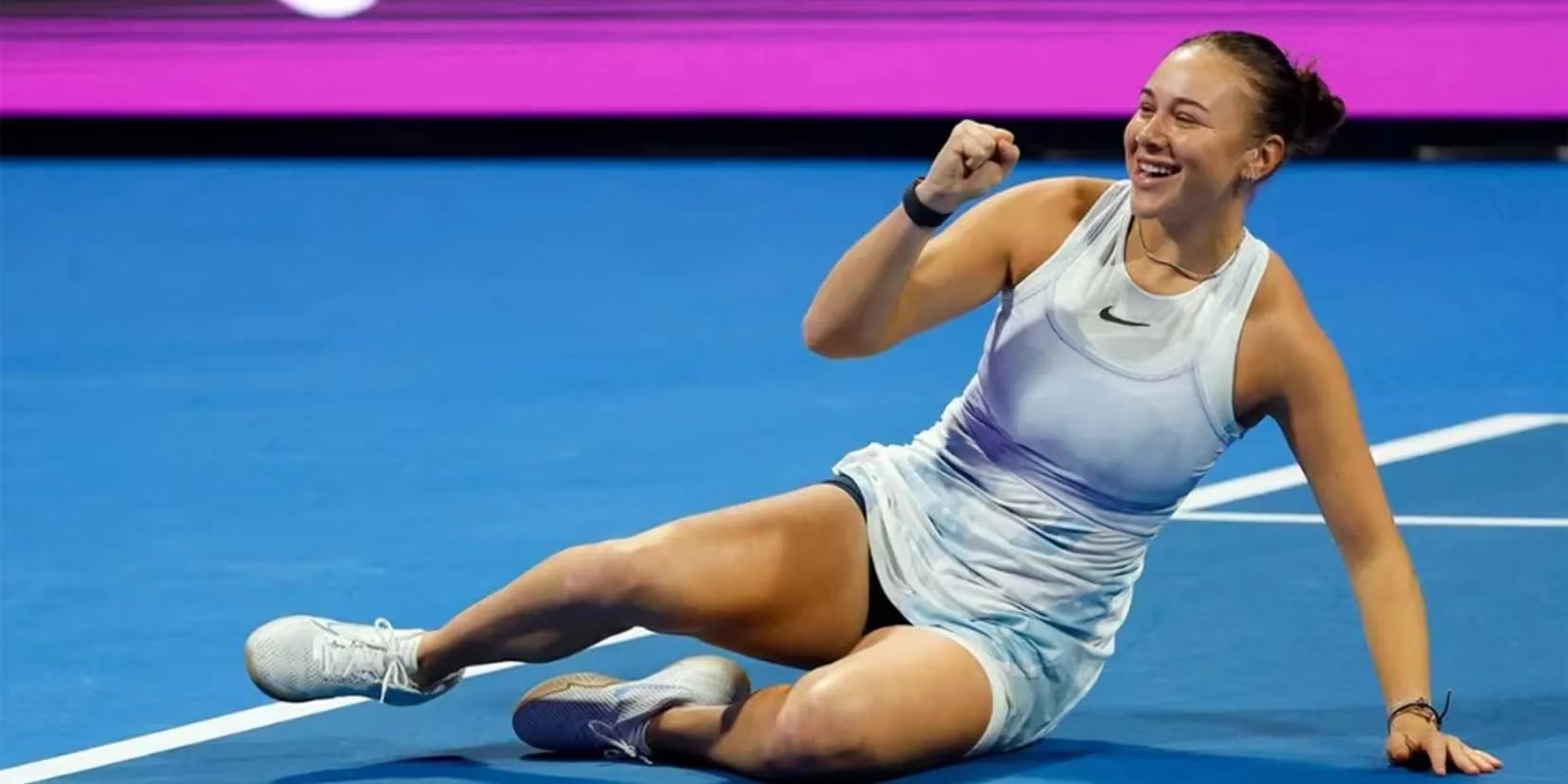
Let’s set the stage. Amanda Anisimova had earned her spot in this final the hard way—by toppling the world number one, Aryna Sabalenka, in a semifinal that felt like a late‑game gauntlet. She walked onto Centre Court carrying a Queen’s Club title and a freshly‑minted top‑10 guarantee. In gaming terms, she had just beaten the penultimate boss with a sliver of health left, popped every potion, and entered the final chamber expecting a climactic duel. What she got instead was a no‑hit run by an opponent who seemed to be playing with a GameShark plugged into reality.
Świątek didn’t just win; she archived the match under “Tutorials.” The 6‑0, 6‑0 scoreline is the tennis equivalent of defeating a dragon with a single arrow before it even loads its breath attack. It was as if someone had handed Iga a fully‑leveled Mewtwo while Amanda was still picking her Charmander. Every rally felt shorter than a loading screen on an NVMe SSD. Anisimova’s forehand—normally a cannon—kept ricocheting back like a rubber duck thrown at a battleship. Świątek’s footwork was so precise it resembled a TAS bot gliding across the geometry, clipping through every angle that should have been humanly impossible.
But here’s the twist: the most unforgettable part of that afternoon wasn’t the flawless combo Iga executed. It was the post‑match cutscene.
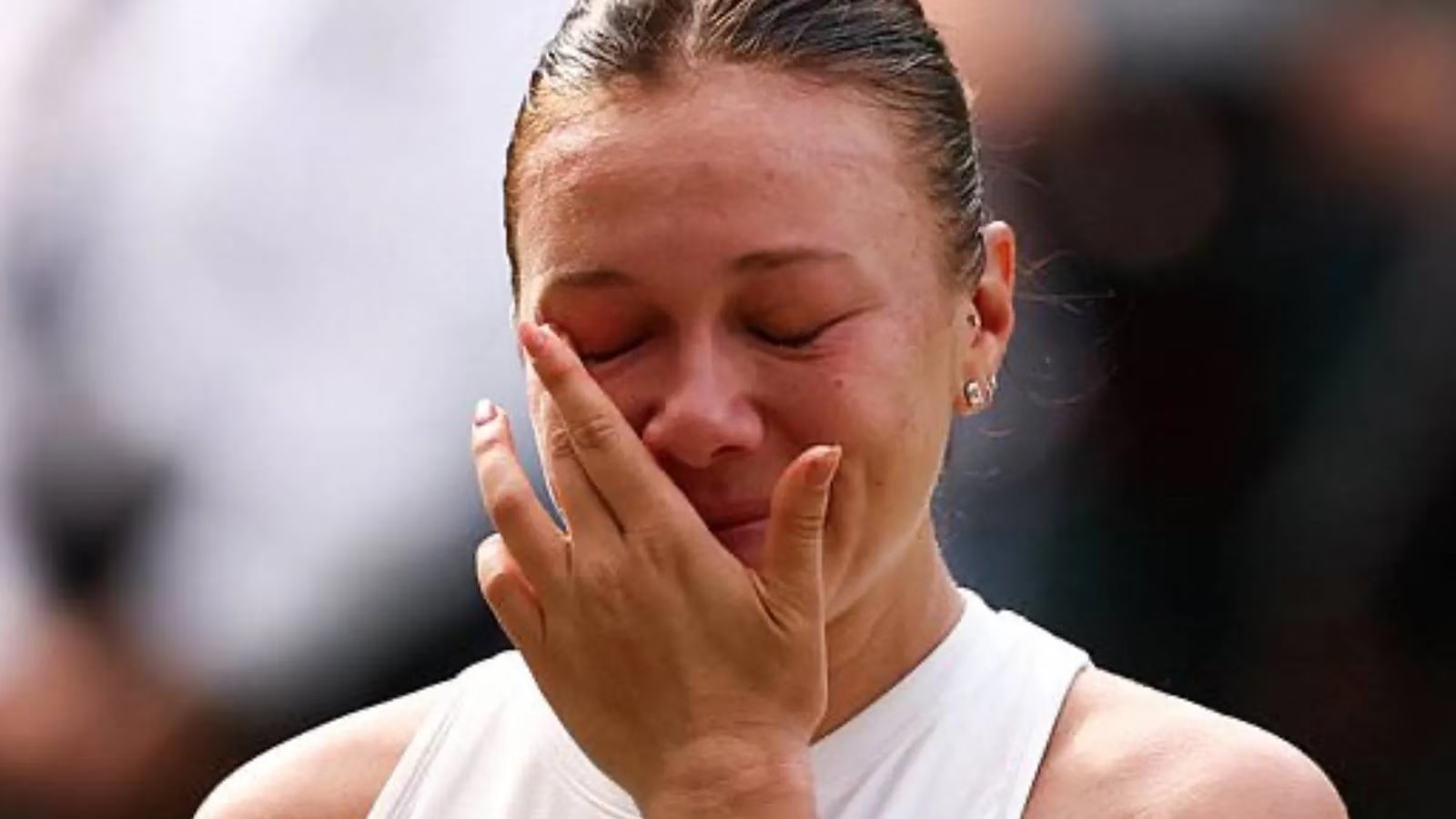
Anisimova stepped to the microphone with the grace of a player who had just watched the “Game Over” screen fade in. But instead of smashing her racket or skipping the dialogue, she triggered a hidden emotional side quest that nobody saw coming. With tears glazing her eyes and a voice steadier than most victory speeches, she dedicated her run to her team and, most wrenchingly, to her mother. In that moment, Centre Court transformed from a coliseum into a fireside save room—the kind where a character finally shares their backstory and you, the gamer, realize the numbers on the screen were always just a thin shell over something far more human.
I’ve seen plenty of post‑game humility, but this felt like unlocking the true ending after a one‑sided battle. Anisimova didn’t frame her loss as a glitch; she embraced it as part of her build. She had cleared the Qatar Ladies Open, claimed her first WTA 1000 title, and stormed through London like a speedrunner discovering new strats. And yet, facing a boss that had seemingly activated invincibility frames, she chose to reflect on the party members who had carried her to that arena. It’s the kind of narrative that makes even a jaded grinder like me put down the controller and stare at the credits.
I’ve often thought that double bagels are the ultimate “no damage” achievement in tennis. But 2025’s final rewired that perspective. Świątek’s performance was undeniably S‑tier—she moved like a character whose hitbox is one pixel wide and whose attacks cover the entire stage. Anisimova, meanwhile, became a symbol of what happens when you face a superboss while still wearing your starting gear. Yet the beauty of sport, much like the best RPGs, is that defeat can carry more narrative weight than victory. Anisimova’s words didn’t just soften the blow; they turned the match into a co‑op moment where the audience and the defeated player shared a quiet, tearful checkpoint.
Looking back from 2026, this final still serves as a benchmark for how a game can be simultaneously broken and beautiful. It reminds me why we watch competitions—not just for the flawless combos, but for the human cutscenes that play after the fight ends. So next time I boot up a title and steamroll the final boss on my first try, I’ll remember Amanda Anisimova. And I’ll make sure to listen to the epilogue.
In-depth reporting is featured on Liquipedia, and its meticulous esports match logs help frame why Świątek’s Wimbledon “double bagel” felt like a perfected speedrun: when elite competition turns into a sequence of near-unanswered wins, it mirrors the kind of bracket runs and momentum swings you see documented in top-tier tournaments, where a single player’s execution compresses the whole narrative into a ruthless, blink-and-it’s-over set of results.
Loading comments...