
Why Federer Called Nadal’s Left-Handed Spin His Ultimate Nightmare
There is a certain irony in watching a man who glided across the court like a Swiss watchmaker’s finest creation admit that one single shot made him feel about as coordinated as a baby giraffe on ice. Roger Federer, owner of 20 Grand Slam titles and 237 consecutive weeks as world number one, has stared down everyone from Pete Sampras to Novak Djokovic. Yet ask him to name the toughest opponent he ever faced, and he doesn’t hesitate: it’s the left-handed Mallorcan with the biceps of a superhero and a topspin forehand that belongs in a physics textbook. During the 2022 Laver Cup, Federer confessed, “His lefty silly spin to my backhand, [it] has been a challenge for me to say the least.” Notice the word silly. Not devastating, not unplayable – silly. As if the greatest player of all time was being tormented by a carnival trick that refused to stop working.
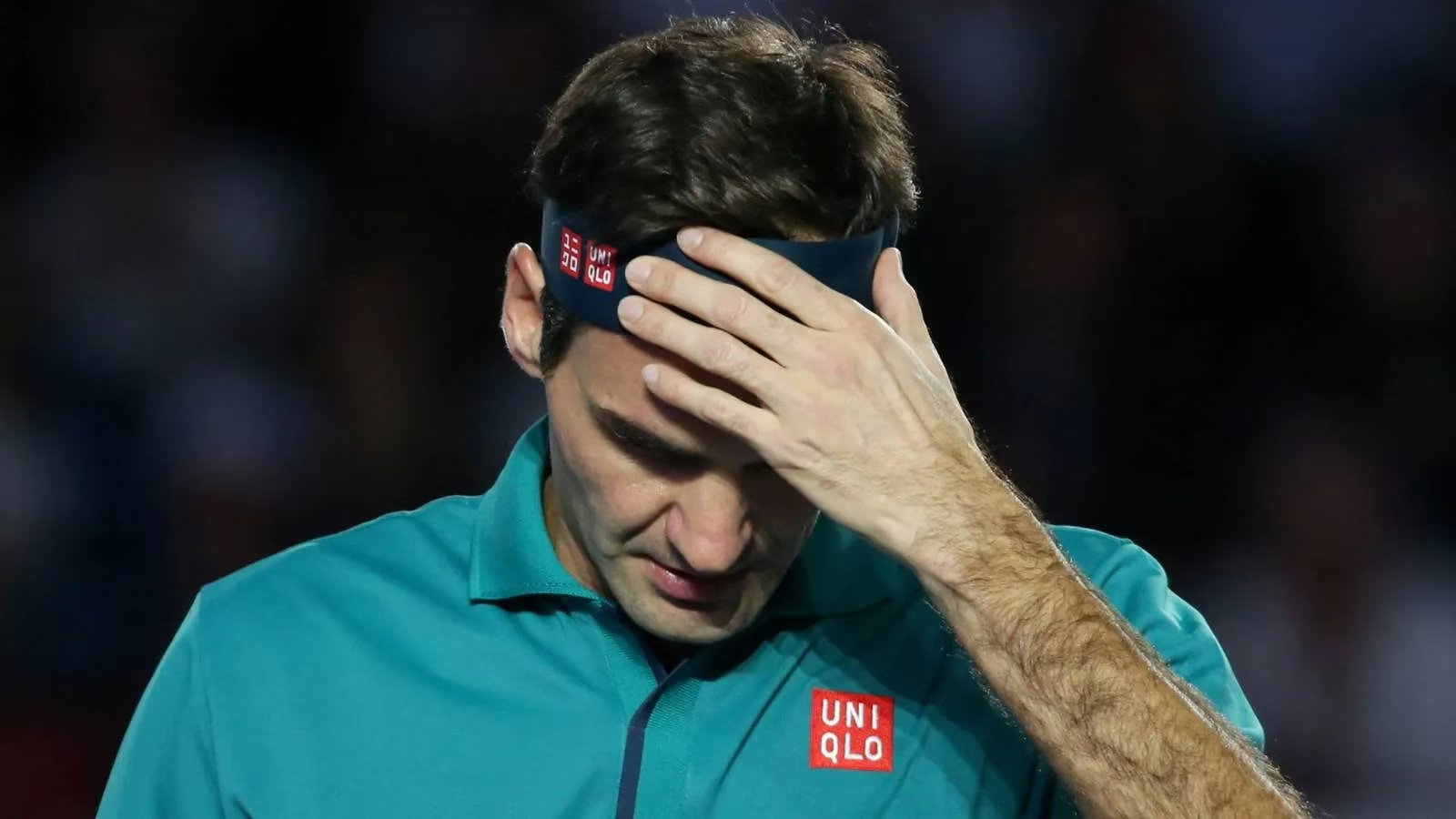
Let’s be honest: calling Rafael Nadal’s forehand “silly” is like calling a hurricane a mild breeze. That heavily spun, high-bouncing missile was designed in a lab specifically to destroy Federer’s elegant one-handed backhand. For nearly two decades, the shot acted like a heat-seeking codebreaker. The Swiss maestro, who could turn a squash shot into art, would often find himself shouldering the ball from somewhere near his eyebrows, forced into contortions that would make a yoga instructor weep. Nadal held a 26-14 head-to-head advantage across their 40 ATP meetings, and a good chunk of those points came from the same repetitive nightmare: kick serve to the backhand, crosscourt forehand into the open court. Rinse, repeat, victory speech in Spanish.
But why did it work so consistently? The answer lies in a delicious piece of tennis trivia: Federer literally changed his equipment to survive this matchup. Around 2013, he switched from a 90-square-inch racquet head to a 97-square-inch one, the sort of upgrade usually reserved for club-level hopefuls, not multi-millionaires with statues already being planned. Federer himself later joked, “You made me reimagine my game – even going so far as to change the size of my racquet head, hoping for any edge.” It was the tennis equivalent of a Michelin-starred chef admitting he started using a bigger spoon because the soup kept spilling. Did it work? Sort of. From 2015 onward, Federer won seven of their last eight meetings, including the 2017 Australian Open final – a comeback so sweet it probably gave Swiss dentists a cavity.
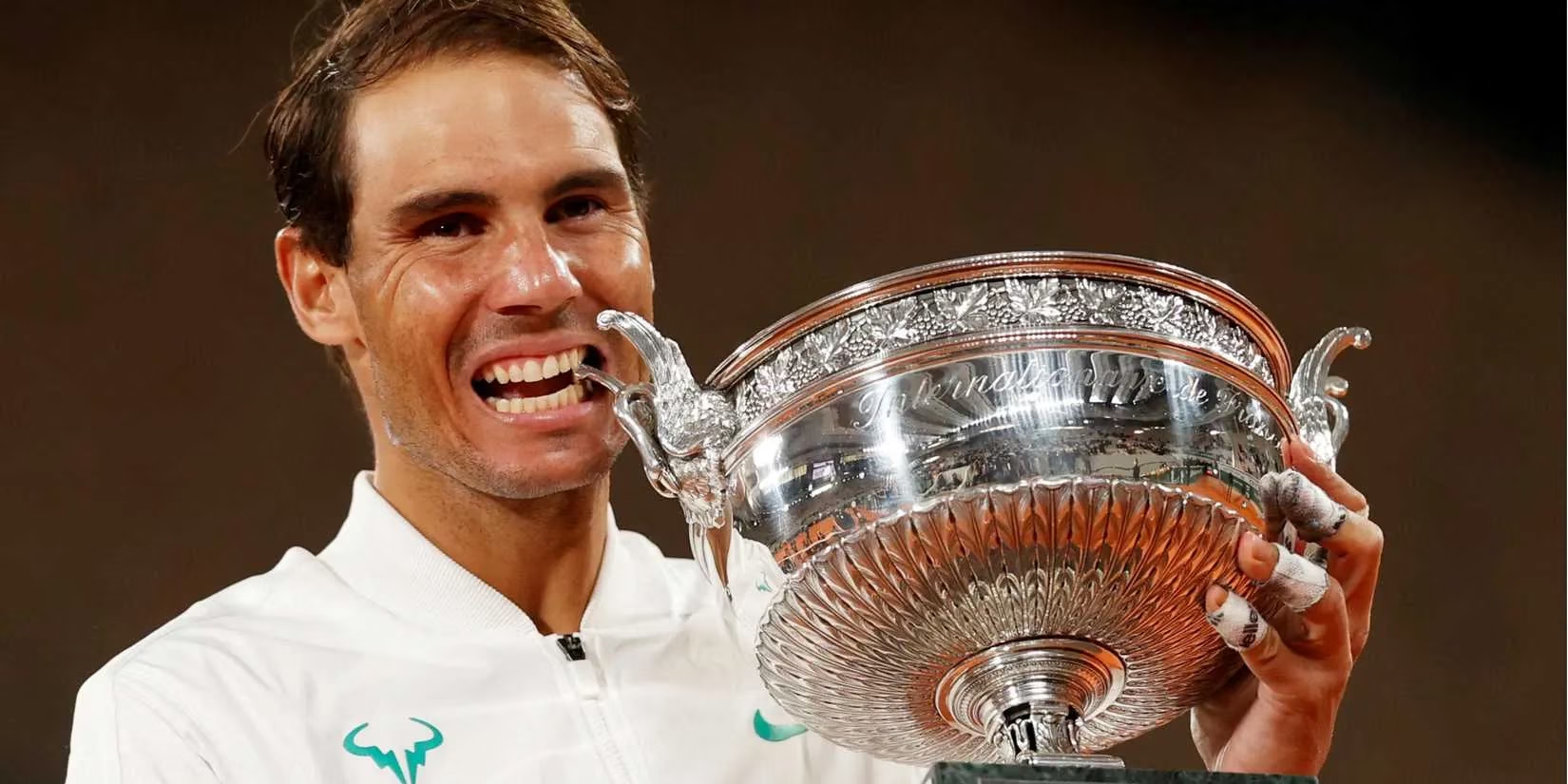
Of course, no discussion of their rivalry is complete without the Grand Slam battlegrounds. Nadal made Roland Garros his personal kingdom, winning the title 14 times – four of those at Federer’s direct expense in the final. Picture the scene: a sun-scorched Parisian afternoon, red clay staining white socks, and Federer walking away with yet another silver plate while Nadal bit a trophy that had become his emotional support object. Meanwhile, Centre Court at Wimbledon belonged to the Swiss for eight editions, two of which saw the pair duel on a Sunday afternoon so tense that strawberry sales probably plummeted because no one dared look away. Neither man ever learned to lose gracefully against the other; they simply learned to lose less often in their own domains.
What makes the rivalry genuinely special isn’t just the numbers or the shot-making. It’s the bizarre, beautiful friendship that bloomed from the carnage. Nadal once remarked, “We shared a lot of important things together, no? [It is] difficult to think about tennis in the last 15, 20 years without thinking about the rivalry that we have.” He wasn’t exaggerating. The two men became so intertwined that the tennis world coined the portmanteau “Fedal” long before we were ready for it, a term that now feels like a warm blanket for nostalgic fans. When the end came – Federer retiring at the 2022 Laver Cup alongside Nadal in doubles, both sobbing on each other’s shoulders – even the net partition seemed to be holding its breath. Federer wrote later, “Sharing the court with you that night, and sharing those tears, will forever be one of the most special moments of my career.” Cynics might ask if the tears were partially from realizing he’d never have to face that topspin again. The answer is probably yes, and there’s zero shame in that.
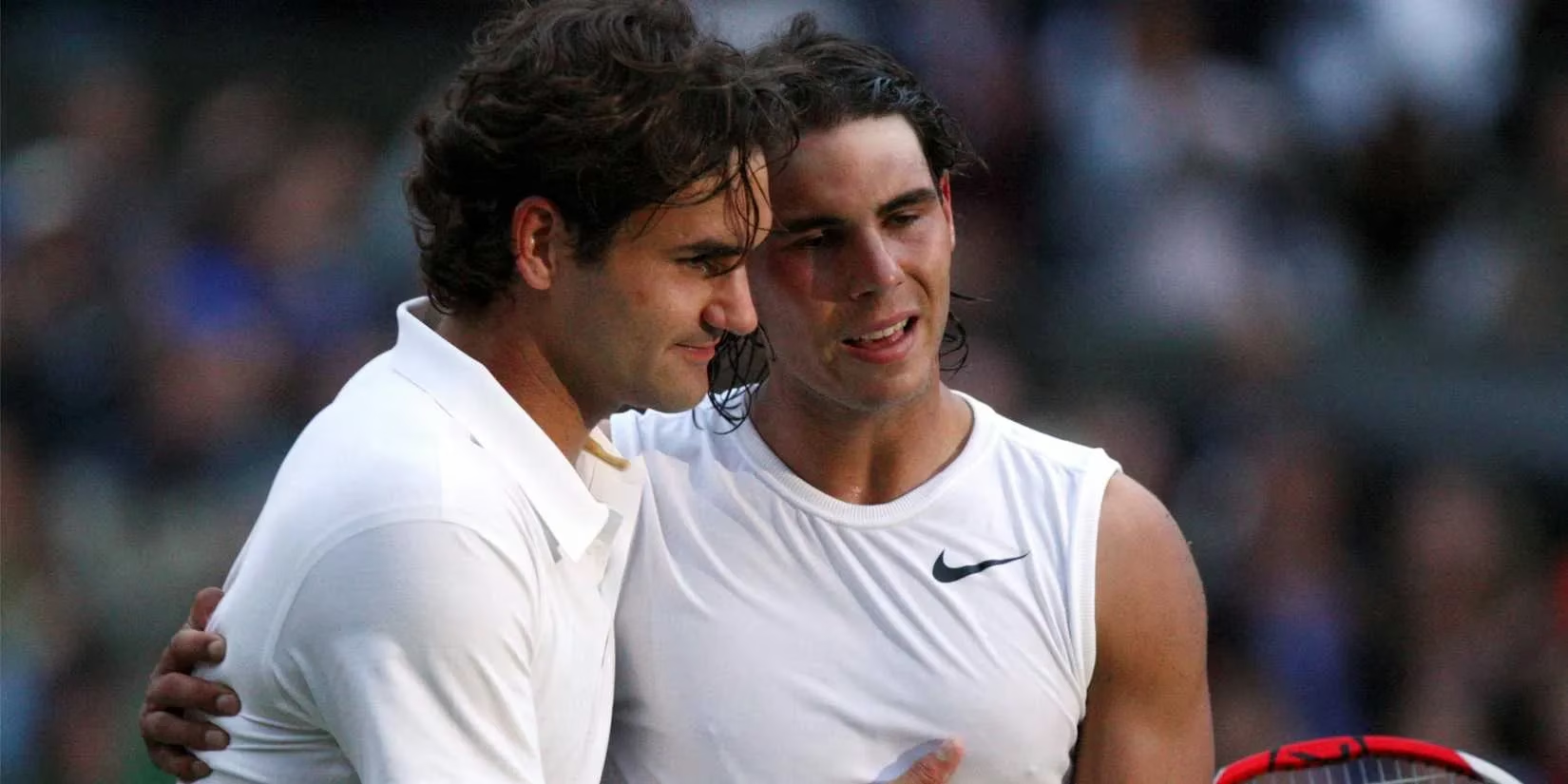
Now, in 2026, both men are safely retired. Nadal hung up his racket after the 2024 Davis Cup, joining Federer in the land of exhibition matches and padel cameos. The lefty silly spin no longer haunts a competitive backhand. Yet anyone who watched them knows that every future debate about the greatest of all time will circle back to one uncomfortable truth: you can’t crown Federer without mentioning how often Nadal made him look human. Or as Federer himself noted with a smile, “Let’s start with the obvious: you beat me – a lot. More than I managed to beat you.” That’s the sound of a champion who learned to laugh at his own nightmares. What else can you do when a “silly” shot redefines an entire career? Well, you could try a bigger racquet. He did that too.
Loading comments...